Volhynia 1943 – Part III

Part III of our Volhynia series.

When War Opened Every Door

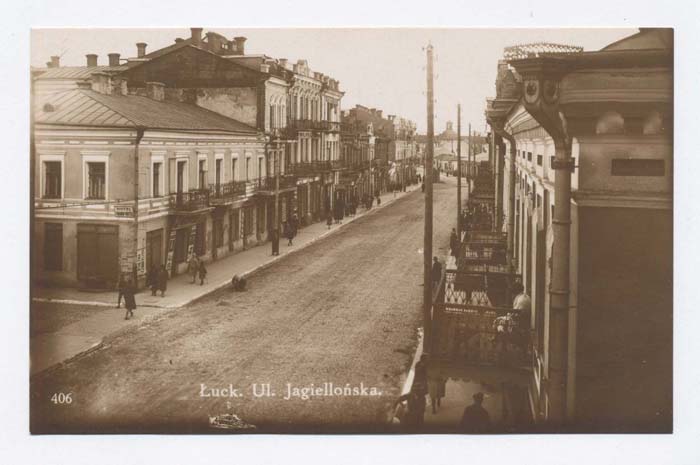
Łuck był jednym z najważniejszych miast Wołynia. Przed wojną region zamieszkiwali Polacy, Ukraińcy, Żydzi, Czesi oraz przedstawiciele innych narodowości.

In the autumn of 1939, Volhynia looked much the same as it had the day before.

The same roads led to the same villages. The same fields awaited the harvest. Churches, Orthodox churches, synagogues and local markets remained part of everyday life. Poles, Ukrainians, Jews, Czechs and many others lived side by side, as they had for generations.

That does not mean there were no tensions.

There were political disagreements, national rivalries and religious differences. Old grievances had never completely disappeared.

Yet few people could imagine that within just a few years the world they knew would cease to exist.

September 1939 opened doors that would never be closed again.

The Disappearance of the State

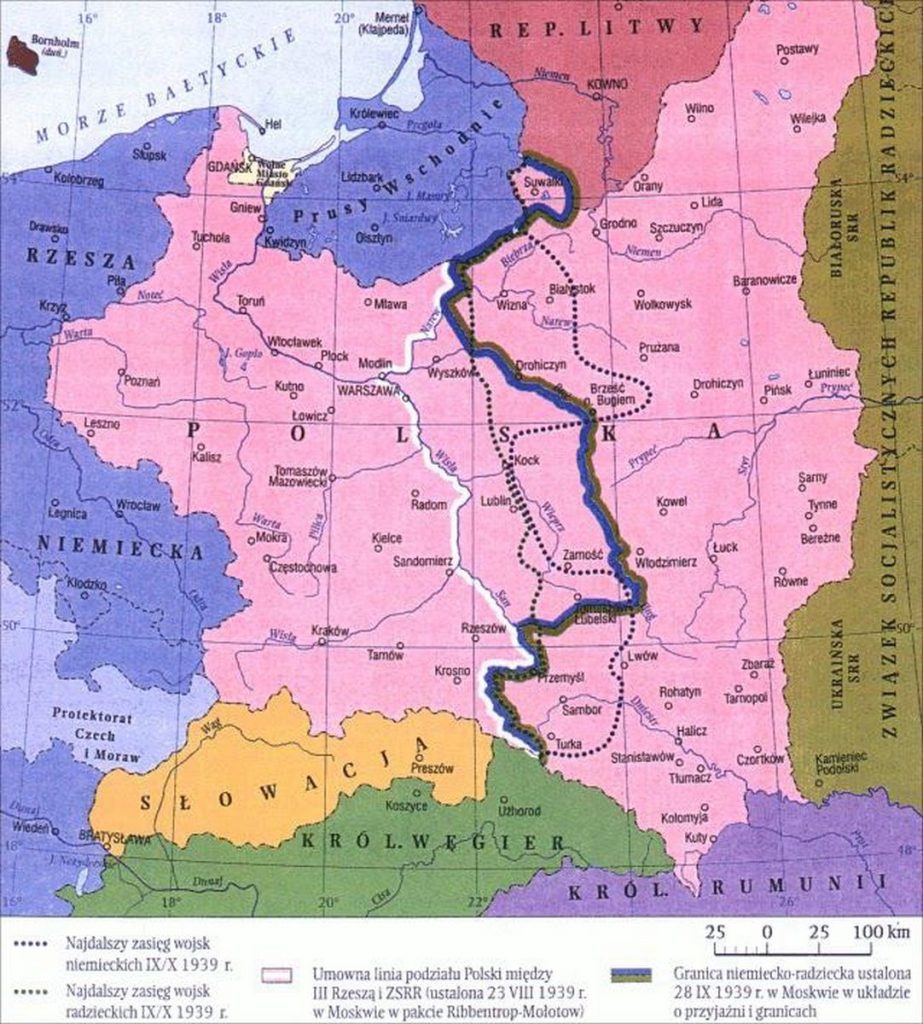
On 1 September 1939, Germany invaded Poland.

On 17 September, the Soviet Union attacked from the east.

For the people of Volhynia, the Second Polish Republic suddenly vanished.

The state that had provided order and authority for two decades was gone.

This was far more than a change of borders.

Everything changed.

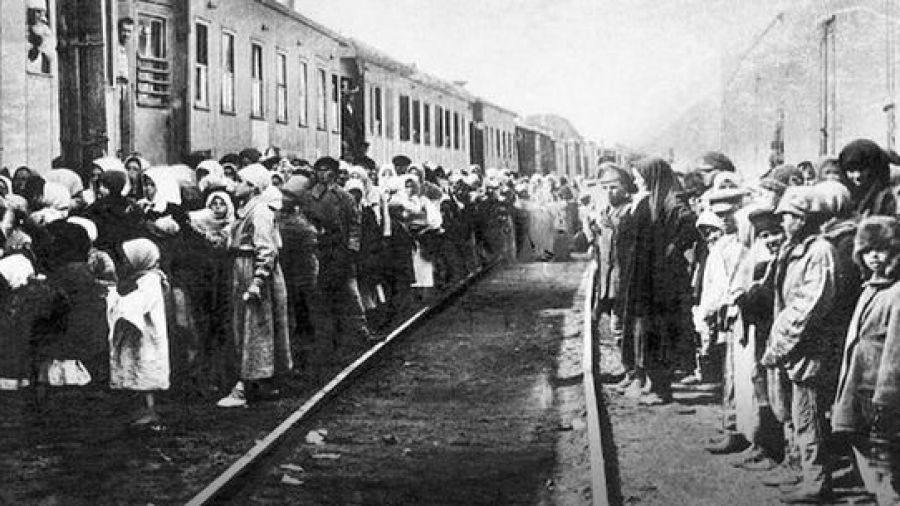
The new Soviet authorities began reshaping society according to communist principles. Officials, police officers, teachers, military veterans and anyone considered politically unreliable were arrested. Thousands of families were deported deep into the Soviet Union.

The repression affected primarily Poles, but not exclusively. Ukrainians, Jews and many others also fell victim to the new system.

Within a short period, many local elites disappeared.

Communities lost teachers, community leaders, administrators and people who had once provided stability in uncertain times.

Po zajęciu Kresów przez Związek Sowiecki tysiące rodzin zostało deportowanych w głąb ZSRR.

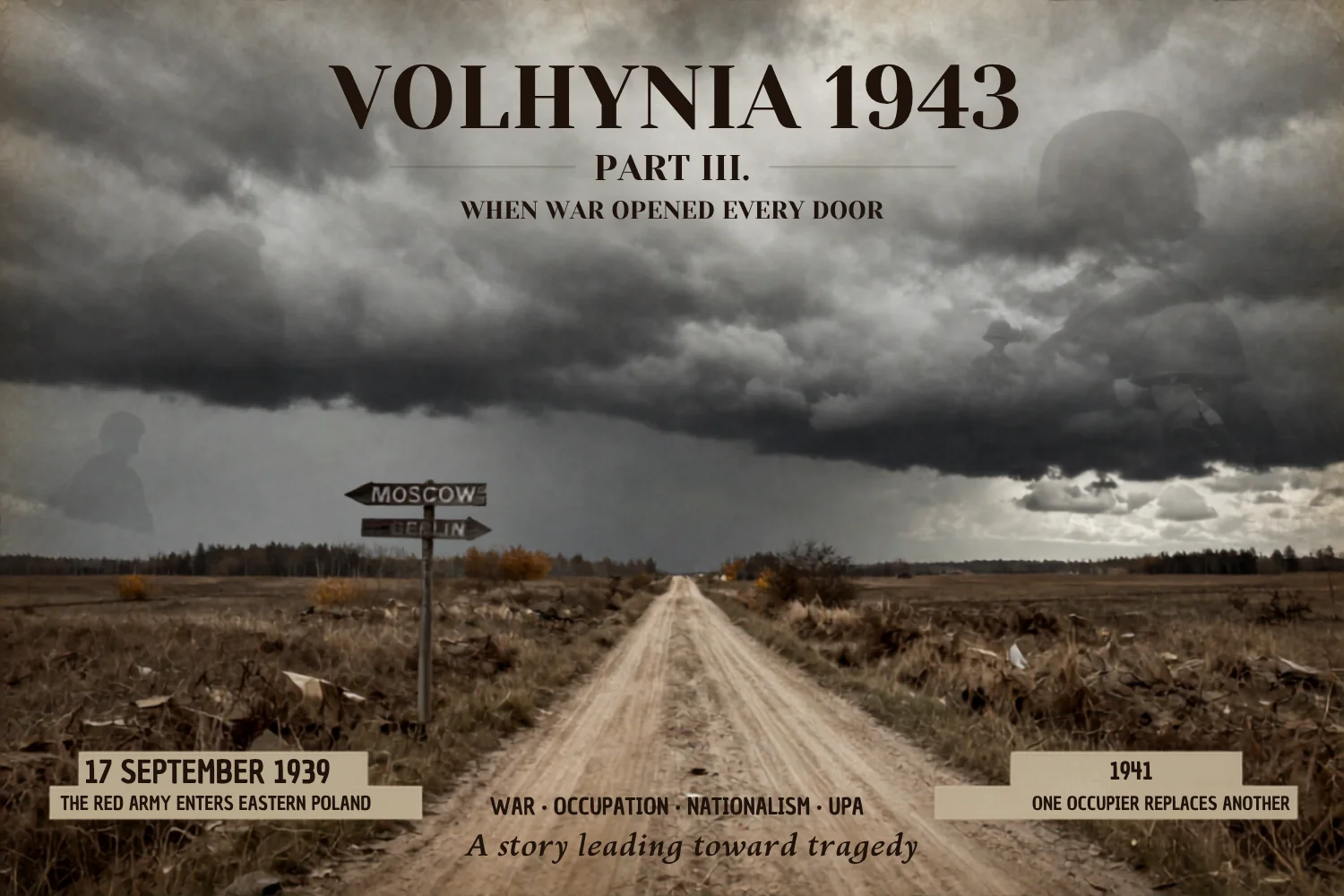
Between Moscow and Berlin

In June 1941 the situation changed again.

Germany invaded the Soviet Union.

The Red Army retreated eastward and German forces entered Volhynia.

For local people, it meant yet another occupying power.

For some Ukrainian nationalist circles, however, it also brought hope.

For years the Organisation of Ukrainian Nationalists (OUN) had sought the creation of an independent Ukrainian state.

The problem was that Berlin had no intention of supporting genuine Ukrainian independence.

Germany had its own plans for Eastern Europe.

It quickly became clear that Ukrainian nationalist ambitions and German objectives were not the same.

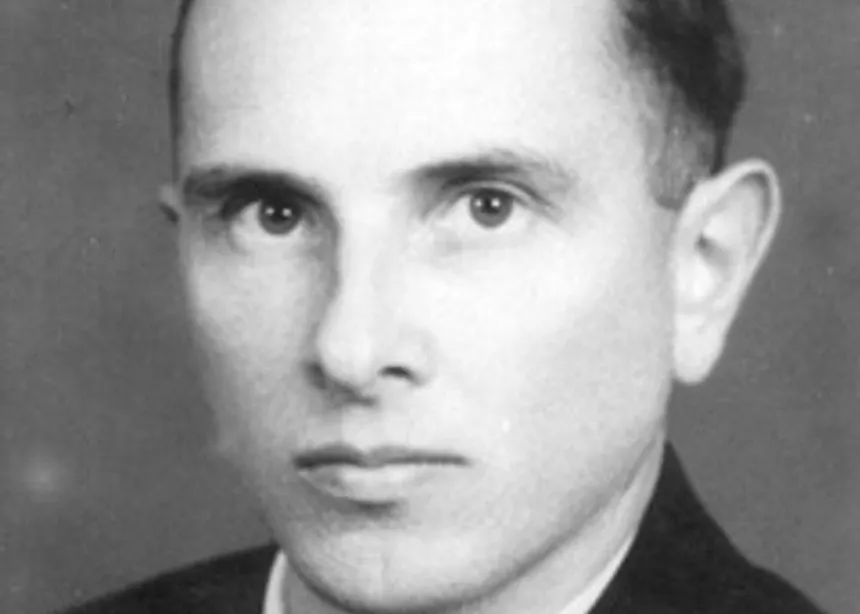
Stepan Bandera
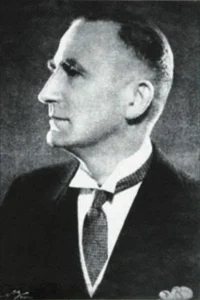
Andrij Melnyk

One Organisation, Two Paths

By this time the OUN had already split into two major factions.

One followed Andriy Melnyk.

The other followed Stepan Bandera.

It was Bandera’s faction, known as OUN-B, that would later play the most significant role in the events unfolding in Volhynia.

History, however, is rarely as simple as political slogans suggest.

Bandera became the symbol of the movement, yet from 1941 onward he was imprisoned by the Germans. There is no reliable evidence that he personally issued operational orders from prison concerning the later actions carried out in Volhynia.

That does not mean his role was irrelevant.

The political movement that carried his name continued to develop its vision of a future Ukrainian state, and many of its activists remained committed to that goal.

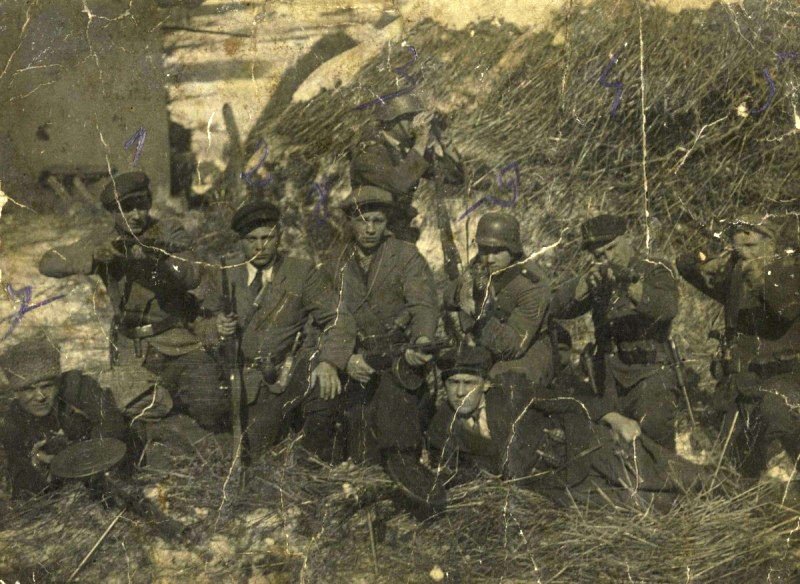
W 1942 roku zaczęła powstawać Ukraińska Powstańcza Armia (UPA), która miała odegrać kluczową rolę w wydarzeniach kolejnych lat.

The Rise of the UPA

In 1942, the Ukrainian Insurgent Army – the UPA – began to emerge.

Its declared objective was the creation of an independent Ukraine.

In theory, its enemies included all occupying powers: Germany, the Soviet Union and any force perceived as threatening future Ukrainian independence.

On paper, this resembled many other national liberation movements that emerged during the war.

Reality proved far more complicated.

Within parts of the OUN-B leadership, a belief gained strength that a future Ukrainian state should be as ethnically homogeneous as possible.

In this way of thinking, the large Polish population of Volhynia was increasingly viewed not as neighbours, but as a political obstacle.

It was at this point that political goals began to merge with plans for violence.

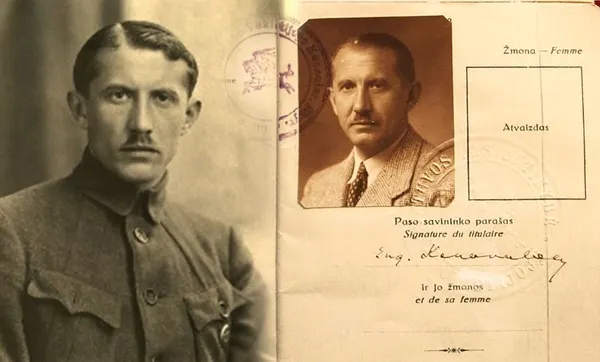
Dmytro Kłaczkiwski „Kłym Sawur” należał do najważniejszych dowódców OUN-B i UPA na Wołyniu.

Who Made the Decisions?

Historians continue to study how decisions were made within the structures of OUN-B and the UPA.

Not every document survived.

Not every order was written down.

Yet most researchers agree on one point: the violence directed against Polish civilians was not simply a spontaneous outburst of anger.

It resulted from decisions taken within organised structures.

In the case of Volhynia, one name appears repeatedly: Dmytro Klyachkivsky, known by the nom de guerre “Klym Savur”, who commanded OUN-B and UPA structures in the region.

Other nationalist leaders also played important roles, while Roman Shukhevych would later become one of the most influential commanders of the UPA.

Responsibility for what followed in 1943 did not rest on a single individual.

It was the outcome of decisions made by an entire leadership network.

Not Only Poles

One fact often overlooked is that Poles were not the only victims of violence.

Ukrainians who opposed the OUN or refused cooperation could also become targets.

Members of other ethnic communities living in Volhynia suffered as well.

The war increasingly became a world in which loyalty to an idea mattered more than human life.

Anyone perceived as standing in the way of that idea risked being labelled an enemy.

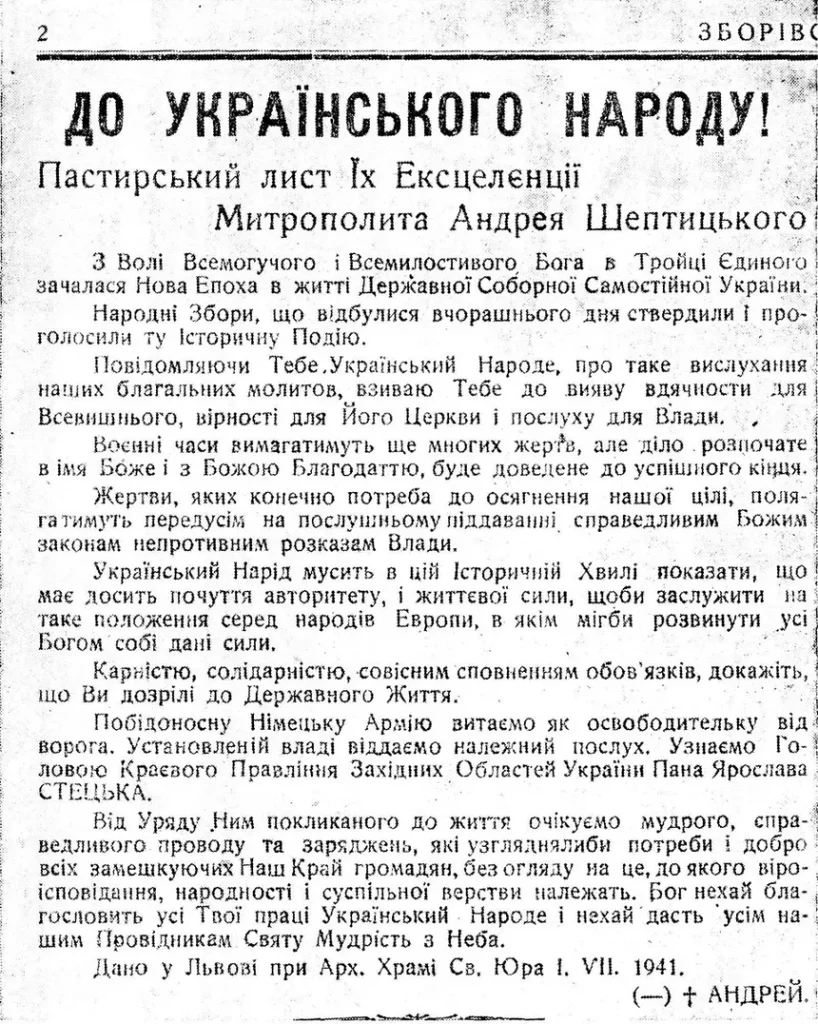
List metropolity Andrzeja Szeptyckiego

To the Ukrainian People

Pastoral Letter of His Excellency Metropolitan Andrey Sheptytsky

By the will of Almighty and Merciful God, One in the Holy Trinity, a new era has begun in the life of the united and independent Ukrainian State.

The National Assembly, which met yesterday, approved and proclaimed this historic act.

Informing you, Ukrainian People, that our fervent prayers have been heard, I call upon you to show gratitude to the Almighty, loyalty to His Church, and obedience to the authorities.

The times of war will still require many sacrifices, but the work begun in the name of God and under God’s blessing, I trust, will be brought to a successful conclusion.

The sacrifices necessary to achieve our goal will consist above all in disciplined obedience to the just laws of God and to the necessary orders of the authorities.

The Ukrainian Nation must, at this historic moment, demonstrate that it possesses sufficient maturity and vitality to earn a place among the nations of Europe where it may fully develop all the abilities granted to it by God.

Through diligence, solidarity, and the conscientious fulfillment of duties, prove that you are prepared for statehood.

We greet the victorious German Army as the liberator from the enemy. We render due obedience to the established authorities. We recognize Mr. Yaroslav Stetsko as the head of the Regional Administration of the Western Regions of Ukraine.

From the German government brought into being, we expect wise and just leadership and regulations that will take into account the needs and welfare of all inhabitants of our land, regardless of their religion, nationality, or social status.

May God bless all your righteous sons, Ukrainian People, and grant all our leaders holy wisdom from Heaven.

Given in Lviv, at St. George’s Cathedral, on 1 July 1941.

† Andrey Sheptytsky
A War That Destroyed Every Boundary

By 1943, Volhynia had become a very different place from the region that existed before the war.

The Polish state was gone.

The Soviets had left behind fear, deportations and shattered communities.

The Germans controlled the region but showed little interest in protecting all its inhabitants.

Armed organisations operated with increasing freedom.

Violence became part of everyday life.

And ordinary people were increasingly left to fend for themselves.

By the summer of 1943, all the pieces of a tragic puzzle were already in place.

Only one question remained:

When would disaster strike?

That story will be told in Part IV.

Discover with us:

Vagabonds of the North
Privacy Overview

This website uses cookies so that we can provide you with the best user experience possible. Cookie information is stored in your browser and performs functions such as recognising you when you return to our website and helping our team to understand which sections of the website you find most interesting and useful.