
Volhynia 1943 – The Road to Tragedy
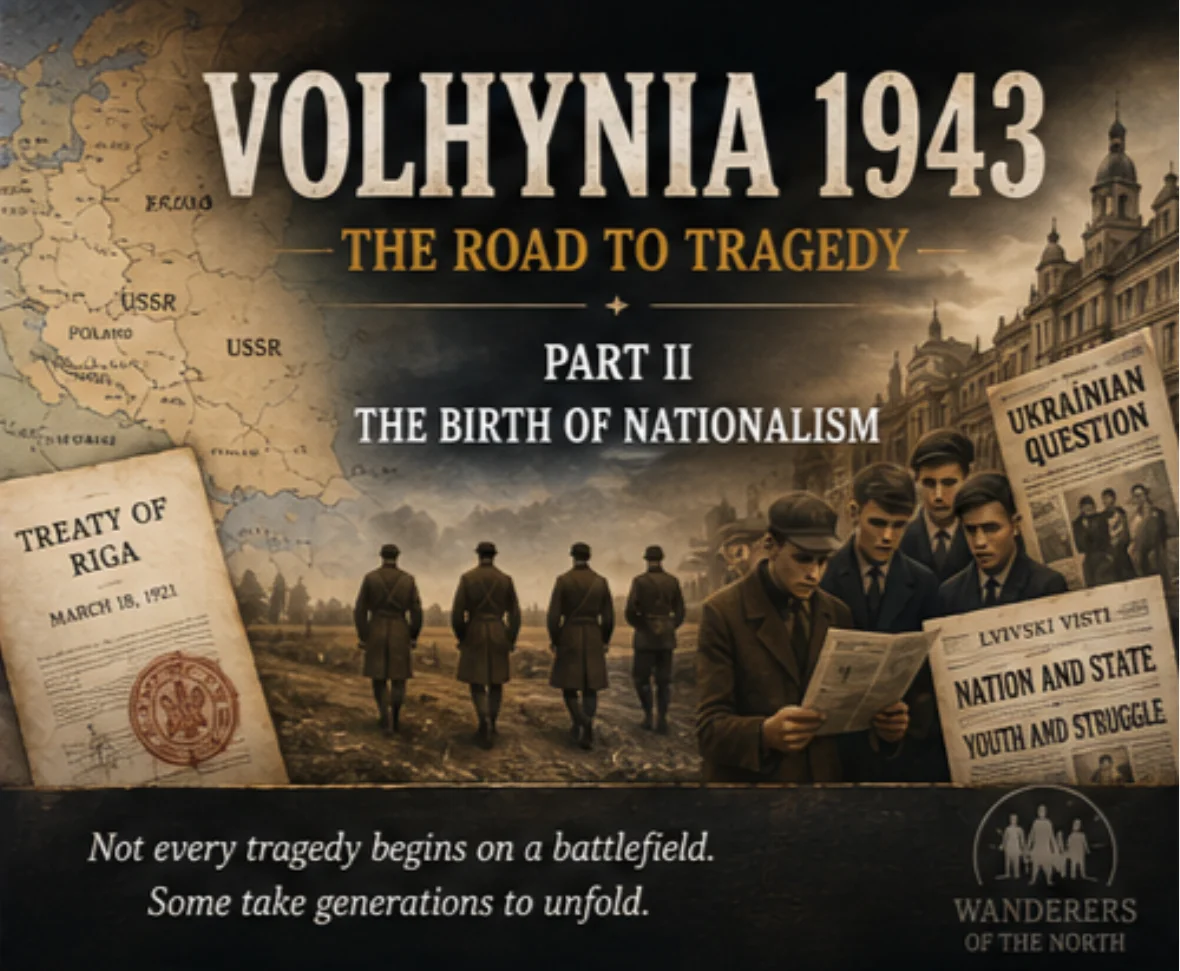
Part II: The Birth of Nationalism
The Treaty of Riga ended the Polish-Soviet War, but it did not end all disputes.
For many Poles, 1921 marked victory and stability for the newly reborn state. For many Ukrainian independence activists, however, it symbolized a lost opportunity.
Not everyone was prepared to accept the new reality.
Among former soldiers and officers of the Ukrainian People’s Republic, the belief persisted that the struggle for independence had only been temporarily lost.
One of the most important figures in this movement was Yevhen Konovalets.
A former military officer and commander, he had no intention of abandoning the dream of an independent Ukraine. In 1920, he helped establish the Ukrainian Military Organization (UVO), operating primarily in territories that had become part of the Second Polish Republic.
The organization’s goal was to preserve the idea of independence and prepare future cadres for renewed struggle.
For some of its members, political activity and parliamentary participation appeared ineffective. Increasingly, they came to believe that independence could only be achieved through clandestine operations and direct action.
The 1920s were a period of tension not only in Ukrainian-inhabited territories.
Across Europe, nationalist movements were gaining influence. Italy had come under the rule of Benito Mussolini, while many countries struggled with the aftermath of war, economic crises, and political instability.
In such an atmosphere, radical ideas found fertile ground.
A growing number of young Ukrainians also began to reject compromise, viewing it as ineffective and ultimately futile.
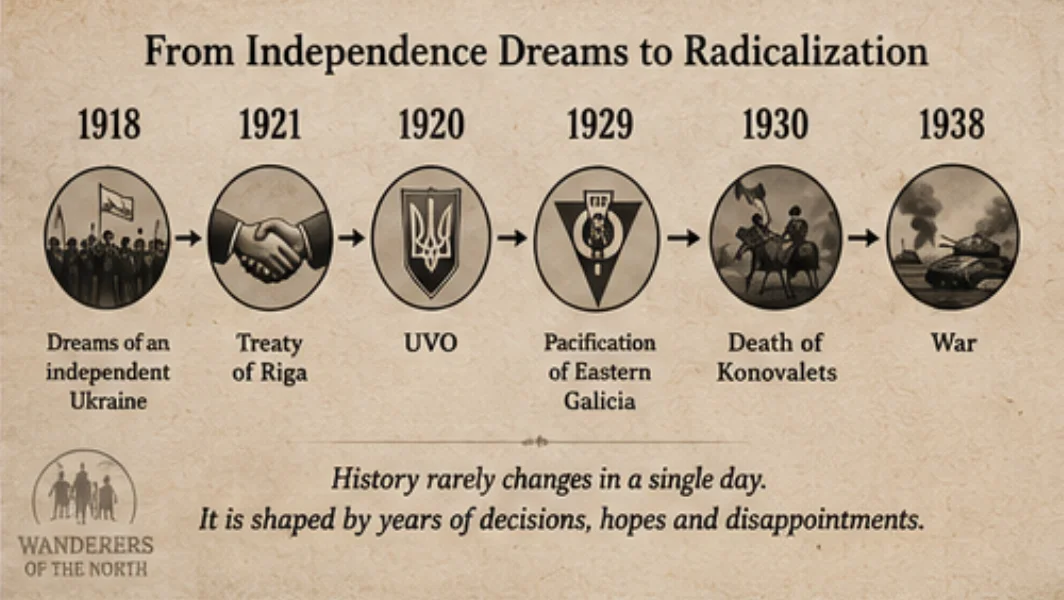
In 1929, the Organization of Ukrainian Nationalists (OUN) was founded in Vienna.
The organization united several nationalist groups that had previously operated independently.
Its objective was the creation of an independent Ukrainian state.
The challenge was that some of its members believed this goal justified the use of almost any means necessary.
OUN rejected parliamentary democracy as a path toward achieving its aims. Instead, it emphasized discipline, loyalty to the organization, and the subordination of individual interests to those of the nation.
For many young people, this vision appeared simple, clear, and appealing.
During the 1930s, tensions between the Polish state and segments of the Ukrainian population continued to grow.
The Polish authorities pursued policies designed to strengthen state control over regions inhabited by national minorities. One of the most significant events was the so-called Pacification of Eastern Galicia in 1930, carried out after a series of sabotage attacks and acts of arson.
For the Polish government, it was a security operation intended to restore order.
For many Ukrainians, it became a symbol of repression and a powerful argument used by radical nationalist circles.
Each confrontation deepened mutual distrust.
At the same time, a new generation was emerging within OUN.
These young activists had no personal memory of the independence struggles of 1918–1921. They knew them only through stories, family memories, and the legends cultivated within the movement.
They grew up in a world where an independent Ukraine did not exist.
To them, compromise increasingly appeared to be another word for defeat.
One of the most prominent representatives of this generation was Stepan Bandera.
During the 1930s, he became one of the most recognizable leaders of OUN’s younger wing.
For some, he symbolized unwavering commitment to Ukrainian independence.
For others, he represented the dangerous radicalization of nationalist politics.
Even at the time, his activities provoked strong reactions.
By the late 1930s, Europe was once again moving toward war.
Poles and Ukrainians living side by side could not yet know that the coming conflict would completely transform the world they knew.
Borders, governments, and everyday life would soon be overturned.
Along with them would return unresolved disputes, old grievances, and the unrealized dreams left behind after 1921.
In the next chapter, we will move into the years 1939–1942 and explore how the outbreak of the Second World War created the conditions that would ultimately lead to the tragedy of Volhynia.
Discover with us: