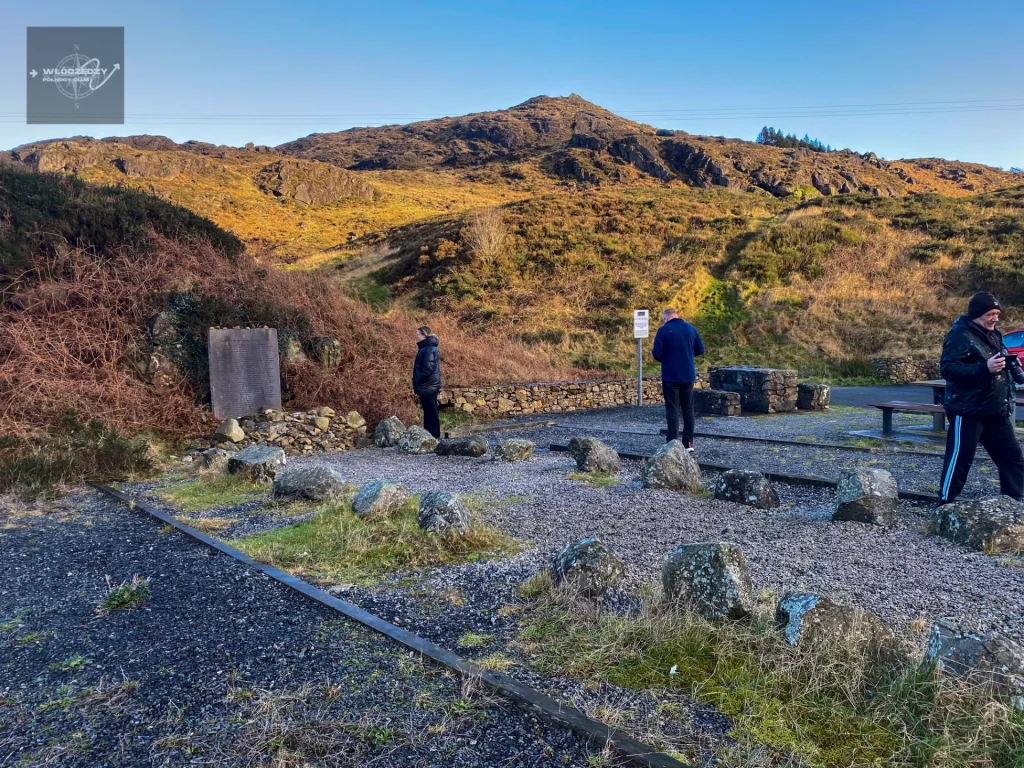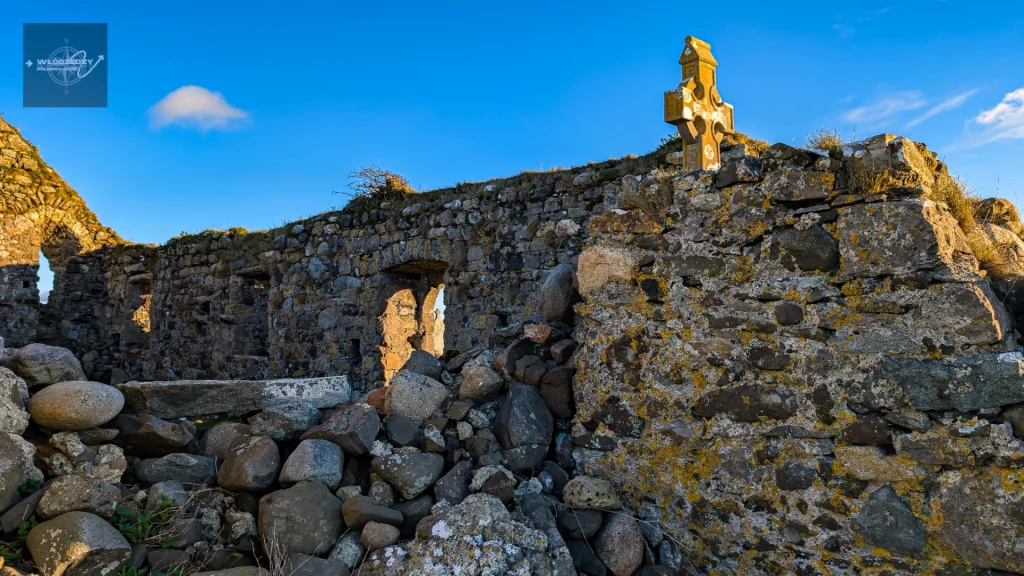
Cooley Peninsula Day Trip: Legends, Megaliths and Hidden Irish Mysteries
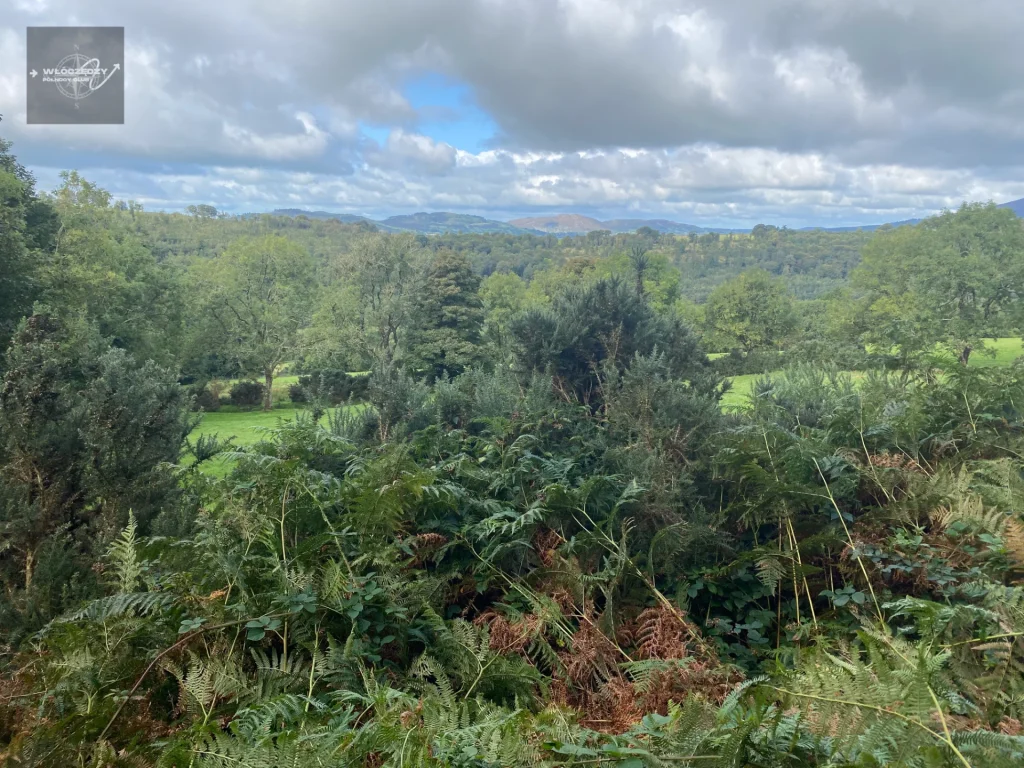
“Not every day trip ends with a walk through a portal to the afterlife.”
Vagabonds of the North
Introduction—this was supposed to be a simple day trip
There are mornings when a plan seems perfectly reasonable.
“Let’s just do a quick day trip around the Cooley Peninsula. A few ancient stones, maybe a castle, a Guinness somewhere along the way, and back home before things get weird.”
Yes.
Of course.
Because nothing ever gets weird when your itinerary includes:
- a prehistoric portal,
- a stone circle hidden in a forest,
- the grave of a giant woman,
- a medieval town,
- a legendary war over cattle,
- suspiciously old church ruins,
- a beach with Templar vibes,
- and a megalith older than most organised civilisation.
Totally normal.
The Cooley Peninsula, tucked between Carlingford Lough and the Cooley Mountains, is one of those places many people drive past on their way to somewhere “bigger.”
That’s a mistake.
Because this is precisely the kind of region where Irish mythology, history, and local folklore all sit at the same pub table and argue over who got there first.
We started, as many questionable adventures do, from Bessbrook, with what looked like a perfectly manageable day plan.
It was not.
Stop 1: Clontygora Cairn – a portal older than most civilisations
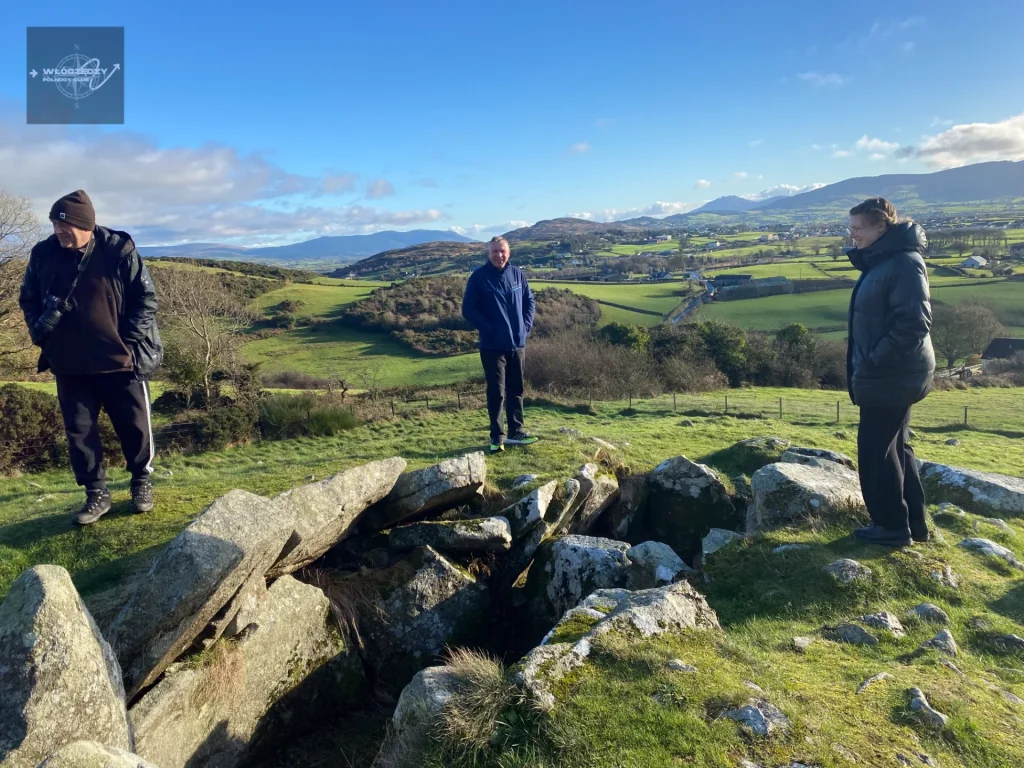
If you’re going to start the day properly, you may as well begin somewhere built around 3000–3500 BC.
Yes.
BC.
As in:
Long before castles,
long before Christianity,
long before Rome,
long before anyone invented emails, parking fines or passive-aggressive group chats.
Clontygora Cairn is a prehistoric passage tomb.
Which is the academic way of saying:
A giant stone structure that absolutely looks like an entrance to another dimension.
Naturally, theories exist.
Archaeologists suggest:
- burial site,
- ceremonial space,
- possible astronomical alignment,
- ritual significance.
Reasonable.
Our immediate conclusion?
“That is definitely a portal to the afterlife.”
Because look at it.
Seriously.
And then, as always happens in situations like this…
Someone had to walk through it.
And once one person walks through a suspicious prehistoric stone opening, others follow.
Which means that Piotr and I can officially confirm:
We entered the portal.
We also exited.
Probably.
To this day, however, neither of us can confirm with complete certainty that we returned to the correct dimension.
🤣
Jokes aside, Clontygora genuinely hits differently.
Not because it’s huge.
Because of time.
You touch a stone that was already ancient before many famous civilizations even existed.
That has a way of adjusting your perspective.
Suddenly your inbox feels less important.
Vagabond tip:
The walk is easy enough, but Irish definitions of “slightly damp” remain deeply untrustworthy.
Stop 2: Ravensdale Stone Circle – not somewhere you casually visit after dark
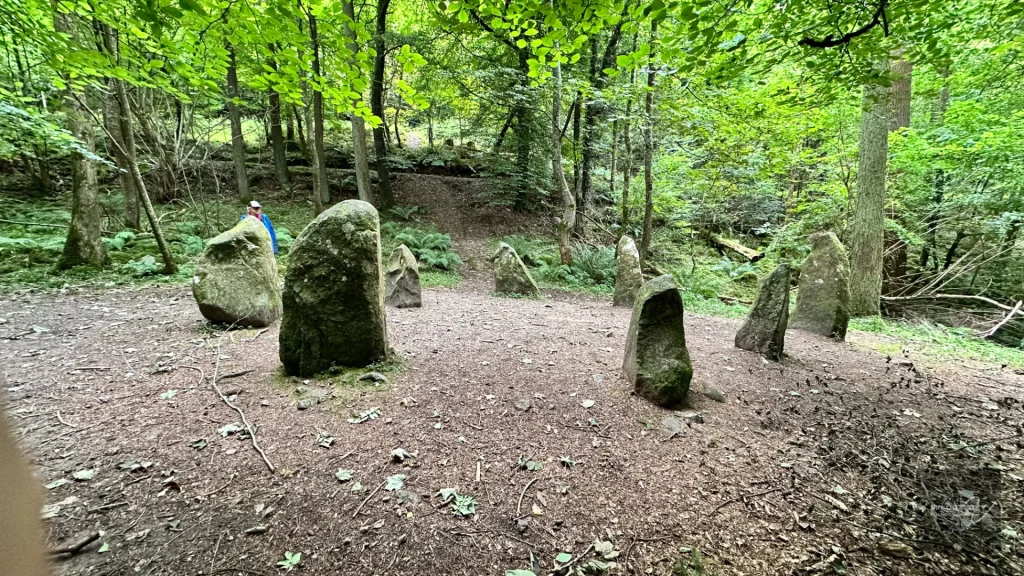
If Clontygora felt like a portal…
Then Ravensdale feels like the waiting room.
Hidden inside Ravensdale Forest, the stone circle has exactly the atmosphere horror directors dream about.
No crowds.
No big visitor centre.
No cheerful gift shop.
No one is selling “I survived ancient Irish pagan architecture” mugs.
Just:
Forest.
Silence.
Stones.
and a growing sense that perhaps someone, somewhere, once took rituals very seriously here.
Stone circles across Ireland are generally linked to the Bronze Age.
Their exact purpose?
Still debated.
Possibilities include:
- ritual ceremonies,
- astronomical observations,
- tribal gatherings,
- or perhaps simply prehistoric neighbors trying to show off.
Entirely plausible.
But regardless of theory…
The atmosphere works.
Especially when you’ve already spent the morning voluntarily walking through a prehistoric portal.
At that point, your threshold for weirdness drops significantly.
Bonus boss fight: the tree
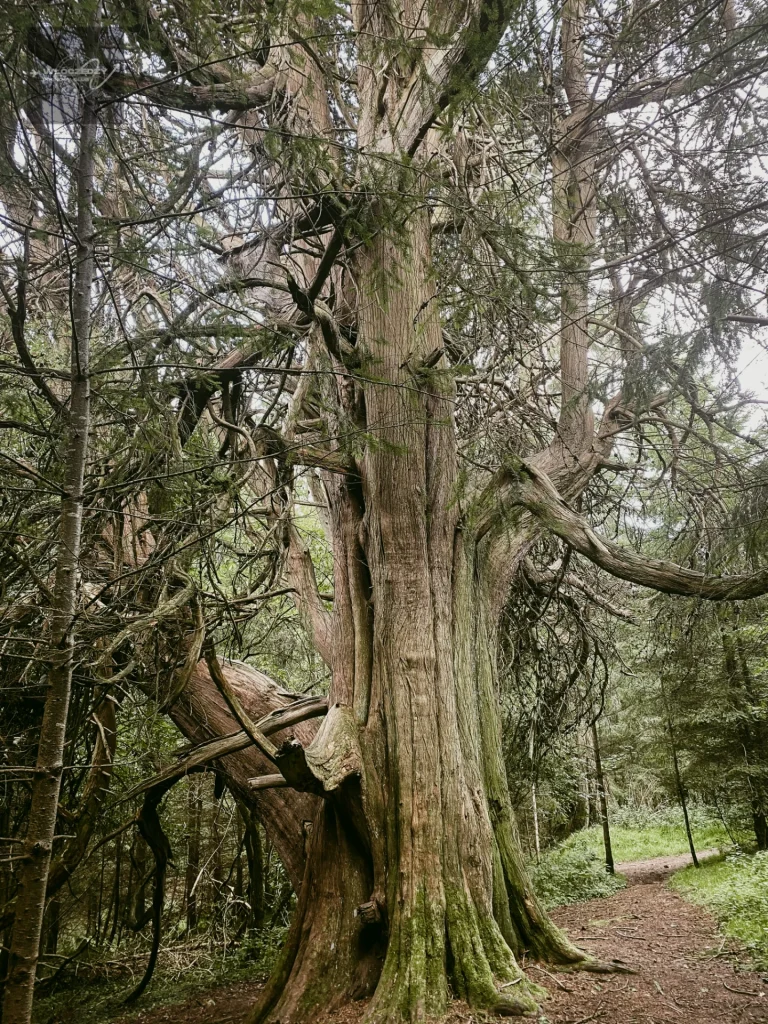
And then we encountered it.
The tree.
Though “tree” feels slightly inadequate.
This thing looked less like vegetation and more like:
- an ancient forest guardian,
- a rejected Lord of the Rings character,
- or something that would absolutely wake up if spoken to incorrectly.
And this was also the exact moment when Danusia’s earlier navigation message suddenly made perfect sense.
Because earlier that day, while we had split up, I received a message:
“Where are you? Come here.”
I replied:
“Where exactly is ‘here’?”
Response:
“Here. By the tree.”
Now.
At this point we were in a forest containing approximately several thousand trees.
So I replied, with what I still consider admirable patience:
“Darling… we are in a forest. There are only trees.”
Turns out…
She meant THIS tree.
And in fairness?
She was absolutely right.
🤣🌲
Stop 3: Long Woman’s Grave – history, myth, or a very impractical burial problem?
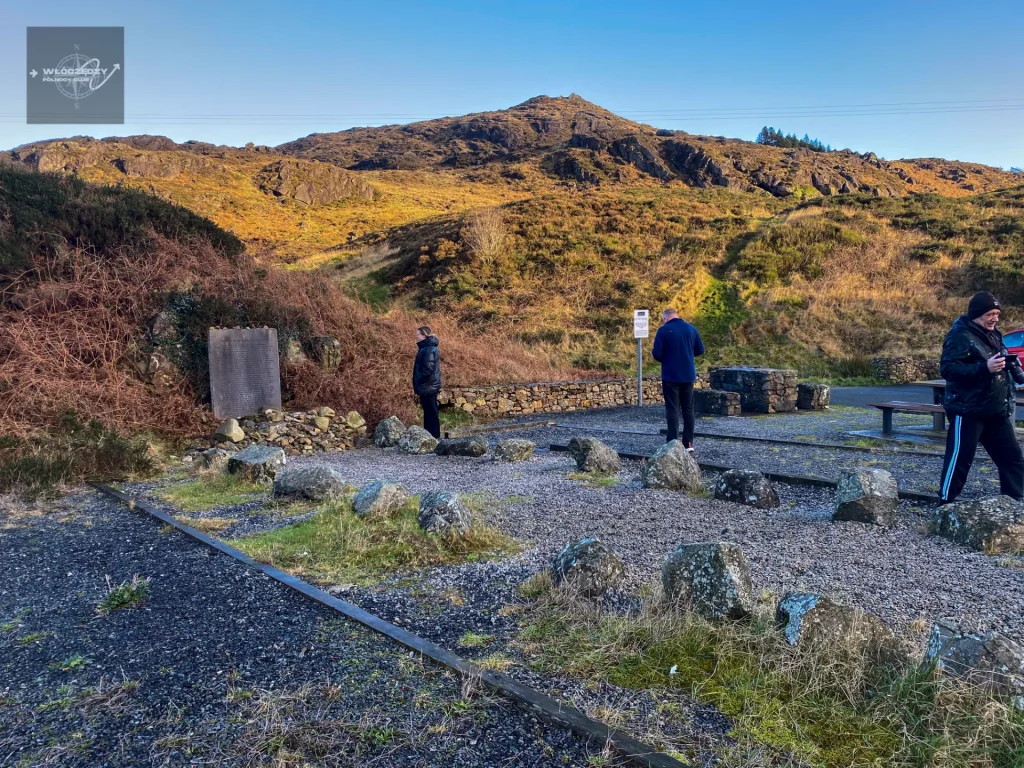
If you thought things might become more normal after prehistoric portals and ritual stone circles…
Absolutely not.
Because next on the route is
And let’s be honest.
That name alone already sounds like something you should approach with mild caution.
Perched high above Carlingford Lough, this mysterious site has fuelled local imagination for generations.
According to one of the best-known legends, this is the burial place of an enormous woman—sometimes described as a giantess, sometimes as a warrior, sometimes as a noblewoman linked (for reasons only Ireland can fully justify) to Spain.
Yes.
Spain.
Because apparently Irish folklore occasionally likes international guest appearances.
The basic story suggests she was so unusually tall that conventional burial arrangements became… complicated.
Which, to be fair, is logistically understandable.
But as with most Irish legends, the facts quickly dissolve into something much stranger.
Because hidden beneath the story is a familiar archetype:
The waiting figure.
The sleeping guardian.
The one who isn’t entirely gone.
Different cultures tell variations of this story.
A hidden king.
A sleeping warrior.
A future return in times of crisis.
Whether Long Woman belongs to that family of myths is debatable.
But standing there, wind howling across the lough, it’s not difficult to understand how such stories survive.
Even if you ignore the legend completely…
The atmosphere does half the storytelling.
Stone.
Silence.
Open views.
Wind with deeply personal opinions.
And that strange Irish feeling that history might not be entirely finished with a place.
Vagabond tip:
Visit on a calm day if you want elegant photos.
Visit on a windy day if you want to discover entirely new hairstyles.
🤣
Stops 4–7: Carlingford – where the Middle Ages forgot to leave
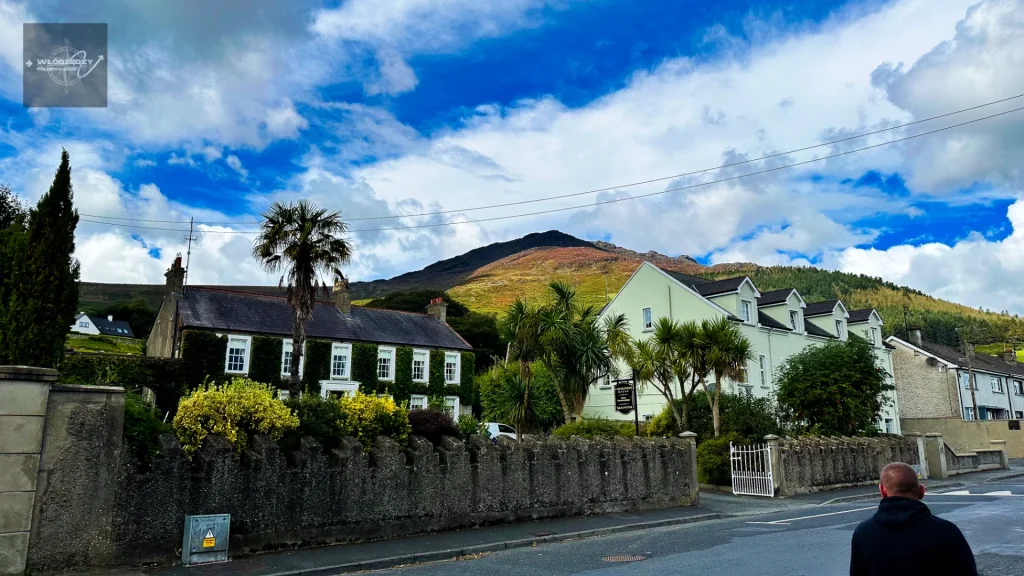
After enough prehistory, legends, and existential uncertainty, it helps to return to something more grounded.
Like a medieval town full of ruins, smugglers, suspiciously atmospheric streets, and excellent pubs.
Carlingford is one of those places where walking without a plan somehow becomes the best possible plan.
Because every few minutes you find:
Another stone archway,
another old wall,
another building that looks like it absolutely witnessed something illegal in 1487.
Carlingford Castle – the Norman method of saying “this is ours now”
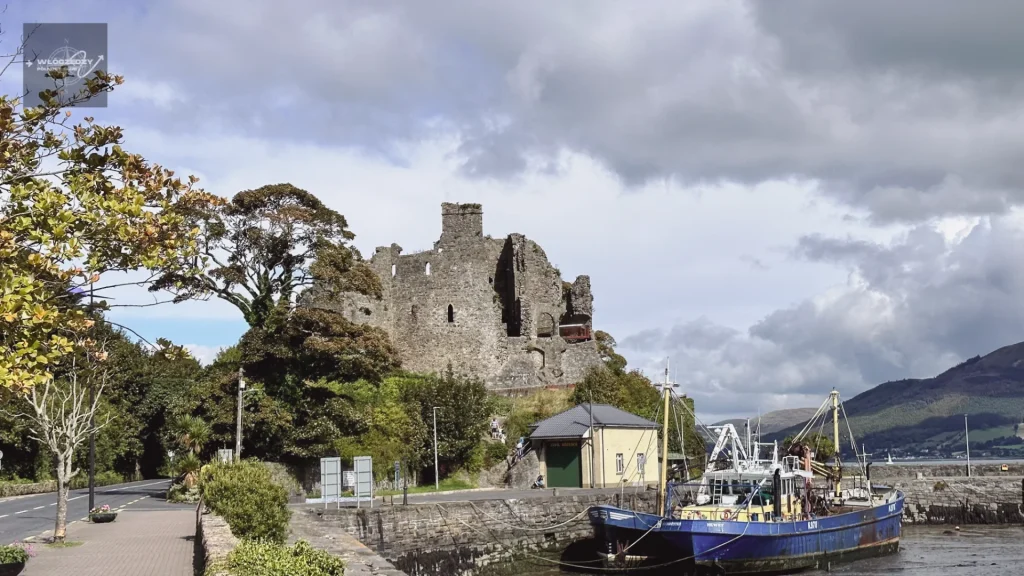
If medieval rulers wanted to control trade, shipping and everyone’s general behaviour…
they built castles.
Preferably on hills.
With excellent views.
And armed men.
Carlingford Castle, also known as King John’s Castle, dates back to the 12th century and guarded the entrance to Carlingford Lough with all the subtle diplomacy of a suspicious nightclub bouncer.
Normans didn’t really do subtle.
Their general management philosophy seemed to be:
stone + elevation + armed supervision = order
And to be fair…
it worked.
The castle controlled strategic movement for centuries.
Today, it remains one of the defining landmarks of the town.
And a very effective reminder that medieval hospitality came with conditions.
The Mint – when Carlingford had serious money
One of Carlingford’s real gems.
The Mint is a fortified 15th-century merchant house.
And despite the name, it wasn’t actually producing coins.
Disappointing, admittedly.
But it does reflect just how prosperous Carlingford once was.
This wasn’t some sleepy fishing village.
It was a serious medieval trading hub.
Ships.
Merchants.
Taxes.
Imports.
Exports.
Probably complaints about tariffs.
So really… not much has changed.
🤣
Carlingford Priory – premium atmospheric ruins
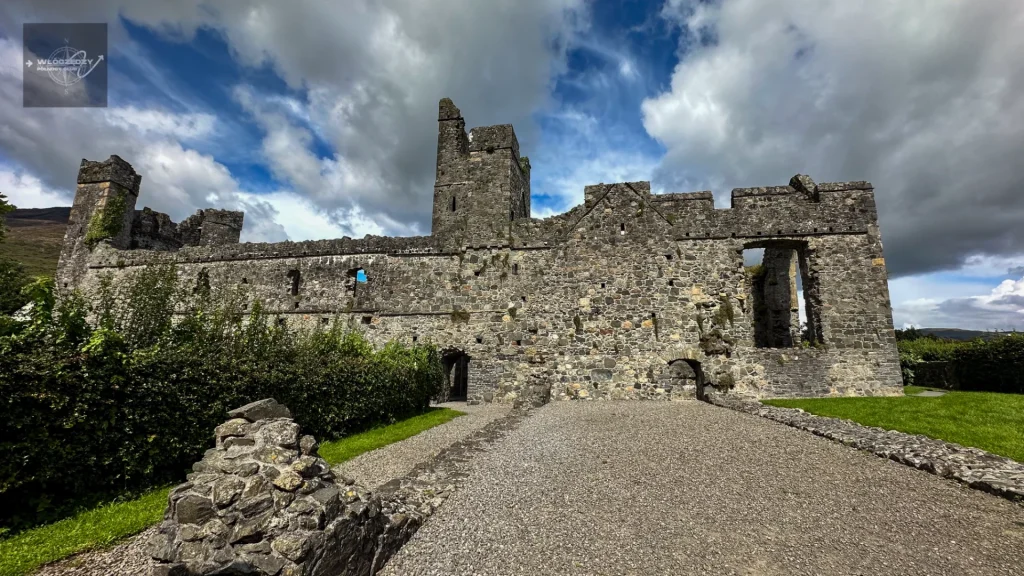
If Ireland excels at anything…
It’s ruins with personality.
And Carlingford Priory absolutely qualifies.
This is the sort of place where silence does half the work.
Old stone.
Weathered walls.
Empty spaces.
And that very subtle feeling that maybe someone is still quietly observing visitors from somewhere behind the masonry.
(Entirely imagination, obviously.)
Probably.
Tactical refuelling: Guinness as field research
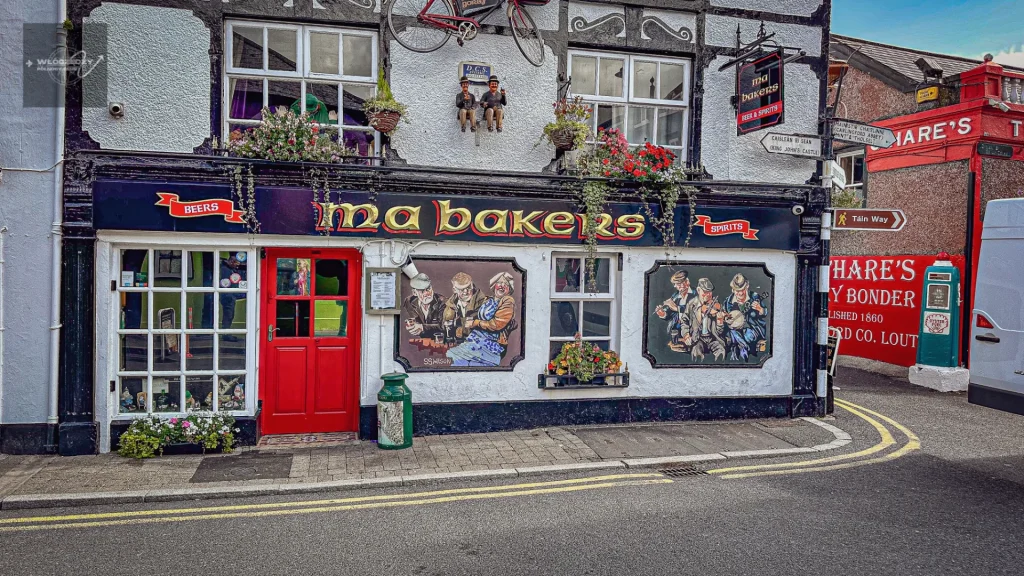
After several thousand years of accumulated history, the body begins issuing increasingly urgent demands.
Usually along the lines of:
“Feed me immediately.”
Thankfully, Carlingford understands.
And so came the highly scientific recovery phase:
🐟 Fish & Chips
🍺 Guinness
Because some places serve Guinness as a beverage.
Other places serve Guinness as a fully legitimate research enhancement tool.
Carlingford belongs firmly in the second category.
🤣🍺
Carlingford Marina – the calm before the next historical absurdity
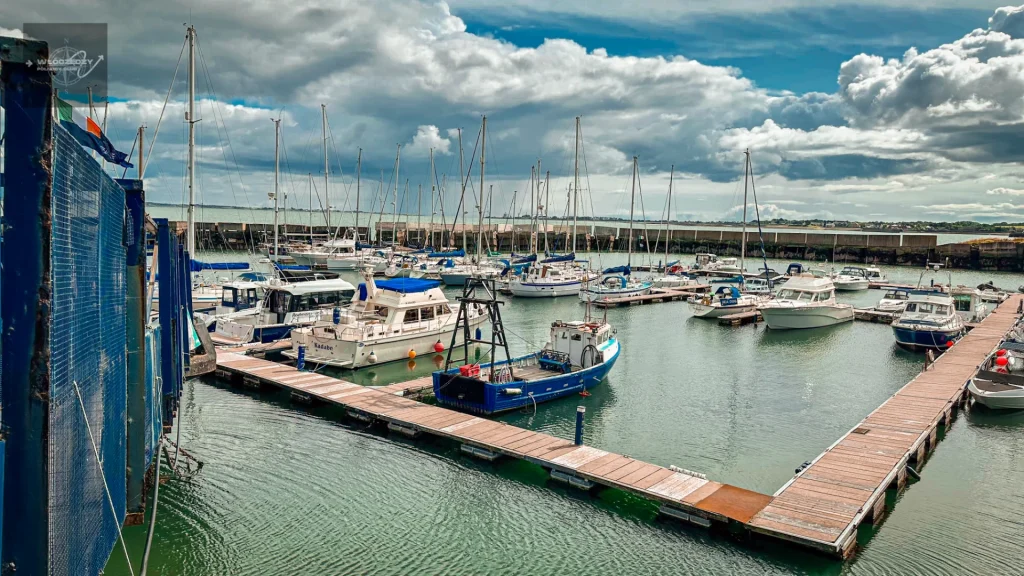
After megaliths, giant legends, and medieval architecture, the marina offers something dangerously close to normality.
Boats.
Water.
Fresh air.
A brief sense of peace.
Of course, this doesn’t last.
Because next…
We enter the world of mythological war cattle.
And yes.
That is a completely serious sentence.
🤣🔥
Stop 8: Rath / Riverstown – welcome to the most Irish conflict imaginable
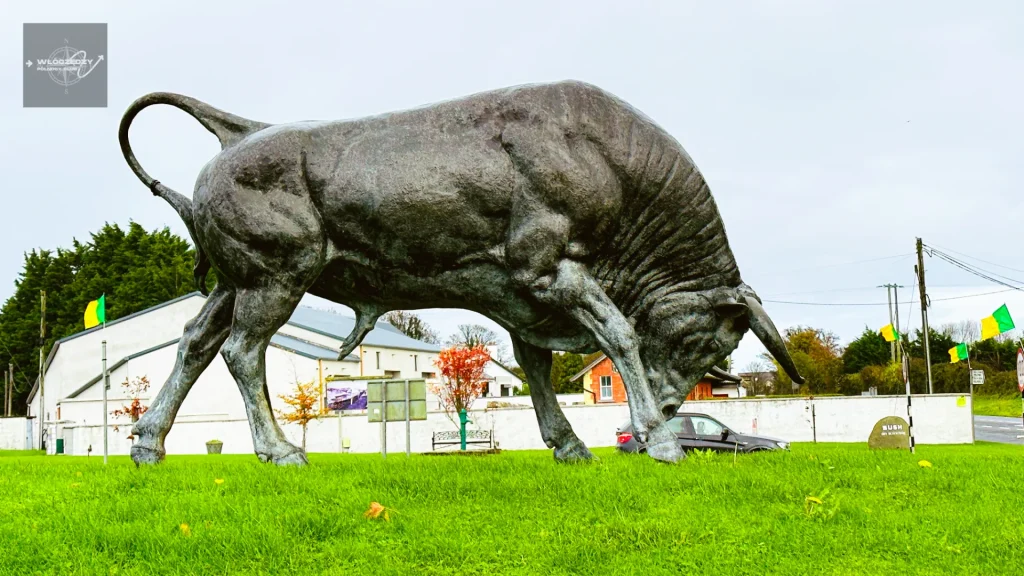
“On the Cooley Peninsula, history doesn’t stay in museums. It hides in stones, ruins and suspiciously old legends about aggressive cattle.”
Vagabonds of the North
At some point during this trip, after prehistoric tombs, giant legends, and medieval fortifications, you might think:
“Surely things are about to become more historically normal.”
No.
Because now we arrive in the territory of one of Ireland’s greatest myths:
Táin Bó Cúailnge
(The Cattle Raid of Cooley)
Which is both one of the most important epic stories in Irish mythology…
…and also, when reduced to its basic summary:
An enormous war that started because of cattle.
🤣
The Brown Bull vs. The White Bull
Let’s simplify.
Queen Medb of Connacht had a problem.
Her husband owned an exceptionally impressive white bull.
Naturally, this created an entirely reasonable royal concern.
Because how can a queen possibly tolerate her spouse having superior livestock?
The solution?
Acquire an equally magnificent animal:
The Brown Bull of Cooley.
Because healthy medieval relationship dynamics clearly existed.
🤣
Negotiations failed.
As negotiations often do when legendary pride and giant bulls are involved.
So naturally…
War followed.
Ireland’s own Iliad (with more livestock)
The legend escalates beautifully.
Heroes enter.
Battles erupt.
Cú Chulainn appears.
Entire armies clash.
And eventually, the two bulls themselves face one another in a final violent confrontation.
The Brown Bull wins.
But is mortally wounded.
Which feels deeply Irish somehow.
Victory, yes.
But preferably with emotional consequences.
Why this matters here
Because this is not just mythology you read in a book.
This landscape is part of the story.
The Cooley Peninsula isn’t simply scenery.
It’s mythological territory.
And that changes the way you travel through it.
Suddenly you’re not just driving scenic roads.
You’re crossing the setting of one of Ireland’s foundational legends.
Which is undeniably cool.
Vagabond comment:
The Greeks had Achilles.
Ireland had:
a furious teenage warrior and highly problematic cattle.
Respect.
🤣☘️
Enter the world of Irish Mythology, if you dare!
Stop 9: The Old Bush Station – a brief return to reality
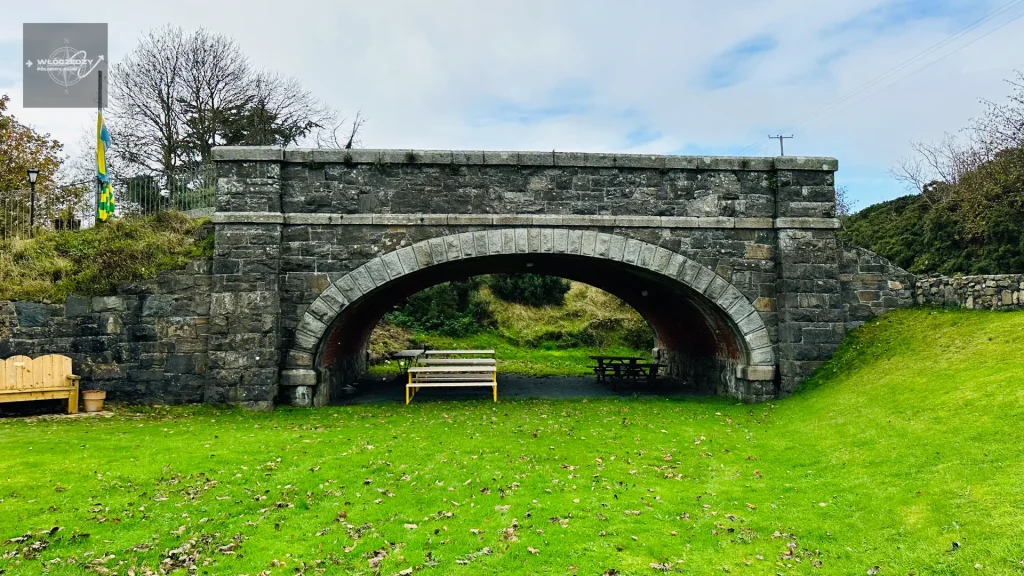
After mythological war cattle, it helps to ground yourself with something practical.
Like old railway infrastructure.
Enter The Old Bush Station.
A quieter stop.
Not flashy.
Not dramatic.
But exactly the sort of place that gives road trips texture.
Because history isn’t only kings, battles, and supernatural ambiguity.
It’s also ordinary people:
- travelling,
- commuting,
- hauling goods,
- returning home,
- complaining about transport delays.
So, really, nothing has changed.
🤣
This stop works beautifully as a breathing space before things take a darker turn.
Stop 10: Kilwirra Church Ruins – where silence becomes part of the architecture
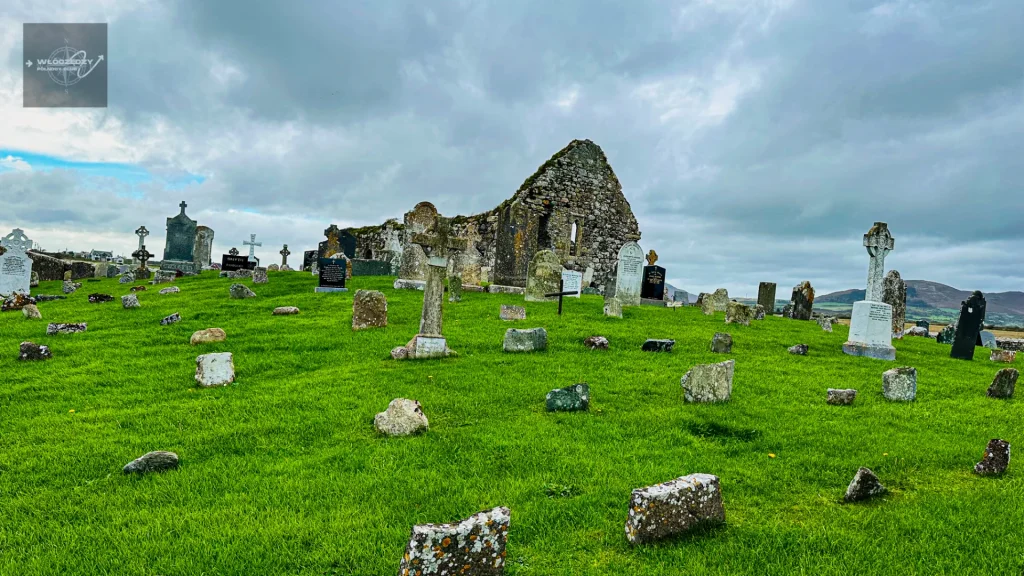
And suddenly the mood shifts again.
Because Ireland does tonal whiplash extremely well.
One minute:
Legendary cattle warfare.
Next minute:
You’re standing among old church ruins, automatically speaking more quietly.
Doesn’t need dramatic presentation.
It already has everything required:
Stone.
Wind.
Graves.
History.
Absence.
And sometimes absence says more than restored walls ever could.
The sea remembers differently
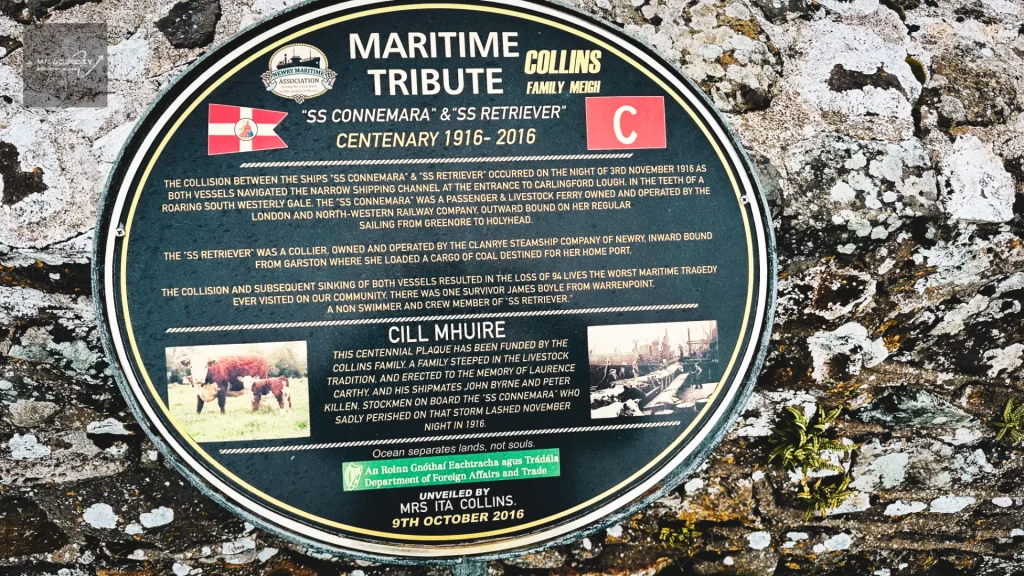
On 3 November 1916, during severe weather near the entrance to Carlingford Lough, two vessels collided:
- SS Connemara
- SS Retriever
The conditions were brutal.
Storms.
Strong winds.
Poor visibility.
Both ships sank.
94 people died.
One survived.
One.
That changes the mood immediately.
Because suddenly the peaceful water nearby feels entirely different.
That’s one of the remarkable things about traveling in Ireland.
A place can move effortlessly between myth, humor, and genuine tragedy within the same afternoon.
Vagabond thought:
The sea has very little patience for human plans.
Stop 11: Templetown Beach – where the sea looks peaceful and history quietly raises an eyebrow
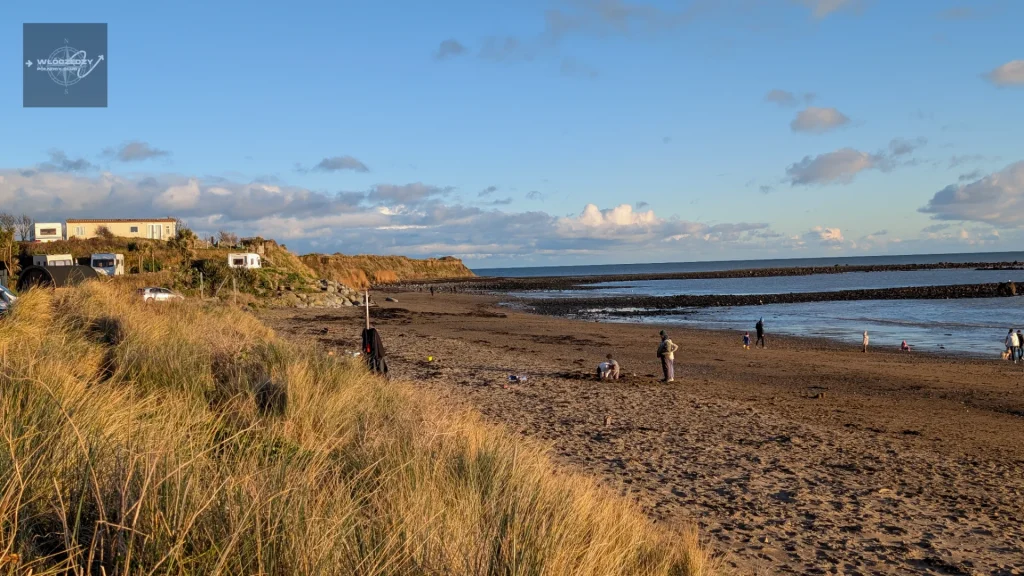
After prehistoric portals, giant women, mythological cattle warfare, medieval ruins, and maritime tragedy, one might reasonably expect the day to become less strange.
That expectation would be incorrect.
Welcome to Templetown Beach.
At first glance?
A beautiful stretch of coastline.
Wide sand.
Fresh sea air.
Views across the water.
The sort of place where people walk dogs, contemplate life, and pretend they definitely meant to bring a jacket.
Perfectly innocent.
Except…
The name.
Templetown.
Now that is not exactly subtle.
And yes—historically, this region does carry associations with medieval religious military orders, though as with all good Irish historical rabbit holes, one must separate:
Actual documented history
from
local folklore
from
the internet’s unstoppable desire to place the Knights Templar absolutely everywhere.
🤣
Still…
The atmosphere works.
There’s something about coastal silence mixed with old names and fragmented stories that makes places like this linger longer in the imagination than they probably should.
Vagabond comment:
Some people search beaches for seashells.
Others apparently start looking for medieval military orders.
We respect both.
🤣⚔️
Stop 12: Proleek Wedge Tomb – because apparently one prehistoric monument wasn’t enough
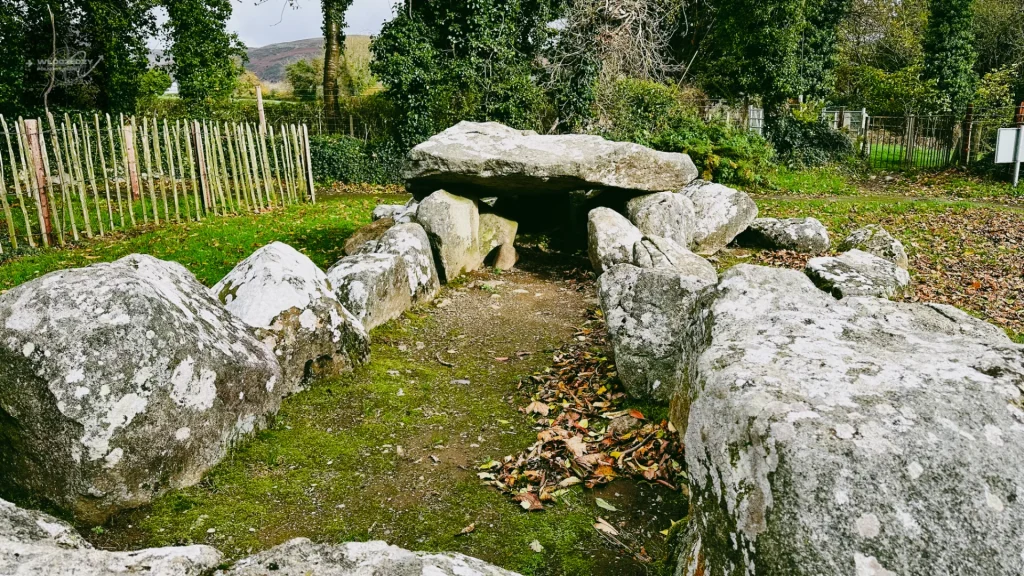
“Some places offer views. Others leave you wondering whether you crossed into another dimension.”
Vagabonds of the North
By this stage in the expedition, your sense of chronological proportion is already collapsing nicely.
So naturally, we proceed to yet another prehistoric structure.
Proleek Wedge Tomb.
Estimated age?
Several thousand years old.
As in:
Older than Christianity,
older than Rome,
older than most things people casually describe as “ancient.”
And, like all proper megalithic sites, it comes with the classic package:
- uncertainty,
- theories,
- ritual speculation,
- archaeological seriousness,
- and visitors quietly pretending they understand structural engineering.
Because honestly…
How?
No cranes.
No machinery.
No spreadsheets.
No contractor shouting at subcontractors.
And yet…
Here it is.
Still standing.
Looking deeply unimpressed by modern civilisation.
The universal megalith question
Nobody ever stands in front of these things and thinks:
“Ah yes, practical burial architecture.”
No.
The actual thought is always:
“HOW?”
Which is fair.
Because prehistoric people clearly had either:
A) astonishing technical skill
or
B) access to very motivated giants.
And at this point in the trip, honestly, both options remain open.
🤣
Stop 13: Proleek Dolmen – final boss
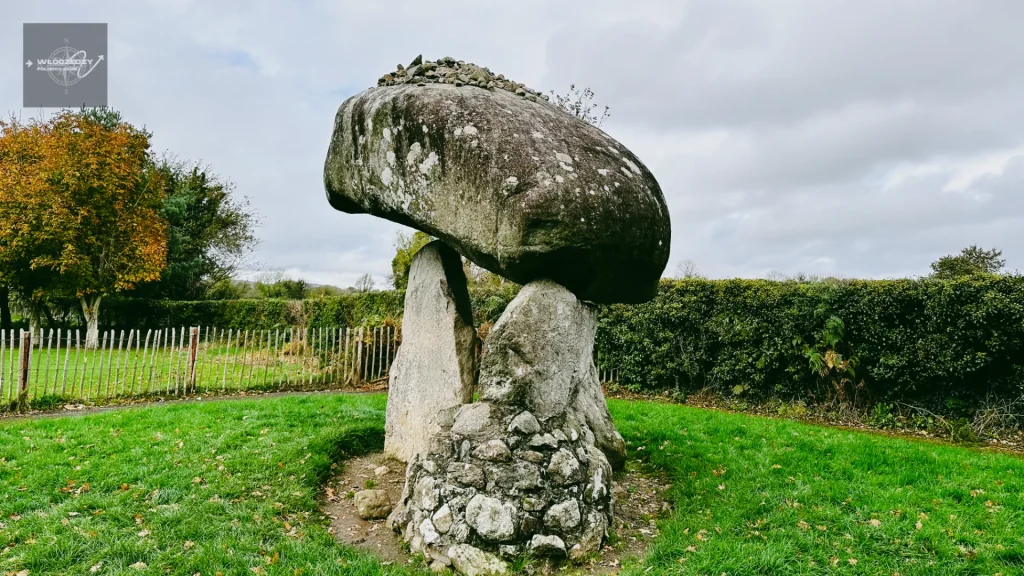
And then…
You arrive.
At the end.
At the monument that somehow makes everything else feel like a warm-up.
Proleek Dolmen.
And let’s be honest.
This thing does not look normal.
It looks like physics briefly took the afternoon off.
A colossal capstone balanced across upright stones in a way that immediately triggers two reactions:
- awe
- mild distrust
Because no human brain fully accepts that this should remain standing.
And yet…
It does.
For thousands of years.
Mocking our flat-pack furniture struggles.
🤣🔥
The local legend
Naturally, a monument like this comes with folklore.
According to tradition, if you throw a small stone onto the top of the dolmen and it stays there…
Good luck follows.
Which is precisely the sort of challenge guaranteed to awaken the competitive toddler hidden inside every adult traveler.
Our own field report 🤣
But frankly?
We had our own theory.
Because after everything that had already happened…
The obvious conclusion was:
This wasn’t just a monument.
This was a portal.
Which leads us to the official Vagabonds field note:
Piotr and I walked through the portal to the Otherworld. There and back. To this day, we still can’t say with complete certainty that we returned on the correct side.
🤣☘️🔥
If future articles become increasingly suspicious…
You’ll know why.
Final verdict — is the Cooley Peninsula worth it?wka
If you’re looking for:
A quiet café stop,
one respectable castle,
a neat little stroll,
and a predictable drive home…
This may not be your route.
But if your ideal day includes:
✔ prehistoric tombs
✔ mysterious stone circles
✔ giant legends
✔ Medieval Carlingford
✔ Norman castles
✔ Fish & chips and Guinness
✔ mythological war cattle
✔ forgotten railway echoes
✔ church ruins
✔ maritime tragedy
✔ Possible Templar intrigue
✔ Megalithic monuments older than most civilisation
…then yes.
Absolutely yes.
Final thoughts
This was supposed to be a simple day trip.
Naturally.
Instead, it became:
- a mythological expedition,
- a history lesson,
- a paranormal field exercise,
- and an increasingly strong argument for Guinness-based recovery strategies.
And honestly?
10/10. Would risk dimensional instability again.
🤣🔥☘️
Lorem ipsum dolor sit amet, consectetur adipiscing elit. Ut elit tellus, luctus nec ullamcorper mattis, pulvinar dapibus leo.Lorem ipsum dolor sit amet consectetur adipiscing elit dolor
Vagabonds of the North