Volhynia 1943—The Road to Tragedy (Volhynian Massacres)
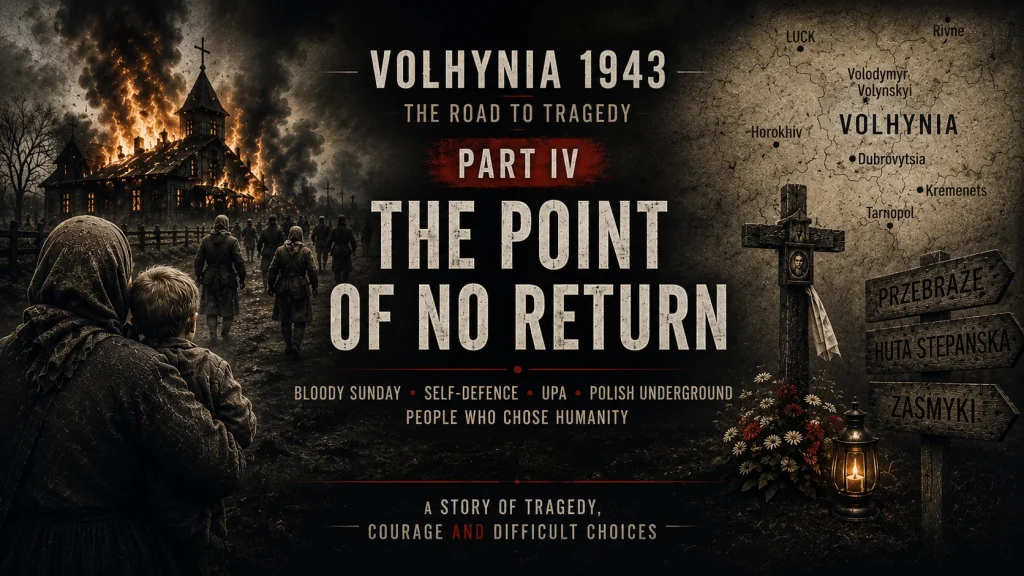
Part IV: The Point of No Return
Throughout the first three parts of this series, we followed the gradual transformation of Volhynia. We explored the collapse of empires, the unfulfilled hopes that followed the Polish–Soviet War, the rise of Ukrainian nationalism, and the devastating impact of two occupations that shattered the existing order after 1939.
By the summer of 1943, that long process had reached a critical point.
For thousands of people living in Volhynia, this was no longer a political dispute, a struggle over borders, or a debate about the future shape of Eastern Europe.
It had become a fight for survival.
The events that unfolded in July 1943 remain one of the most painful chapters in the history of Polish-Ukrainian relations. For decades they have been the subject of political disputes, competing interpretations, silence, and intense emotions.
Yet behind every historical debate stand ordinary people – farmers, teachers, priests, children, and entire families who found themselves trapped in the middle of war, occupation, and growing ethnic conflict.
The purpose of this article is not to catalogue the most horrific details of violence. Numerous publications have already done that.
Instead, we seek to answer a different question:
How did Volhynia reach the point where neighbours turned against one another, and how did an entire region descend into one of the greatest civilian tragedies of the Second World War in Eastern Europe?
The Last Attempt at Dialogue
In early July 1943, the situation in Volhynia was already deteriorating rapidly. Reports of attacks on Polish civilians were becoming increasingly frequent, and the Polish underground feared that an even larger wave of violence was approaching.
Despite this, some people still believed that dialogue remained possible.
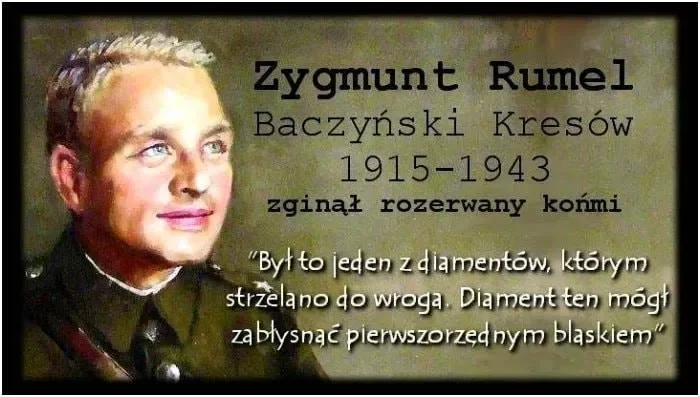
Representatives of the Polish underground attempted to establish contact with the leadership of the Ukrainian Insurgent Army (UPA). The delegation included Zygmunt Rumel, Lieutenant Krzysztof Markiewicz, and Witold Dobrowolski.
Historians continue to debate the precise purpose of the mission. Some argue that it was intended to explore cooperation against the occupying powers. Others believe its primary objective was to halt the growing violence directed against civilians.
Regardless of the details, the mission represented an effort to seek communication at a moment when events were rapidly moving beyond anyone’s control.
Zygmunt Rumel was a particularly symbolic choice. Born in Volhynia, he spoke Ukrainian fluently and believed that Poles and Ukrainians could find a path toward mutual understanding despite their political differences.
The delegation reached its destination in July 1943.
The talks never took placered and later killed by UPA forces. For many Poles in Volhynia, their deaths became a symbol of the collapse of any remaining hope for a peaceful settlement.
Only a few days later, events would unfold on a scale few could have imagined
July 11, 1943 (Bloody Sunday)
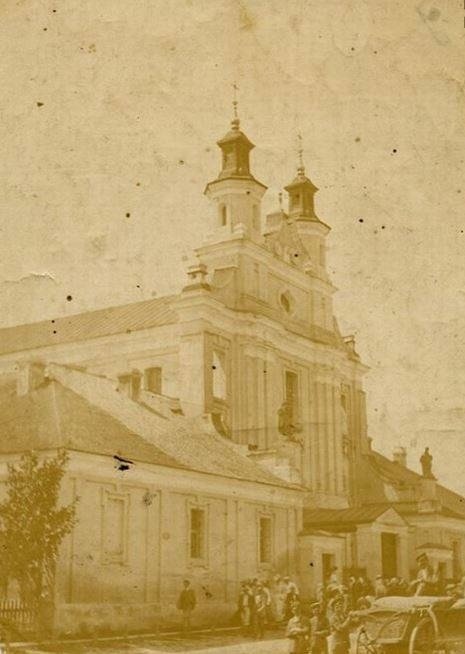
The morning of July 11 began like many other summer Sundays in Volhynia.
Harvest season was underway. Some people prepared for work in the fields. Others attended Sunday Mass in churches and chapels scattered across the countryside.
That day would become known as Bloody Sunday.
It marked the largest and most coordinated wave of attacks against Polish civilians during the Volhynian massacres.
UPA units, supported in some areas by elements of the local population, launched attacks across dozens of settlements. Historians generally identify at least ninety-nine localities that were attacked on that single day, although the exact number varies depending on methodology and geographic scope.
The targets were overwhelmingly civilians.
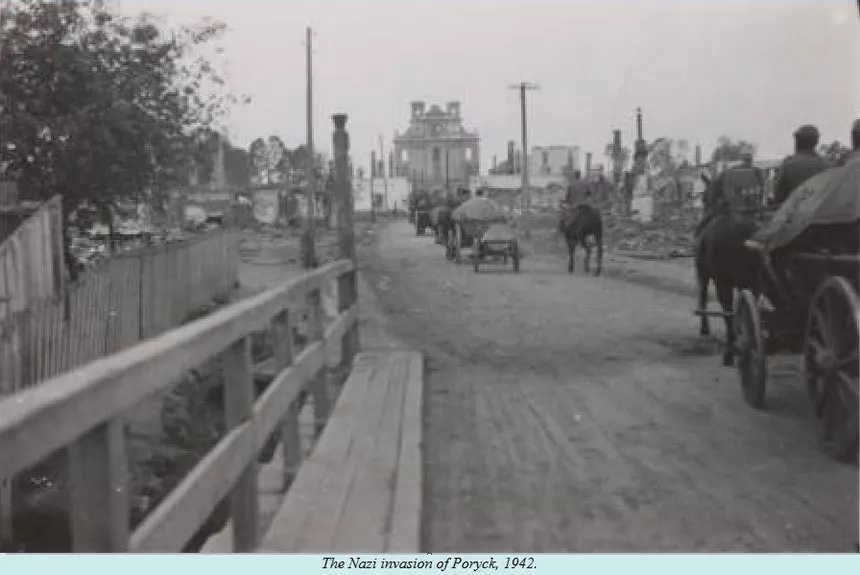
In many places, attacks were timed to coincide with religious services, when large numbers of people had gathered in churches. Places such as Kisielin, Poryck, Chrynów, and Zabłoćce became some of the most widely known examples, but similar events unfolded simultaneously across much of the region.
For this reason, July 11, 1943 is widely regarded as the culmination of the violence in Volhynia.
Not because violence began that day.
But because it reached a scale never seen before.
The Scale of the Violence and Its Objectives
Historians continue to debate many aspects of the events in Volhynia, including the exact number of victims, the degree of central planning, and the responsibilities of individual commanders.
However, there is broad agreement on one point.
The attacks were not a series of isolated local disputes.
They formed part of a larger campaign directed primarily against the Polish civilian population of Volhynia.
Documents produced by Ukrainian nationalist organizations and later historical research suggest that many leaders within the nationalist movement sought to establish conditions for a future Ukrainian state by removing competing national communities from territories claimed as Ukrainian.
For ordinary civilians caught in the conflict, such strategic objectives meant little.
What mattered was survival.
As reports of attacks spread, entire communities began to flee. Some sought refuge in larger towns under German control. Others moved from village to village in search of safety.
Many had nowhere to go.
Islands of Resistance
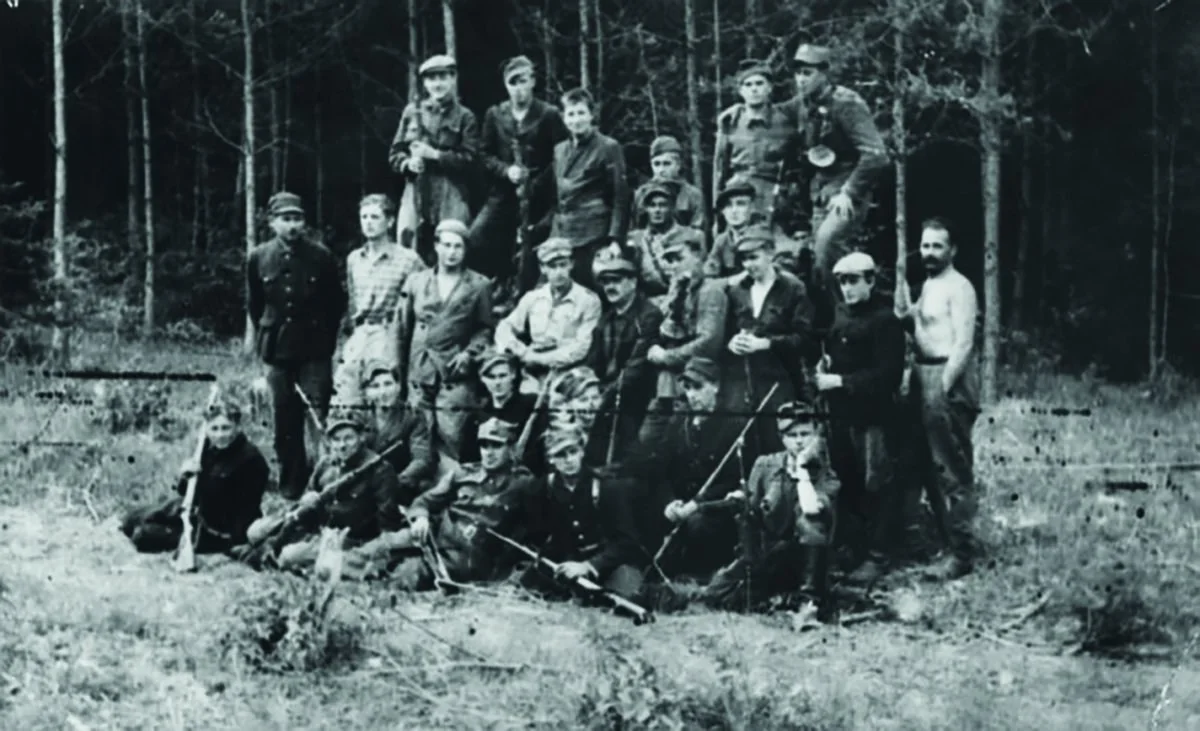
In response, local self-defence centres began to emerge.
The most famous was Przebraże, which became the largest Polish self-defence stronghold in Volhynia. Thousands of refugees found shelter there as fortifications were built, patrols organised, and scarce supplies gathered.
Similar efforts were established in places such as Huta Stepańska and Zasmyki.
These communities were not regular military formations capable of large-scale operations.
Their primary purpose was simple: to protect civilians.
In many cases, they succeeded.
The history of Volhynia is therefore not only a story of victims.
It is also a story of people who, amid the collapse of institutions and order, chose to defend their families, neighbours, and communities.
Those Who Chose Humanity
It is tempting to view the events of Volhynia through a purely black-and-white lens.
Reality was more complex.
Alongside those who participated in violence were others who tried to prevent it.
Many survivor testimonies describe Ukrainian neighbours who warned Polish families about planned attacks. Some helped people escape. Others provided shelter, food, or guidance toward safer locations.
These stories do not diminish the scale of the tragedy.
But they remind us that even during the darkest moments of history, individuals retain the ability to make moral choices.
Some Ukrainians risked not only their own lives but also the safety of their families in order to help others.
Several paid the ultimate price.
Their stories remain an important part of the historical record and a reminder that humanity can survive even amid violence and fear.
The Response of the Polish Underground
For the Polish Home Army (Armia Krajowa) and the Peasant Battalions (Bataliony Chłopskie), the events of 1943 required a shift in priorities.
Increasingly, their efforts focused on protecting civilians.
They organised self-defence units, escorted refugees, gathered intelligence, and attempted to secure vulnerable areas.
As the conflict intensified, retaliatory operations also occurred against Ukrainian villages believed to be supporting armed formations responsible for attacks on civilians.
This remains one of the most painful and controversial aspects of the period.
Although the scale and character of these actions differed from the anti-Polish campaign carried out by the UPA, civilians also suffered in retaliatory violence.
The history of Volhynia cannot be understood solely through the question of who started the cycle of violence.
It must also address how difficult it became to stop once that cycle had begun.
Volhynia Was Not the End
It had not.
The violence did not stop at the borders of Volhynia.
In the months that followed, anti-Polish operations spread into Eastern Galicia, including the regions of Lwów, Tarnopol, and Stanisławów.
At the same time, the wider military situation was changing rapidly. The Red Army was advancing westward. German forces were retreating. Every major actor in the region was preparing for a new phase of the war.
For ordinary civilians, however, these strategic developments translated into continued uncertainty, displacement, and loss.
New victims appeared.
New refugees fled their homes.
New communities were drawn into the conflict.
Volhynia was not the end of the story.
It was the beginning of a wider chapter that would soon affect much of Eastern Europe.
In the next part of this series, we will examine the years 1944–1947, the expansion of violence beyond Volhynia, retaliatory actions, the return of Soviet power, and the long-term consequences for both Poles and Ukrainians.
Because wars eventually end.
Their memory often does not.
Discover with us: