History of Ireland Without the Headache – Part II

Ulster a Irlandia Północna

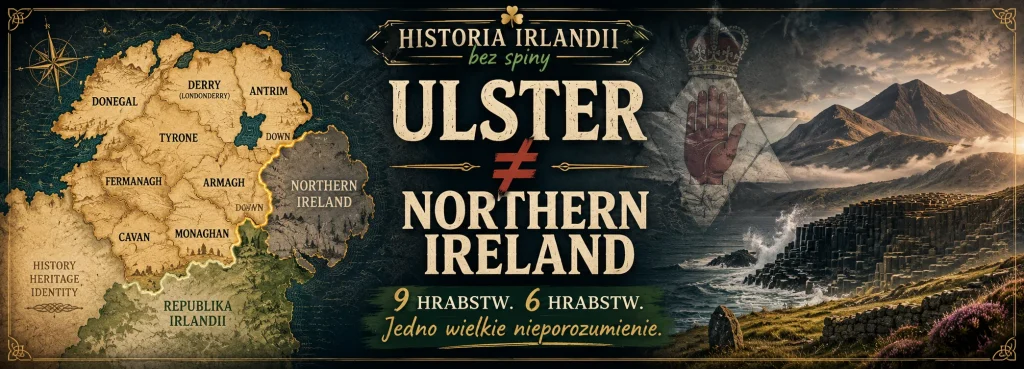
Ulster Is Not Northern Ireland

If you’ve spent more than five minutes talking about Ireland, chances are you’ve heard someone say:

“Ulster and Northern Ireland are basically the same thing.”

Not quite.

In fact, it’s one of the most common misconceptions about the island. Tourists say it. People in Britain say it. Occasionally, even Irish people say it.

Today we’re going to clear up the confusion once and for all. And while we’re at it, we’ll answer another question that often leaves visitors scratching their heads:

Why doesn’t Northern Ireland have its own official flag, anthem or coat of arms?

Grab a coffee. This is where geography, history and politics collide—without anyone throwing a chair.

Ulster, Historia Irlandii

First Things First: What Is Ulster?

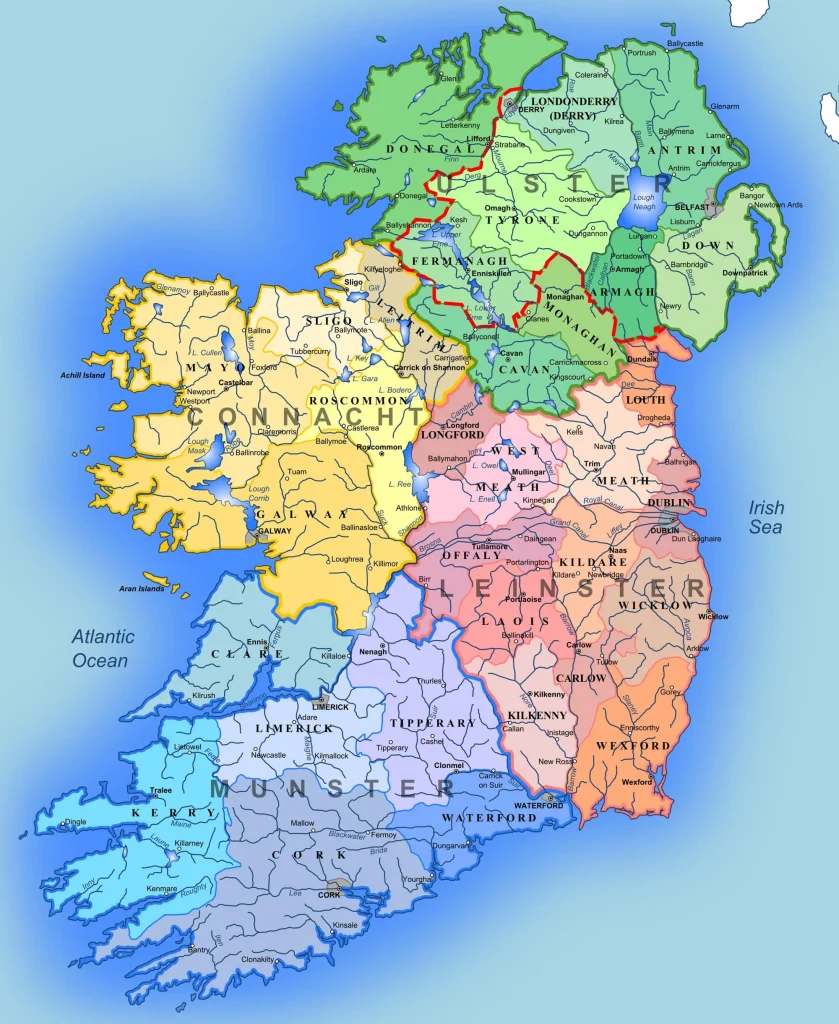
Ireland has traditionally been divided into four provinces:

  • Leinster
  • Munster
  • Connacht
  • Ulster

Ulster is the northern province of Ireland.

Simple enough.

But here’s the important part:

Ulster contains nine counties.

Those counties are:

  • Antrim
  • Armagh
  • Down
  • Fermanagh
  • Tyrone
  • Londonderry (or Derry, depending on who you’re talking to)
  • Donegal
  • Monaghan
  • Cavan

Nine counties.

Keep that number in mind.

Because Northern Ireland only has six.

So Where Did Northern Ireland Come From?

In 1921, following the Irish War of Independence, the island was partitioned.

Most of Ireland eventually became what we now know as the Republic of Ireland.

Six counties in the north-east remained within the United Kingdom and became Northern Ireland.

Why six?

Because those six counties had a substantial unionist majority at the time.

The other three Ulster counties—Donegal, Monaghan and Cavan—became part of the new Irish state.

Which means:

All of Northern Ireland is in Ulster, but not all of Ulster is in Northern Ireland.

It’s a small distinction that changes everything.

Why Do So Many People Use the Word "Ulster"?

Because the name is older than Northern Ireland itself.

For many unionists, “Ulster” feels historic, cultural and regional. It connects them to centuries of local identity.

That’s why you’ll hear names such as:

  • Ulster Rugby
  • Ulster Unionist Party
  • Ulster Scots

The word carries a sense of heritage that goes far beyond modern political borders.

Nationalists and republicans, meanwhile, often prefer terms such as:

“The North”

or

“The North of Ireland.”

In Northern Ireland, even geography can become politics.

Why Doesn't Northern Ireland Have an Official Flag?

Now things get interesting.

Most countries have a flag.

Most regions have a flag.

Northern Ireland officially doesn’t.

The obvious question is:

Why?

Because agreeing on a flag would immediately raise another question:

Whose flag?

And that is where the trouble begins.

The Former Flag: The Ulster Banner
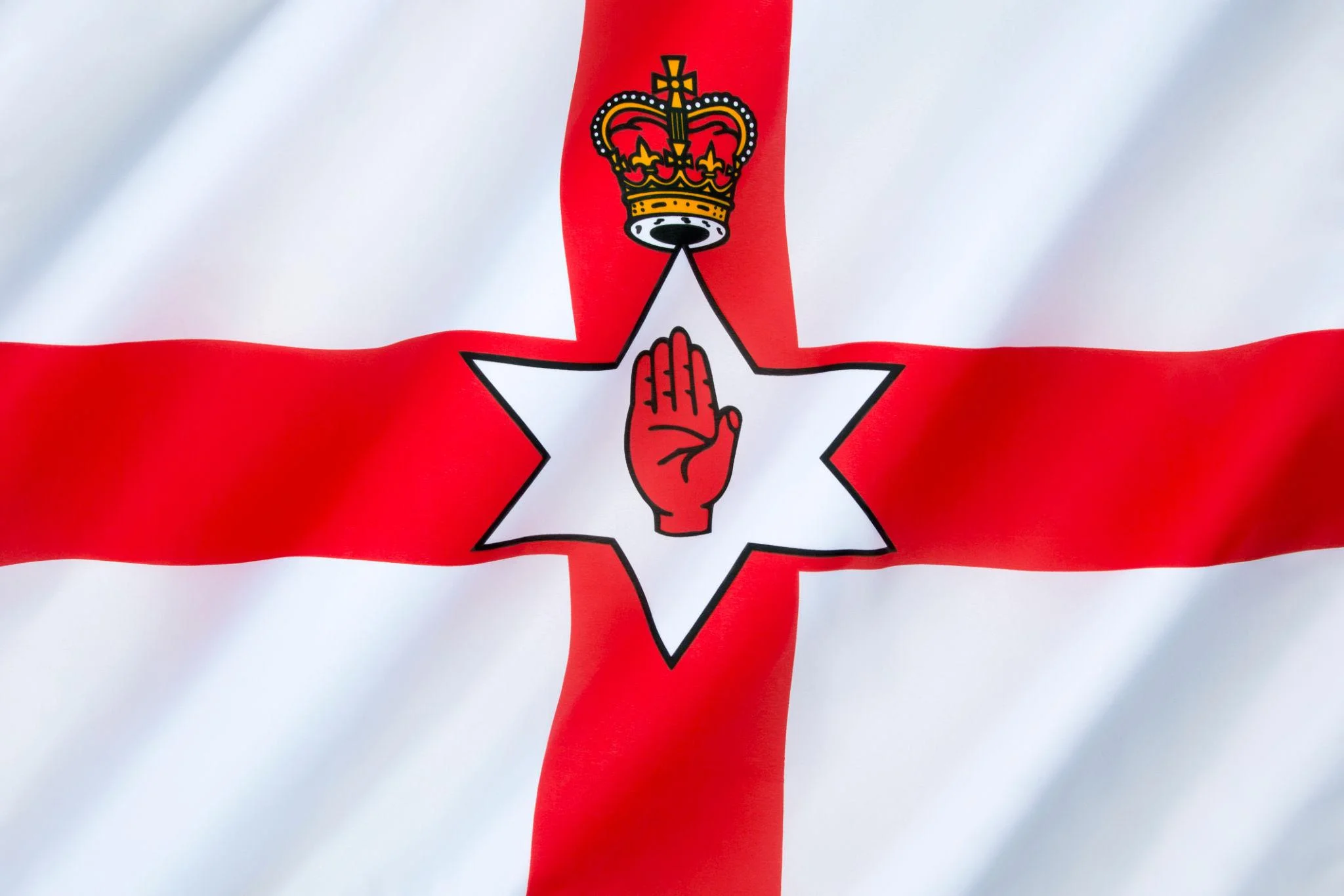
Ulster Banner

Between 1953 and 1973, Northern Ireland used a flag known as the Ulster Banner.

It featured:

  • the Red Hand of Ulster
  • a six-pointed star
  • a crown
  • the red cross of Saint George

When Northern Ireland’s devolved parliament was abolished in 1973, the flag lost its official status.

It was never replaced.

As a result:

Northern Ireland currently has no official flag of its own.

So What Is Official Today?

As part of the United Kingdom, Northern Ireland officially uses the Union Flag, better known around the world as the Union Jack.

Government departments, courts and state institutions use the UK flag rather than a separate Northern Irish one.

What About an Anthem?

Officially, Northern Ireland falls under the United Kingdom.

That means the official state anthem is:

God Save the King

However, not everyone in Northern Ireland identifies with that tradition.

Sport soon found itself facing a problem.

How do you represent everyone when not everyone agrees on the symbols?

The answer was compromise.

In several sporting events, organizers use Londonderry Air, the famous melody better known as Danny Boy.

No lyrics.

No politics.

Just music.

At least that’s the theory.


Sport and the Art of Diplomatic Acrobatics

Northern Irish sport has become an expert in navigating symbolic minefields.

Commonwealth Games

Northern Ireland usually competes under:

  • the Ulster Banner
  • Londonderry Air

Football

The Northern Ireland football team traditionally uses:

  • the Ulster Banner
  • God Save the King

Rugby

This is where things get really Irish.

The Irish rugby team represents the entire island of Ireland.

Players from Belfast and Cork stand side by side in the same squad.

To avoid choosing between competing traditions, the team uses:

  • a special rugby flag
  • Ireland’s Call

A purpose-built anthem designed to unite supporters from both sides of the border.

Whether it succeeds depends entirely on who you ask.

Does Northern Ireland Have a Coat of Arms?

Not officially.

The former government of Northern Ireland had its own coat of arms, but that disappeared with the old parliament.

Today, no official replacement exists.

Instead, one symbol appears almost everywhere.

The Red Hand of Ulster
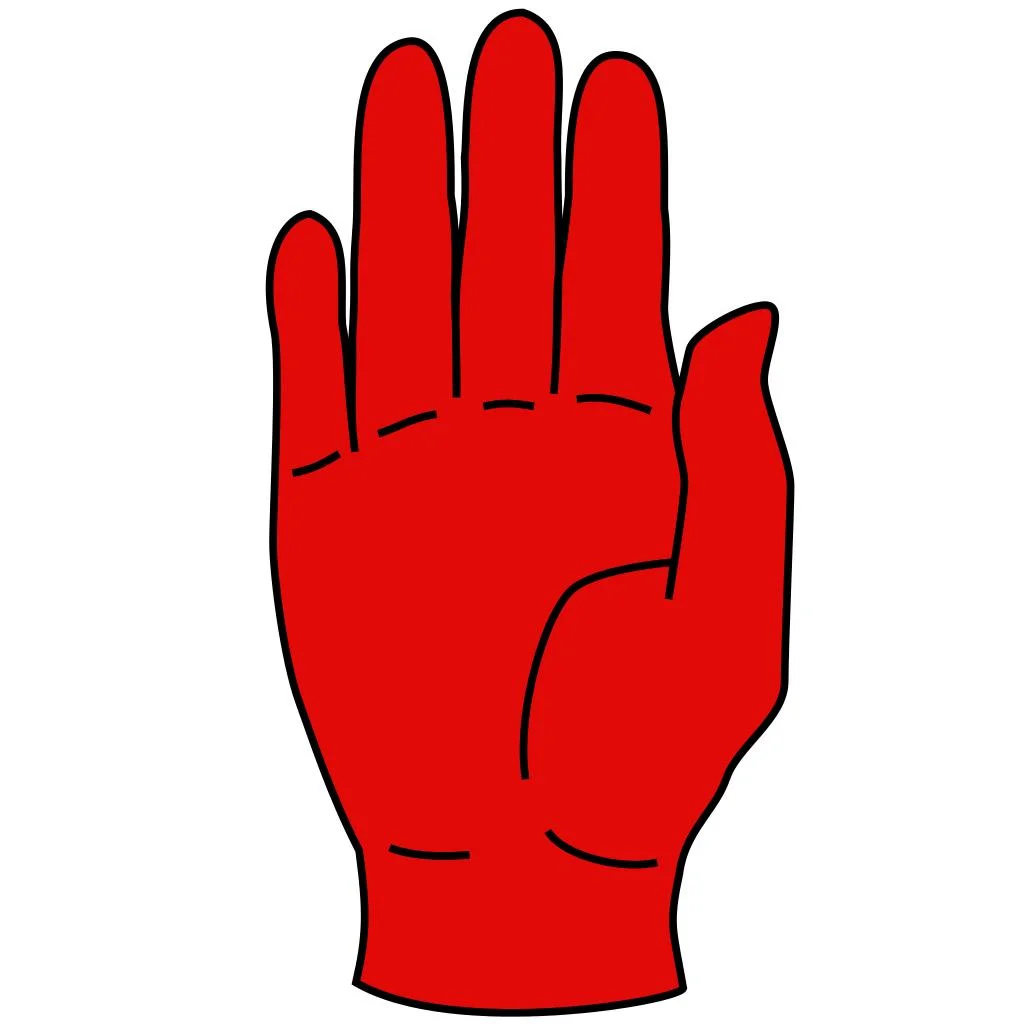
Red Hand of Ulster
Red Hand of Ulster

The Red Hand of Ulster is one of the oldest and most recognisable symbols on the island.

According to legend, a group of warriors raced towards a shore.

The first person to touch land would claim it.

One competitor realised he was losing.

So he cut off his own hand and threw it onto the beach.

Technically, his hand arrived first.

And that, apparently, was good enough.

Irish legends rarely do things the easy way.
Final Thoughts

If you remember only three things from this article, make them these:

✔ Ulster has nine counties.

✔ Northern Ireland has six counties.

✔ Northern Ireland has no official flag, anthem or coat of arms because finding symbols acceptable to both major communities has proved harder than drawing a border on a map.

So the next time somebody tells you:

“Ulster and Northern Ireland are the same thing.”

You can politely reply:

“Not exactly. You’re missing three counties and about a century of history.”

Discover with us:

Vagabonds of the North
Privacy Overview

This website uses cookies so that we can provide you with the best user experience possible. Cookie information is stored in your browser and performs functions such as recognising you when you return to our website and helping our team to understand which sections of the website you find most interesting and useful.