
The Holy Grail, Lost Treasure and Conspiracy Theories
Where Did the Wealth of the Most Powerful Order in Medieval Europe Disappear?
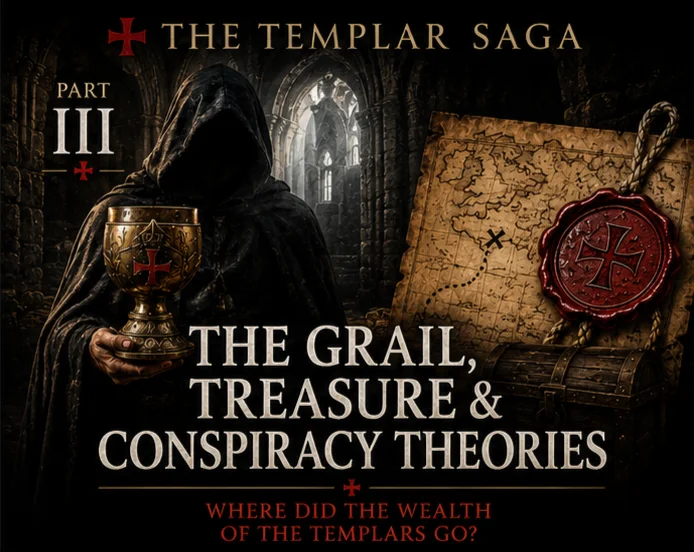
History & Stories
"When a man disappears, a memory remains. When a treasure disappears, a legend is born."
Vagabonds of the North
When the Dust Settled
The Order of the Temple officially ceased to exist in 1312.
Two years later, in 1314, Grand Master Jacques de Molay was burned at the stake in Paris.
King Philip IV had achieved his goal.
The Pope had closed the case.
Europe moved on.
Or at least it appeared to.
Because before long, uncomfortable questions began to emerge.
If the Templars had been so wealthy…
where was their treasure?
The Problem with the Treasure
According to contemporary records, the Templars owned:
- vast estates,
- hundreds of commanderies,
- warehouses,
- ships,
- financial assets,
- archives,
- and valuable relics.
When royal officials moved in to seize Templar property, many expected unimaginable riches.
Instead, they found far less than anticipated.
Much less.
And that is where one of history’s greatest mysteries begins.
Did the Templars Know?
The arrests of Friday the 13th, 1307, were planned in secret.
Officially, only a handful of people knew what was coming.
Yet some historians have noted something curious.
In the weeks leading up to the arrests, certain assets appear to have vanished.
Records become vague.
Inventories become incomplete.
Money seems to disappear.
No one knows exactly what happened.
But the possibility remains that some members of the Order received a warning.
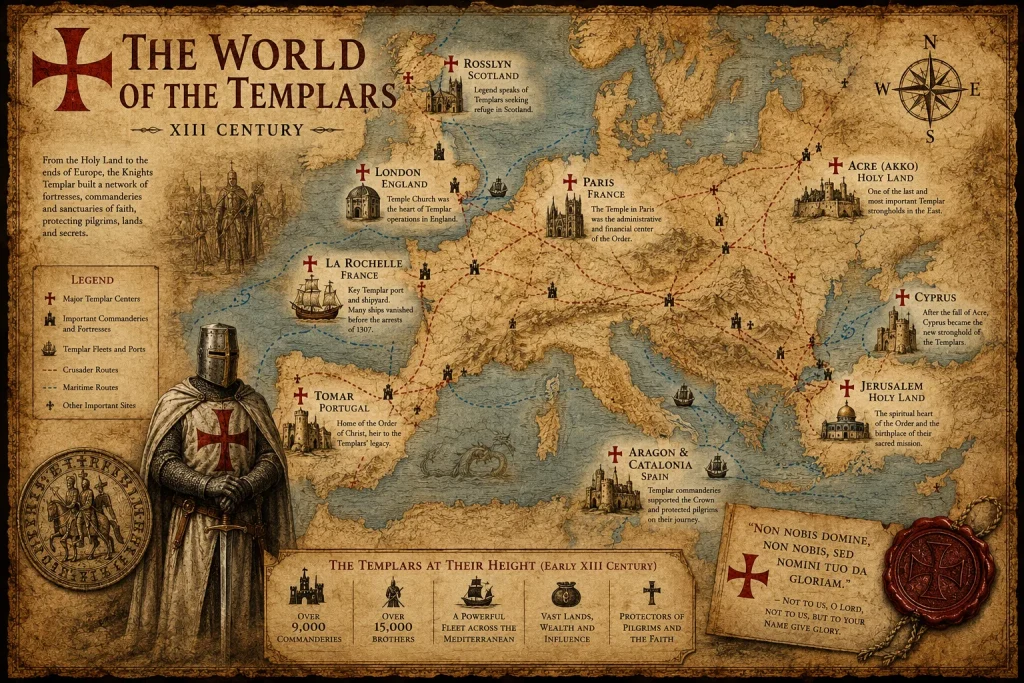
The Phantom Fleet of La Rochelle
This is where history starts to resemble an adventure novel.
The Templars maintained an important port facility at La Rochelle on the Atlantic coast of France.
According to later accounts, several ships left the harbour shortly before the arrests began.
The problem?
Nobody knows where they went.
No passenger lists survive.
No confirmed destination exists.
No reliable documents explain their journey.
Only rumours.
And rumours tend to survive much longer than facts.
The Holy Grail
Sooner or later, every discussion about the Templars reaches the same destination.
The Holy Grail.
The legendary cup associated with the Last Supper.
Depending on the story, it grants wisdom, divine knowledge, immortality or spiritual enlightenment.
Historically speaking, there is no evidence that the Templars ever possessed such a relic.
None.
But history and legend rarely travel the same road.
A handful of medieval tales were enough.
The rest was supplied by human imagination.
Scotland and the Great Escape
Scotland occupies a special place in Templar folklore.
At the time of the Order’s suppression, Scotland was engaged in conflict with England and largely beyond French influence.
For many storytellers, it became the perfect refuge.
According to legend, escaped Templars crossed the sea carrying treasure, relics and secret knowledge.
Historians remain cautious.
Legends remain enthusiastic.
The debate continues.
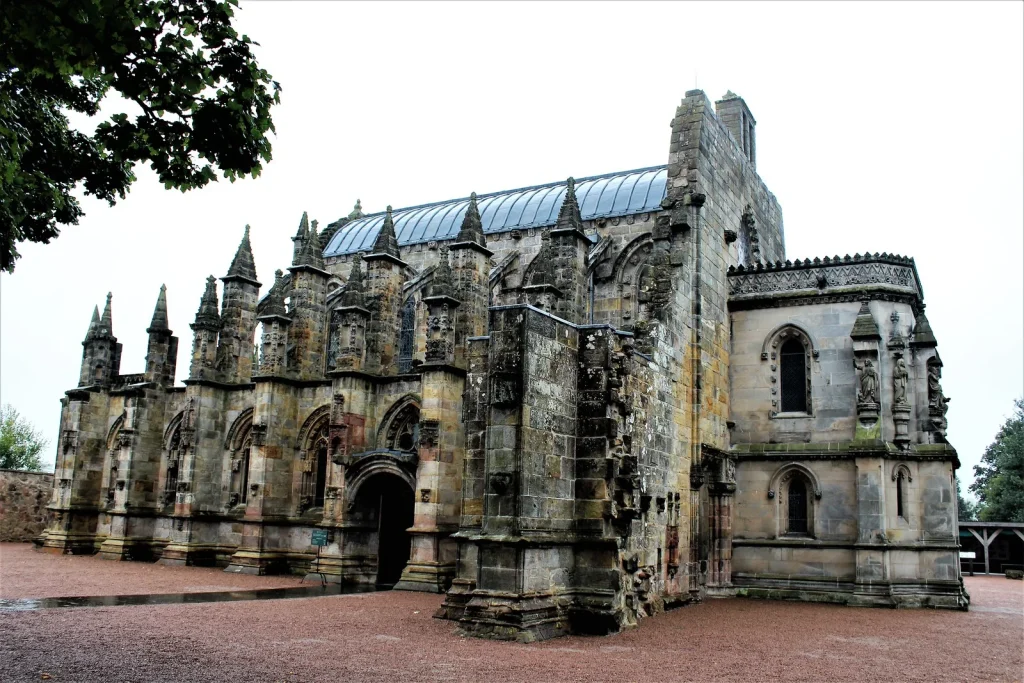
Rosslyn Chapel
Few places have captured the imagination of modern visitors more than
Rosslyn Chapel
A relatively small chapel.
An extraordinary amount of symbolism.
Endless interpretations.
Some believe it contains clues left behind by the Templars.
Others see connections to the Holy Grail.
Many historians suggest a far simpler explanation.
Yet every year thousands of visitors arrive hoping that the stones themselves may reveal a secret.
From History to Popular Culture
The Templars experienced an unexpected resurrection centuries after their downfall.
No longer warriors.
No longer bankers.
No longer crusaders.
Instead, they became legends.
Novelists embraced them.
Filmmakers adopted them.
Game developers reinvented them.
Conspiracy theorists elevated them.
From classic adventure stories to modern thrillers, the Templars became one of the most recognisable symbols of mystery in Western culture.
The Real Question
Perhaps the most fascinating question is not:
“Did the Templars find the Holy Grail?”
Or:
“Did they hide their treasure?”
The real question may be:
“Why do we still want to believe they did?”
Because a world without mysteries would be a far less interesting place.
The Vagabonds’ Perspective
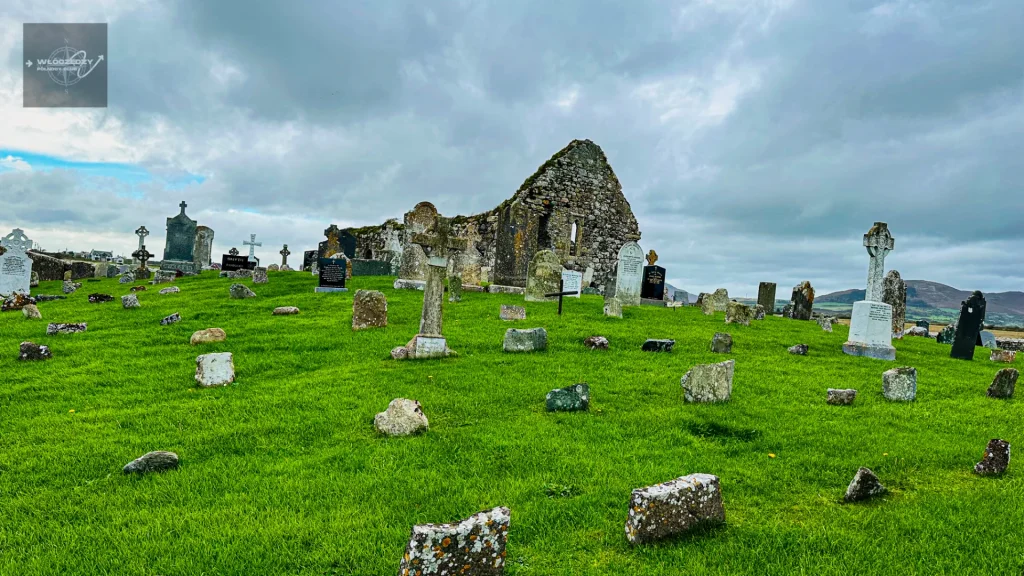
When we stand among forgotten ruins like Kilwirra Church Ruins, surrounded by weathered gravestones and centuries-old stonework, we are not searching for treasure.
We are not hunting the Grail.
We are not looking for secret tunnels.
We are asking the same question travellers have asked for generations:
What really happened here?
That curiosity is the true reason why the legend of the Templars refuses to die.

Conclusion
Kings can destroy an order.
Popes can close investigations.
Historians can analyse documents.
But none of them can defeat imagination.
Because where facts end…
legends begin.
"The greatest treasure of the Templars may never have been gold. It may have been mystery itself."
Vagabonds of the North