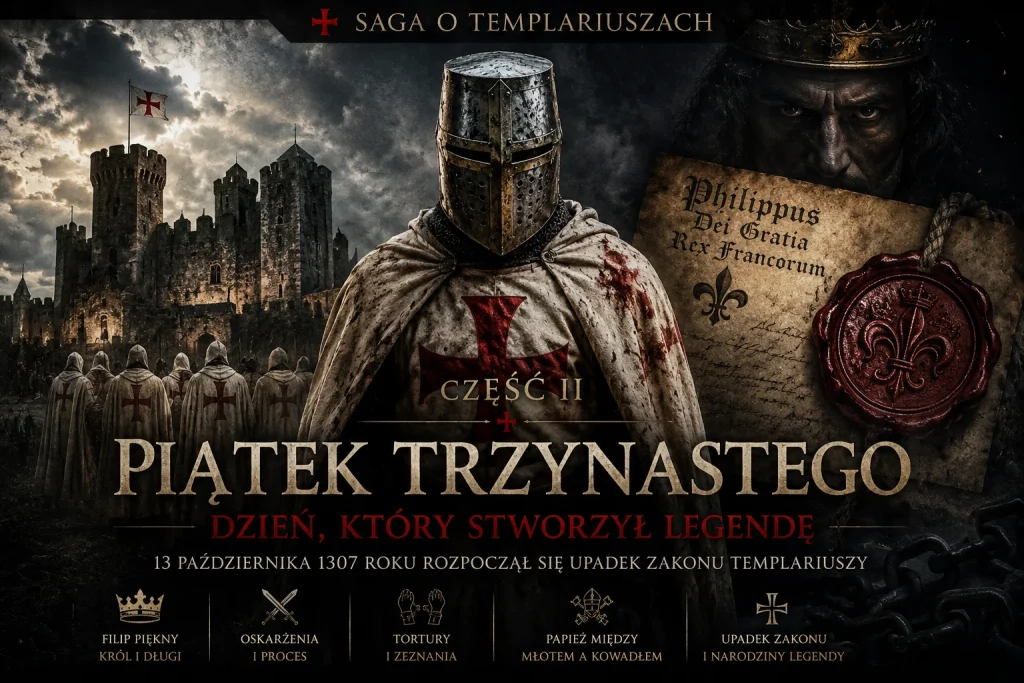
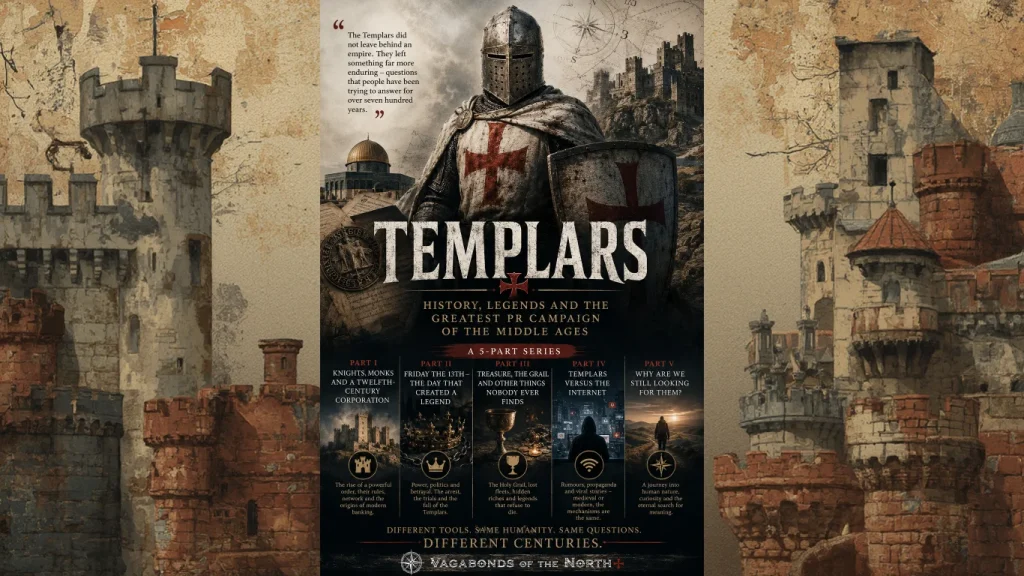
Friday the 13th – The Day That Created the Templar Legend
History & Stories
“Most empires do not fall to an enemy’s sword. They fall beneath debts they can no longer repay.”
Vagabonds of the North
Friday, 13 October 1307
For many people, the date already sounds familiar.
Friday the 13th.
A day of bad luck.
A cursed day.
A date still avoided by some people around the world.
The problem is that for most of European history, nobody considered Friday the 13th particularly unlucky.
That association appeared centuries later.
Yet the story begins here.
In France.
On Friday.
13 October 1307.
When a King Has a Problem
Let us meet the central figure of this chapter.
Not a Templar.
A king.
His name was Philip IV of France, better known as Philip the Fair.
History remembers him as an effective ruler.
The Vagabonds of the North might describe him differently:
A man with expensive ambitions and a chronic shortage of money.
😄
Philip fought wars.
Expanded royal administration.
Strengthened French influence across Europe.
All of this required enormous amounts of money.
And money was always in short supply.
The Greatest Debtor in Europe
This is where the story becomes interesting.
Among the creditors of the French Crown were the Knights Templar.
The same organization we met in Part I.
An Order that had spent nearly two centuries building wealth, influence, and an extraordinary reputation.
They possessed lands.
Castles.
Ships.
Commanderies.
And financial resources that many kings could only dream of controlling.
They were not a kingdom.
But they held power that rivaled kingdoms.
When Trust Becomes a Threat
For many years, the Templars had been useful.
They protected pilgrims.
Managed estates.
Financed ventures.
Provided stability.
But success comes with a hidden danger.
It attracts attention.
And often envy.
Imagine being King of France.
You rule one of the most powerful realms in Europe.
Yet beside you stands an organisation:
- wealthier than many nobles,
- independent of local rulers,
- answerable directly to the Pope.
That is not merely an ally.
It is a potential problem.
The Plan
On 13 October 1307, royal officials across France moved into action.
The operation had been prepared in secrecy for months.
Arrests took place simultaneously throughout the kingdom.
Hundreds of Templars were taken into custody.
Caught completely by surprise.
After nearly two centuries of influence, the Order found itself facing an enemy it had never expected.
A king.
The Charges
The accusations were sensational.
The Templars were charged with:
- heresy,
- blasphemy,
- spitting on the Cross,
- secret rituals,
- worshipping mysterious idols.
It sounded shocking.
That was precisely the point.
The accusations were aimed not only at judges.
They were aimed at public opinion.
Medieval Public Relations
Today we would call it a media campaign.
In the fourteenth century, the tools were different.
Sermons.
Rumours.
Official letters.
Royal decrees.
But the mechanism was identical.
If you wish to destroy an organization, the first step is often to destroy trust in it.
That lesson remains remarkably modern.
Torture and Confessions
Many Templars confessed.
For centuries, those confessions were presented as proof of guilt.
The problem is that many were obtained under torture.
History repeatedly demonstrates that human beings will admit to almost anything if subjected to enough pain.
Such confessions reveal little about truth.
They reveal much about suffering.
A Pope Between Two Powers
Pope Clement V soon found himself trapped between two forces.
On one side stood the Templars.
On the other stood one of Europe’s most powerful monarchs.
Historians still debate his role.
Did he believe the accusations?
Was he acting under pressure?
Did he attempt to save the Order?
The answers remain uncertain.
The Death of an Order
In 1312, the Knights Templar were officially dissolved.
Not by an invading army.
Not on a battlefield.
Not during a crusade.
But through political decisions.
After nearly two centuries, one of medieval Europe’s most influential organisations ceased to exist.
At least officially.
And Then the Legend Began
Ironically, the destruction of the Order made it immortal.
Had the Templars quietly faded into history, they would likely be little more than a footnote today.
Instead, their story contained everything a legend requires:
- mystery,
- wealth,
- politics,
- accusations,
- trials,
- a dramatic ending.
People have always loved such stories.
The Vagabonds' Perspective
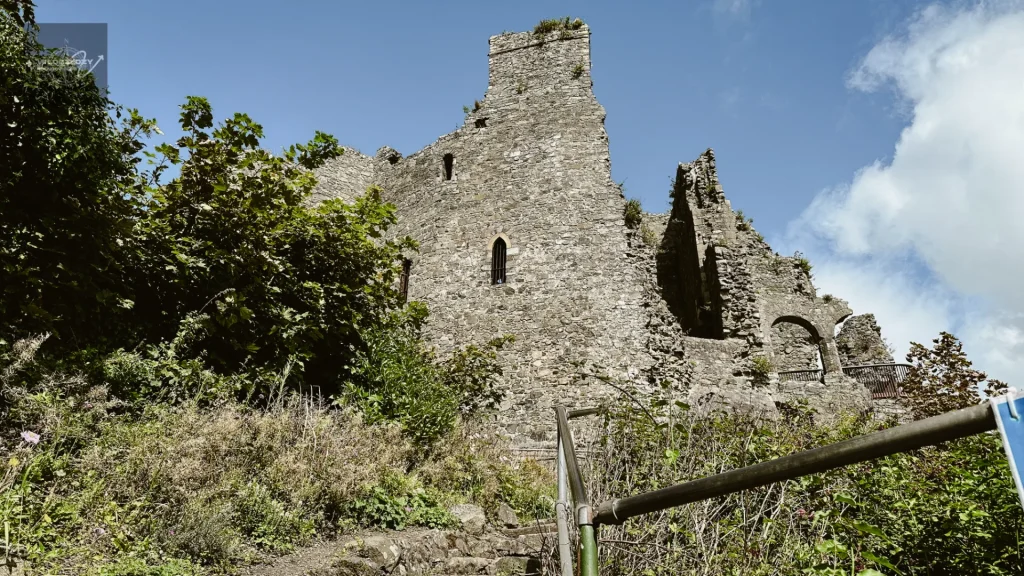
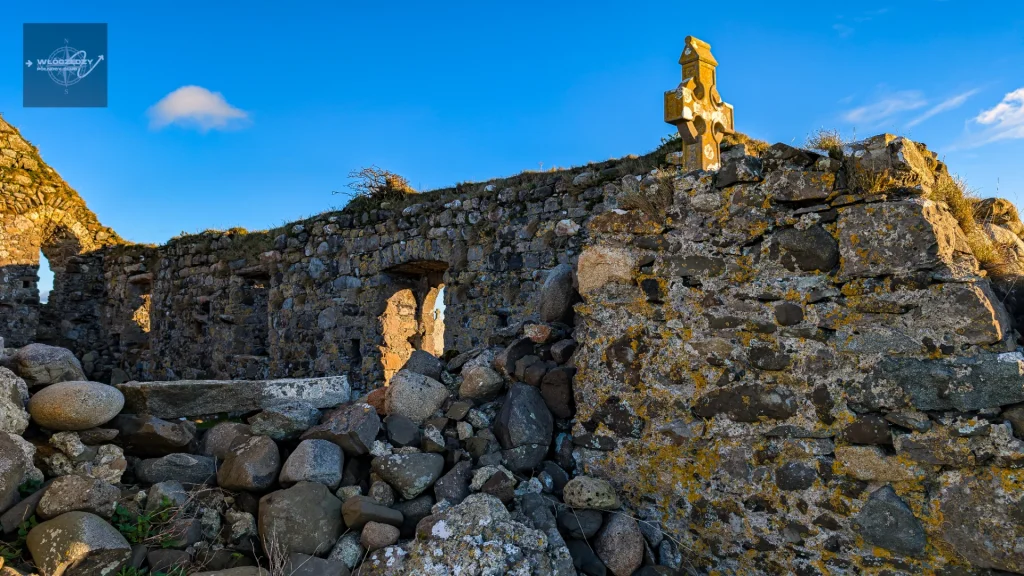
When standing among ancient ruins like Kilwirra Church on the Cooley Peninsula, it is tempting to imagine history as a simple tale of winners and losers.
Reality is rarely so straightforward.
Sometimes the powerful fall.
Sometimes organisations richer than kings disappear.
Sometimes all it takes is a ruler with enough debt and enough influence.
The story of the Templars reminds us of something deeply modern:
Power is not the same as security.
Conclusion
Were the Templars guilty?
Historians continue to debate individual details.
Yet increasing evidence suggests that many accusations formed part of a political campaign rather than a search for truth.
Philip the Fair solved a problem.
The Pope preserved a fragile balance.
The Order disappeared.
But its memory survived.
And perhaps that is why, more than seven hundred years later, we are still talking about the Knights Templar.
“The King won the trial. The Templars won memory.”
Vagabonds of the North