
History of Ireland Without the Headache – Part IV
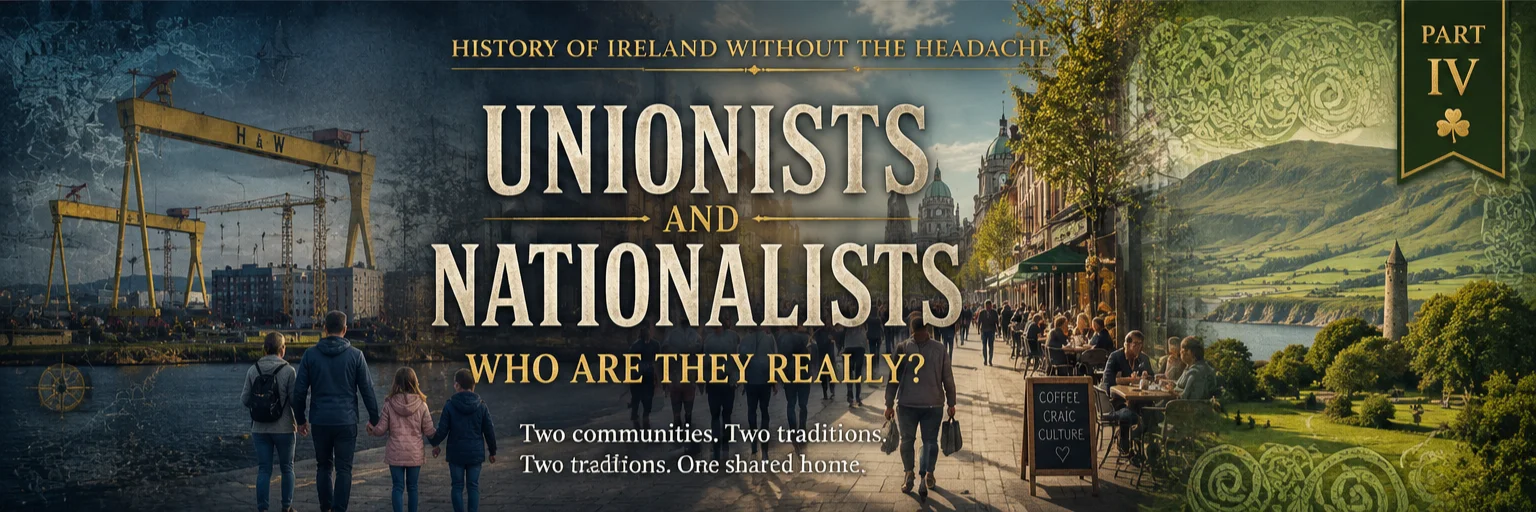
Unionists and Nationalists – Who Are They Really?
For many visitors, Northern Ireland can seem confusing.
One street flies British flags.
The next celebrates Irish culture.
One neighbor calls himself British.
The other calls herself Irish.
And both may have lived on the same road their entire lives.
So who exactly are unionists and nationalists?
The short answer is simple.
The real answer takes a little longer.
Who Are Unionists?
Unionists believe that Northern Ireland should remain part of the United Kingdom.
For them, the connection to Britain is an important part of their identity, history and political future.
Many identify as:
- British
- Northern Irish
- Ulster people
- members of a Protestant cultural tradition
However, there is a common misunderstanding.
Not every Protestant is a unionist.
Not every unionist attends parades.
And not every unionist owns a flag large enough to be visible from space.
Although some certainly try.
Where Does Unionist Identity Come From?
Much of it traces back to the seventeenth century and the Plantation of Ulster.
Settlers from England and Scotland arrived in large numbers.
They brought:
- Protestant traditions
- English and Scots culture
- loyalty to the Crown
- a strong connection to Britain
Over generations, these communities developed a distinct identity rooted in both Ulster and the United Kingdom.
When Irish independence became a real possibility in the early twentieth century, many feared becoming a minority within a new Irish state.
Their answer was clear:
Remain part of the United Kingdom.
Who Are Nationalists?
Nationalists believe that Northern Ireland should one day become part of a united Ireland.
For them, partition was not the solution to Ireland’s problems.
It was part of the problem itself.
Many identify as:
- Irish
- Northern Irish
- members of a Catholic cultural tradition
- supporters of Irish self-determination
Again, reality is more complicated than stereotypes.
Not every Catholic is a nationalist.
Not every nationalist is a republican.
And not everyone who says “Derry” is preparing for a revolution.
Nationalists and Republicans: The Same Thing?
Not exactly.
A nationalist supports Irish unity.
A republican generally supports Irish unity as well, but often places greater emphasis on republican traditions, anti-monarchism and Irish independence movements.
Many people fall somewhere in between.
Others simply want better public services, affordable housing and fewer arguments about the seventeenth century.
Two Communities, Two Historical Memories
"Two communities. Two traditions. One shared home."
Vagabonds of the North
This is where Northern Ireland becomes fascinating.
Unionists and nationalists often disagree not only about the future.
They also remember the past differently.
For one community, the Battle of the Boyne represents liberty and constitutional tradition.
For the other, it may symbolise conquest and division.
For one community, the Union Flag represents belonging.
For another, it represents a history of outside control.
Neither side is simply arguing about facts.
They are often talking about identity.
What About Religion?
Religion played a major role historically.
For generations:
- Protestants were more likely to be unionists.
- Catholics were more likely to be nationalists.
Today, things are less straightforward.
Many people are not particularly religious, yet still inherit cultural identities shaped by family, community and history.
In Northern Ireland, religion is often as much about heritage as belief.
Loyalists and Republicans
Another important distinction.
A unionist supports the Union.
A loyalist is usually associated with a more hard-line form of unionism and stronger emphasis on traditional symbols and community activism.
Likewise:
A nationalist supports Irish unity.
A republican may place greater emphasis on Ireland’s revolutionary and anti-monarchical traditions.
These words are often used interchangeably by outsiders.
Locals usually know the difference immediately.
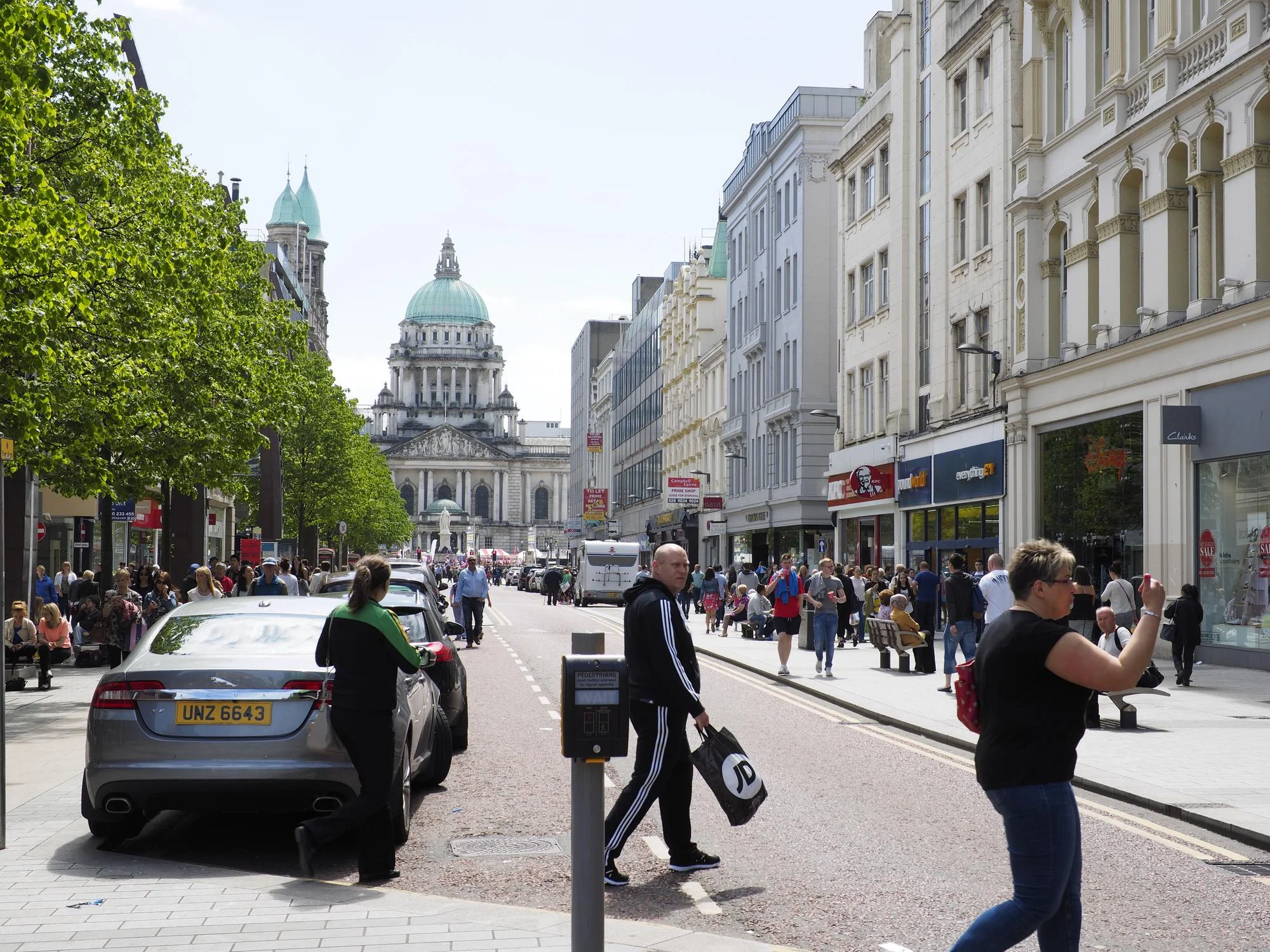
What About Ordinary People?
They’re busy doing what ordinary people do everywhere.
Working.
Raising families.
Paying bills.
Complaining about the weather.
Arguing about fuel prices.
Shopping at Lidl.
Most people do not wake up each morning wondering what happened in 1690.
History matters here.
But daily life matters more.
Is Northern Ireland Changing?
Yes.
Younger generations often see things differently from their grandparents.
Many people feel comfortable identifying as:
- British
- Irish
- Northern Irish
- or a mixture of all three
Others simply want a peaceful future and less political drama.
History remains important.
But increasingly, many people are focused on what comes next.
Final Thoughts
If you remember only three things, remember these:
✔ Unionists want Northern Ireland to remain part of the United Kingdom.
✔ Nationalists want Northern Ireland to become part of a united Ireland.
✔ Most people are far more interested in everyday life than outsiders often imagine.
Northern Ireland is not simply a story about conflict.
It is a story about identity, memory and belonging.
And perhaps the most important question of all:
What does “home” mean to different people living on the same island?
Discover with us: