Grunwald 1410
🔥 Campfire I: How We Accidentally Created Our Own Problem
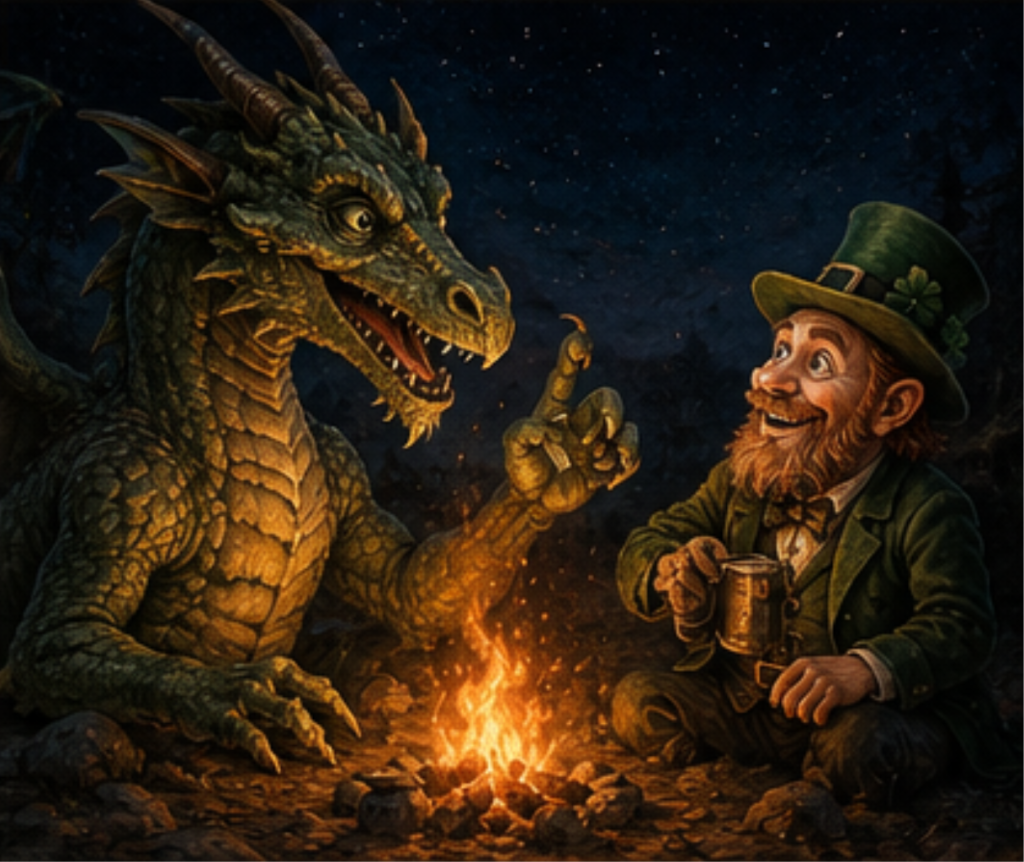
The evening was calm.
The fire crackled lazily. Somewhere in the distance an owl called from the darkness, and the smell of woodsmoke drifted through the air.
The Leprechaun stared into the flames.
The Wawel Dragon adjusted a log and settled back comfortably.
🍀 Leprechaun
“Tell me something.”
🐉 Dragon
“That usually means trouble.”
🍀
“Who was the biggest loser at the Battle of Grunwald?”
🐉
“Konrad of Masovia.”
🍀
“The one who brought in the Teutonic Knights?”
🐉
“The very same.”
🍀
“But he had been dead for nearly two hundred years.”
🐉
“Exactly. That’s what makes the answer interesting.”
🍀
“Alright. Start at the beginning.
Poland. Middle Ages. What’s going on?”
🐉
“Chaos.”
🍀
“That seems a little broad.”
🐉
“And yet surprisingly accurate.”
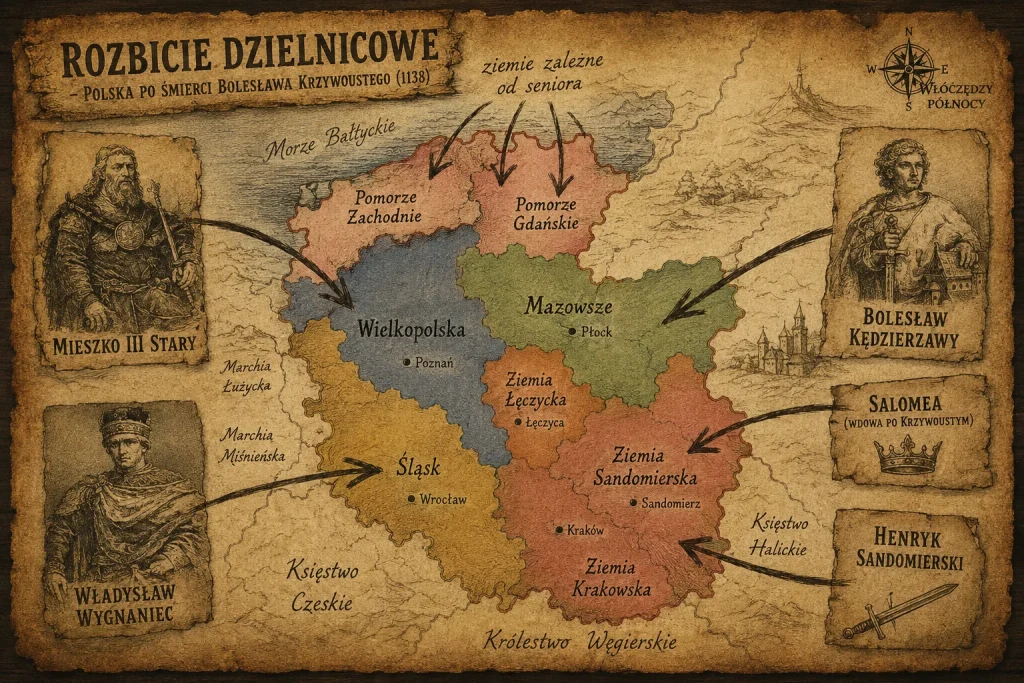
After the death of Bolesław III Wrymouth, Poland was divided among his sons.
The idea was meant to prevent future struggles for power.
🍀
“Let me guess.
It didn’t work.”
🐉
“No.”
🍀
“It’s remarkable how often in history the phrase ‘this will prevent conflict’ ends up producing exactly the opposite result.”
🐉
“History has a strong sense of irony.”
🍀
“So Poland was divided?”
🐉
“Into separate duchies.
Each prince had his own ambitions, his own interests, and his own ideas about who should rule the whole country.”
🍀
“That sounds familiar.”
🐉
“Because it isn’t a uniquely Polish story.
Medieval Europe was full of similar disputes.”
🍀
“So there was no strong united Poland?”
🐉
“There was still an idea of Poland.
The Piast dynasty remained.
The culture remained.
But the state no longer possessed the strength it had under rulers like Bolesław the Brave.”
🍀
“And that’s when the Prussians enter the story?”
🐉
“Yes.”
🍀
“Before we continue…
Who exactly were they?”
🐉
“A Baltic people living north of Masovia.
They were not Slavs.
They were not Germans.
And they were certainly not the later Prussians most people associate with nineteenth-century Prussia.”
🍀
“So completely different people?”
🐉
“Completely.
Pagan.
Warlike.
Fiercely independent.”
🍀
“And they were raiding Masovia?”
🐉
“Regularly.
Raids. Looting. Kidnappings.
For the people living on the frontier, this wasn’t some grand historical drama.
It was everyday life.”
🍀
“So when we look at maps today, we see politics.
They saw their neighbour’s house burned to the ground.”
🐉
“Exactly.
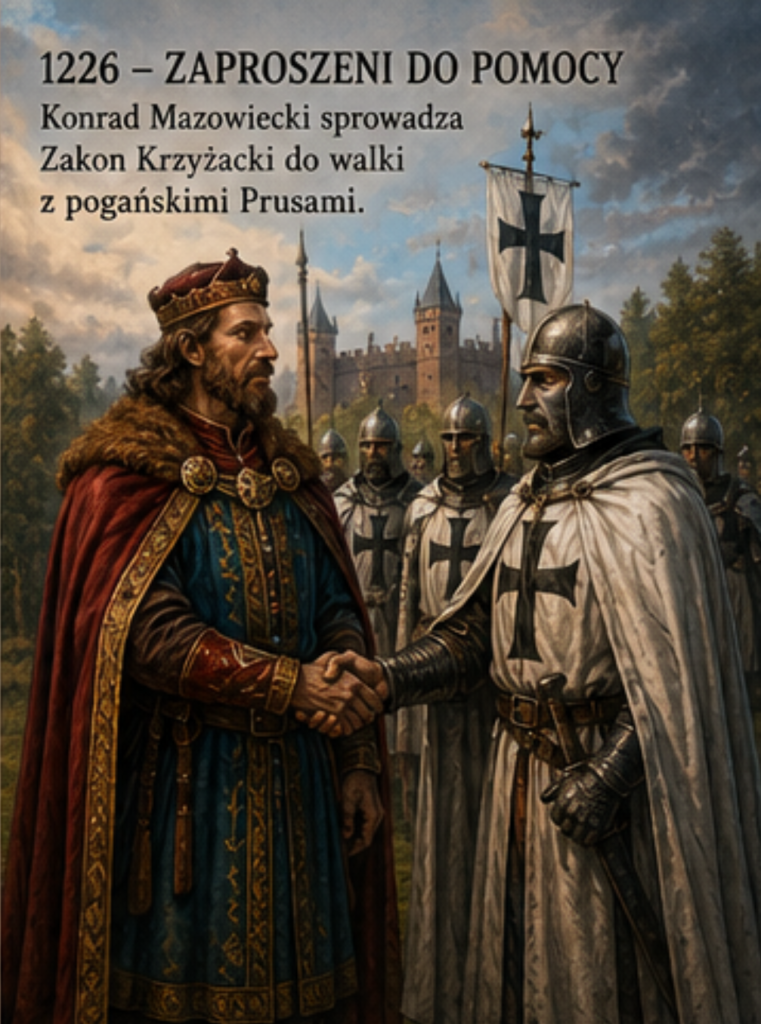
And that’s where Konrad of Masovia enters the story.”
🍀
“Let’s be honest.
He doesn’t have the greatest reputation in Polish history.”
🐉
“Because we know how the story ends.”
🍀
“And he didn’t.”
🐉
“Exactly.
Konrad wasn’t sitting beside a campfire seven hundred years later.
He knew nothing about Grunwald.
Nothing about Malbork.
Nothing about the future power of the Teutonic Order.
He only saw his borders and his problem.”
🍀
“So he wasn’t an idiot?”
🐉
“No.
He was a man trying to solve a very real problem.”
🍀
“That sounds much less dramatic than school textbooks.”
🐉
“History rarely is dramatic.
Most of the time it’s simply complicated.”
The fire spat sparks into the night.
🍀
“Alright then.
Where did the Teutonic Knights come from?”
🐉
“Not from Poland.”
🍀
“I figured that much.”
🐉
“The Order was founded during the Crusades in the Holy Land.
At first they cared for pilgrims and the sick.
Later they became a military order.
One of the most disciplined and effective organisations in medieval Europe.”
🍀
“So… a medieval professional army?”
🐉
“In simplified terms, yes.
They had money.
They had connections.
They had the support of emperors and popes.
Most importantly, they had experience.”
🍀
“And Konrad looked at them and thought:
‘Those are exactly the people I need.’”
🐉
“More or less.”
🍀
“And this is where everything goes wrong?”
🐉
“Not yet.
At first, everything looked perfectly reasonable.”
🍀
“I love that sentence.
Every historical disaster seems to begin with:
‘At first, everything looked perfectly reasonable.’”
🐉
“Usually.”
The Teutonic Knights arrived in the Chełmno Land.
Their task was simple.
Protect the frontier.
Fight the Prussians.
Stabilise the region.
🍀
“And did they?”
🐉
“Very effectively.
Almost too effectively.”
🍀
“Uh oh.
I know that tone.”
🐉
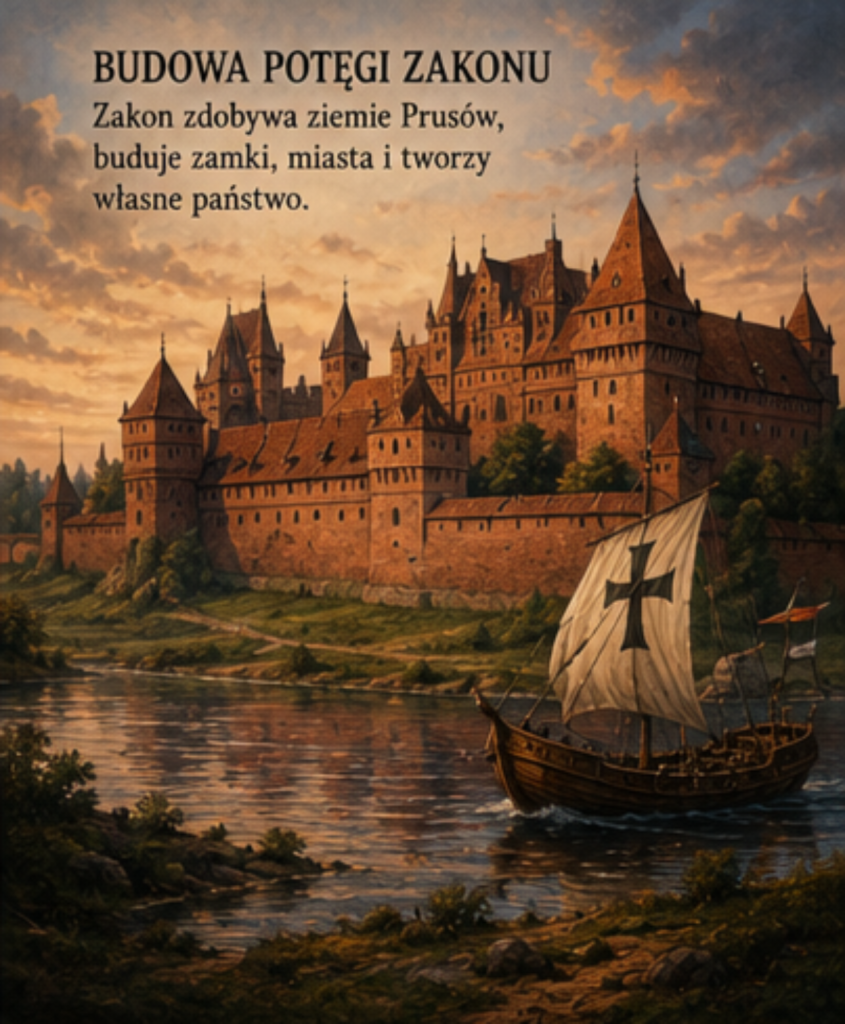
“Over the following decades they conquered the Prussian lands.
Built castles.
Founded towns.
Created an administration.
Expanded trade.”
🍀
“So the problem was solved.”
🐉
“Yes.”
🍀
“Excellent.
We can end the story here.”
🐉
“No, we can’t.”
🍀
“Why not?”
🐉
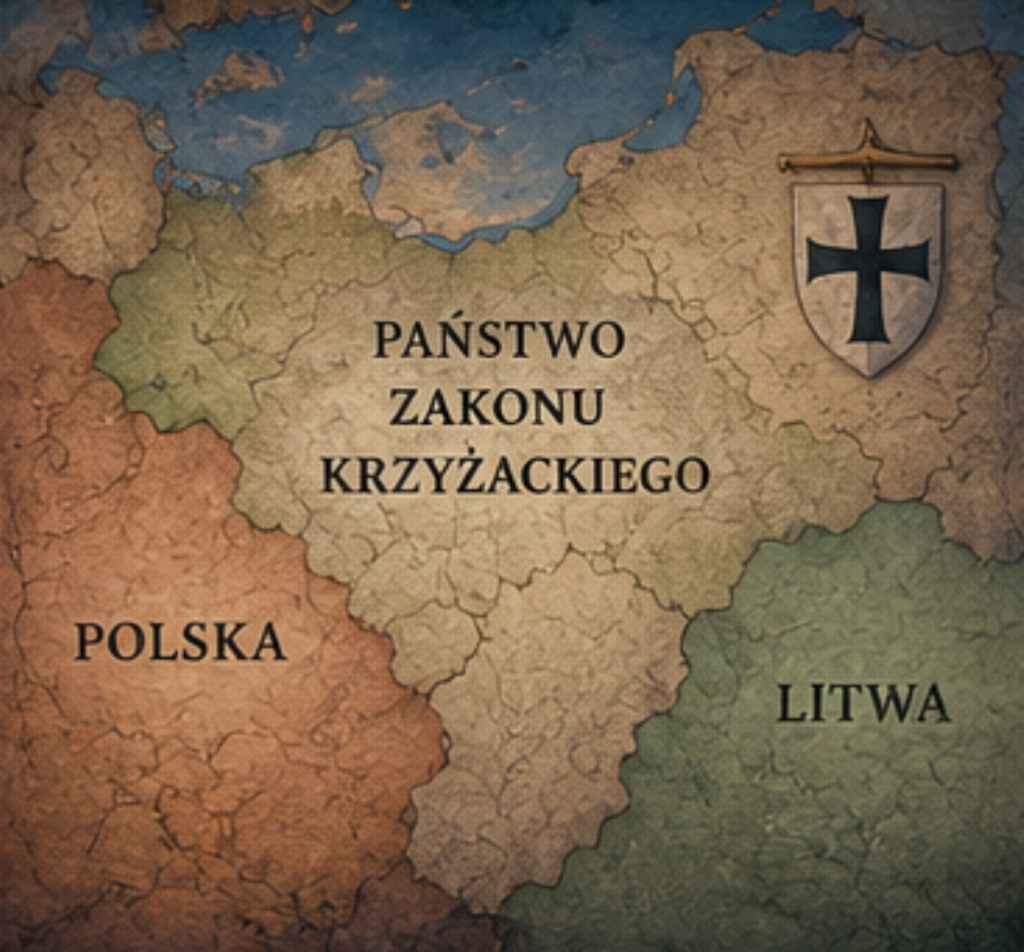
“Because when Konrad invited the Teutonic Knights, he hoped for a neighbour.
The Teutonic Knights decided to become a state.”
For a moment neither spoke.
Even the Leprechaun stopped smiling.
🍀
“So Poland helped create the very power that would later become its problem?”
🐉
“Yes.”
🍀
“That must drive historians mad.”
🐉
“More than you can imagine.”
🍀
“You know what’s strangest?”
🐉
“What?”
🍀
“If you stopped the story right here, most people would say Konrad succeeded.”
🐉
“Because he did.”
🍀
“And at the same time he planted the seed of a future conflict.”
🐉
“That’s how history works.”
The fire was beginning to fade.
The Dragon added another log.
🍀
“So the problem was solved.”
🐉
“Yes.”
🍀
“And a new one had just begun.”
🐉
“Exactly.”
🍀
“And that new problem eventually leads us to Grunwald?”
🐉
“Yes.
But before we see banners, knights and two famous swords, nearly two hundred years still have to pass.”
🍀
“Two hundred years?!”
🐉
“I told you.
History doesn’t like to hurry.”
🔥 End of Campfire I 🔥
Discover with us: