
Armagh – A City of Two Cathedrals, Astronomers and Stories Discovered Along the Way
Vagabonds of the North | 12 September 2026
Some cities are best explored without rushing. Others demand a good pair of walking shoes. Armagh belongs to both categories. Add a group of seven, children campaigning for ice cream, Google Maps and an Irish king who seemed determined to hide his memorial plaque, and you have all the ingredients for a memorable day out.
The First Battle: Children Versus Adults
We arrived in Armagh at around 9.30 in the morning. We left the car in a car park near the Translink station and began working out our route.
Before we could set off, however, we faced our first organisational crisis.
Ice cream.
The youngest members of our seven-strong party believed that was exactly how a visit to the city ought to begin. The adults disagreed. It was still chilly, we had hours of walking ahead of us, and the ice cream wasn’t going anywhere.
After brief but vigorous negotiations, we agreed to leave the sweet treats until later.
At 10.01, I took my first photograph of St Patrick’s Catholic Cathedral.
Our adventure was officially under way.
The Catholic Cathedral—Impossible to Miss
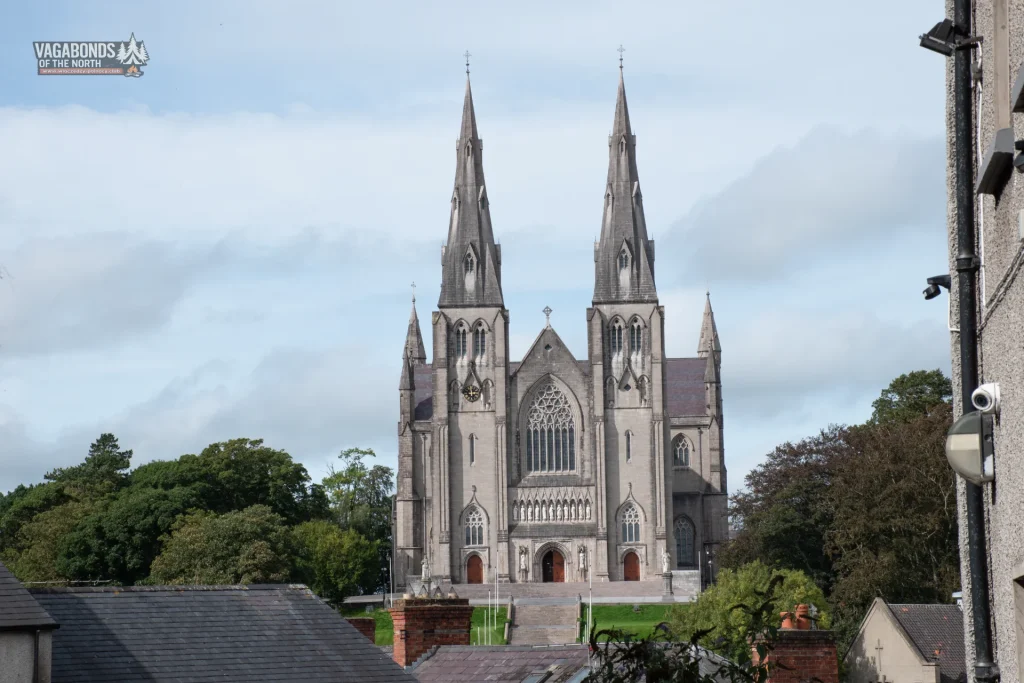
St Patrick’s Catholic Cathedral towers over Armagh. Its two soaring spires can be seen from many parts of the city, and the monumental Gothic Revival building makes an impression long before you reach the entrance.
When we arrived, Saturday Mass was in progress.
We had no intention of disturbing the congregation, so we decided to explore the cathedral grounds first.
It turned out to be an excellent decision.
Instead of taking a few photographs of the grand façade and moving on, we walked around the back of the building. We noticed burial places of senior clergy, including Archbishops of Armagh, as well as buildings behind the cathedral.
One part of the complex was inaccessible. A locked gate prevented us from taking a closer look at buildings that appeared to have a church-related function. We couldn’t establish exactly what they were used for.
Places like that always make me curious.
Sometimes an unassuming gate conceals a story every bit as interesting as those told in the grandest museum galleries.
A Cathedral Built in the Shadow of the Great Famine
Construction of the Catholic cathedral began in 1840. It was a difficult period for Irish Catholicism, which had endured centuries of political and religious restrictions.
Just a few years later, the Great Famine struck Ireland.
The catastrophe of 1845–1852 claimed around a million lives and drove millions more people to emigrate. Under such circumstances, a monumental building project could hardly remain a priority.
Work was suspended and later resumed in stages. The cathedral was consecrated in 1873, although its decoration and furnishings continued to develop for decades afterwards.
So today’s cathedral is more than a place of worship.
It is also a witness to the transformation of Irish society in the nineteenth century.
An Interior Rich in Detail
Once Mass had ended, we went inside.
My first impression?
Space.
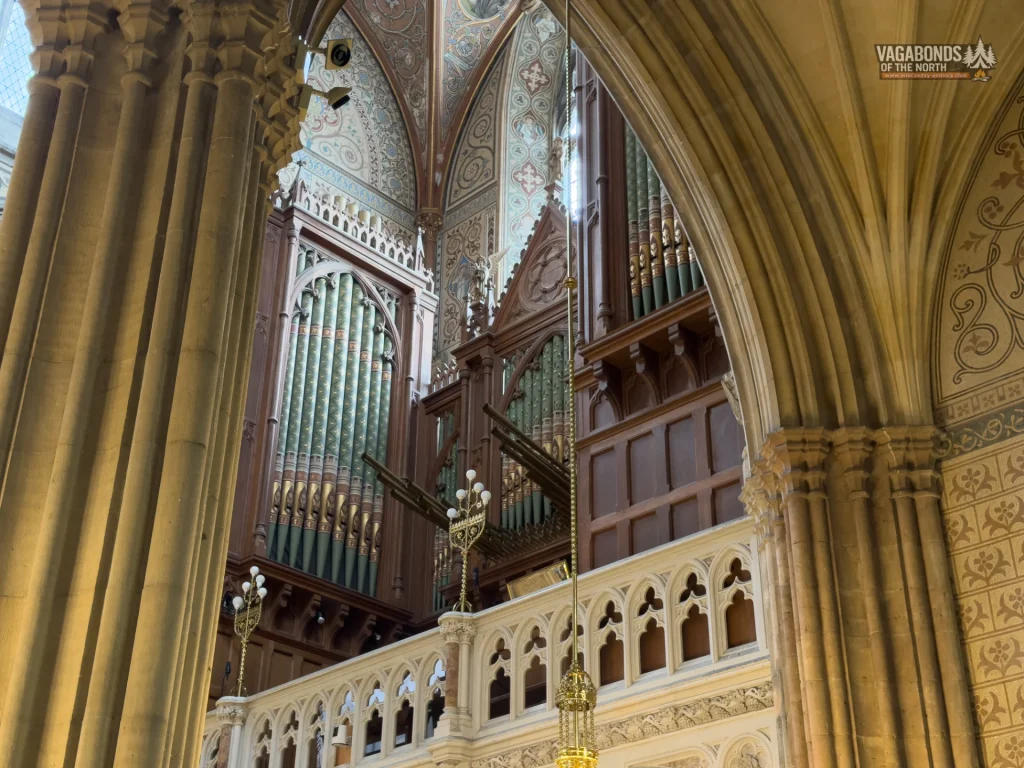
Soaring vaults, slender columns, stained-glass windows and lavish wall decoration draw your eyes constantly from one detail to the next.
The sanctuary is particularly striking. The altar stands deep within it, surrounded by elaborate decoration, mosaics and sculpture.
The cathedral also preserves reminders of a history far more dramatic than the building’s own story.
One of the figures commemorated here is St Oliver Plunkett, Archbishop of Armagh, who was executed in London in 1681.
His story reminds us how closely religion and politics have been intertwined throughout Irish history.
We won’t attempt to tell the entire history of Irish Catholicism here. That deserves an article of its own.
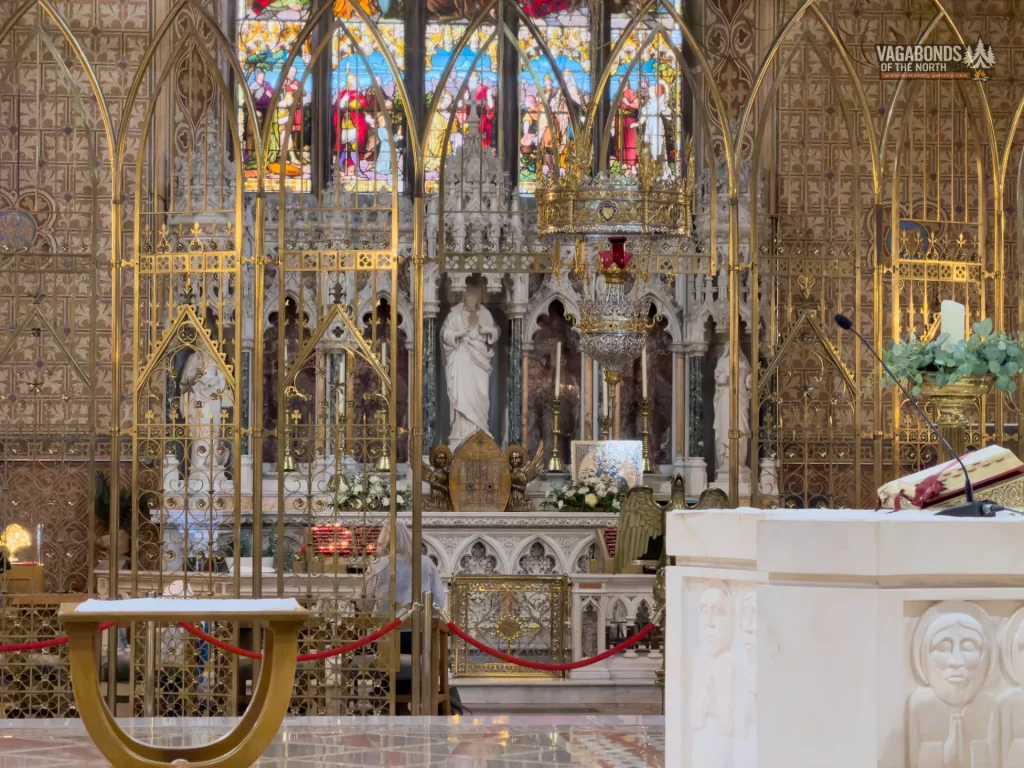
During our visit, one side chapel particularly caught our attention. An intricate gilded screen separated it from the rest of the cathedral.
Inside were statues of saints, stained glass, an ornate altar and a tabernacle. Above it hung an impressive lamp with red glass.
Nearby, we also saw two nuns wearing white-and-blue habits.
At first, we wondered whether the unusual decoration might have some connection with Eastern Christian traditions. The details visible in our photographs, however, suggest that it is more likely a Catholic Eucharistic chapel.
Whatever its precise designation, it was one of the most intriguing corners of the cathedral.
And another reminder that, in a building like this, it pays to look to the sides as well as straight ahead.
Uphill – Because Armagh Likes to Keep Visitors Fit
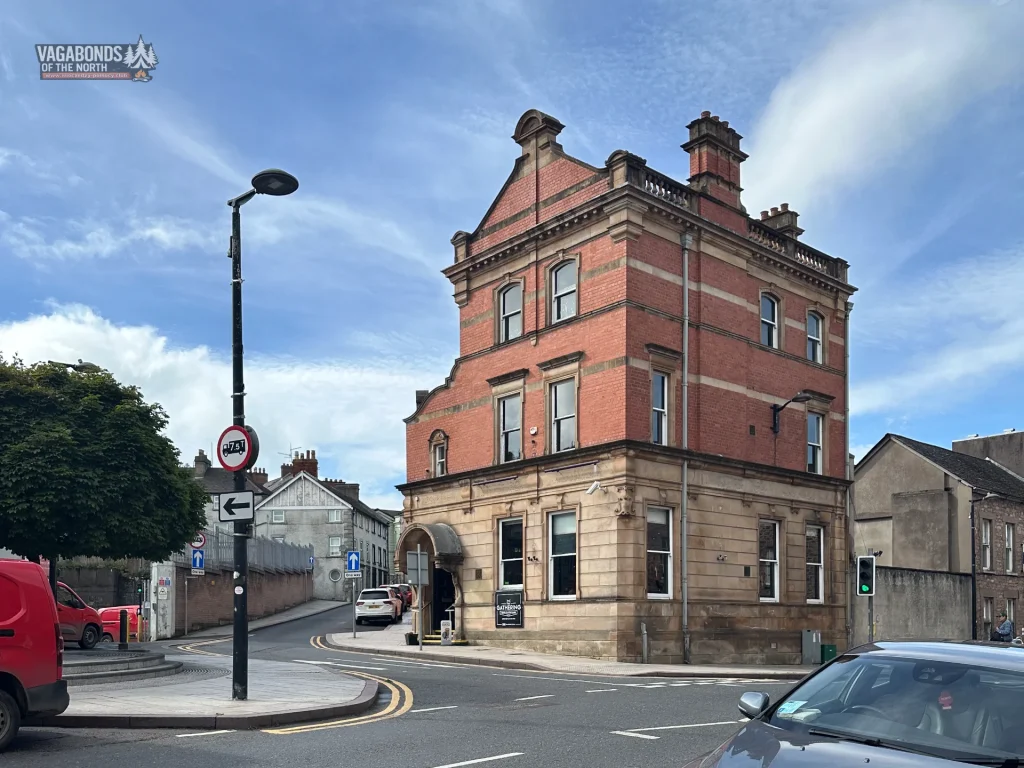
At 11.01, I recorded a short video at the junction of Abbey Street and Dawson Street.
I remember that spot particularly well.
The road runs beside a high wall, and the bend is so sharp that approaching cars can appear almost out of nowhere.
From there, we headed towards St Patrick’s Church of Ireland Cathedral.
Uphill, naturally.
Apparently, having two cathedrals wasn’t enough for Armagh. Both had to offer visitors a little physical exercise alongside their spiritual experiences.
At 11.06, I took my first photograph of the Anglican cathedral’s exterior.
Five minutes later, we were inside.
The Church of Ireland Cathedral – A History Older Than Today's Divisions
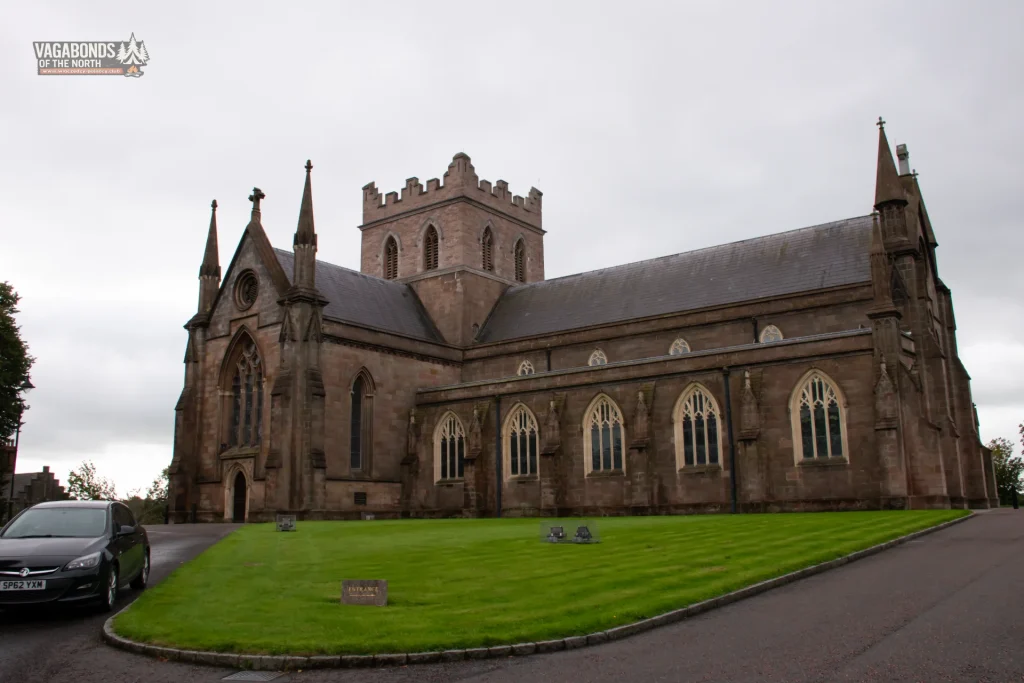
St Patrick’s Church of Ireland Cathedral stands on a hill that has been a religious centre of Armagh for a very long time.
Tradition traces the beginnings of the Christian settlement here to St Patrick in the fifth century.
The present building has undergone numerous alterations and restorations. It is not a medieval church preserved unchanged through the centuries, but a place whose successive architectural layers tell a story of changing times.
That is precisely what makes it fascinating.
Compared with the monumental, richly decorated Catholic cathedral, the Church of Ireland interior feels more restrained.
That certainly doesn’t make it less interesting.
Quite the opposite.
It contains historical objects, memorials, plaques and artefacts connected with the history of the city and Ireland as a whole.
The Man from Tandragee and Other Mysteries
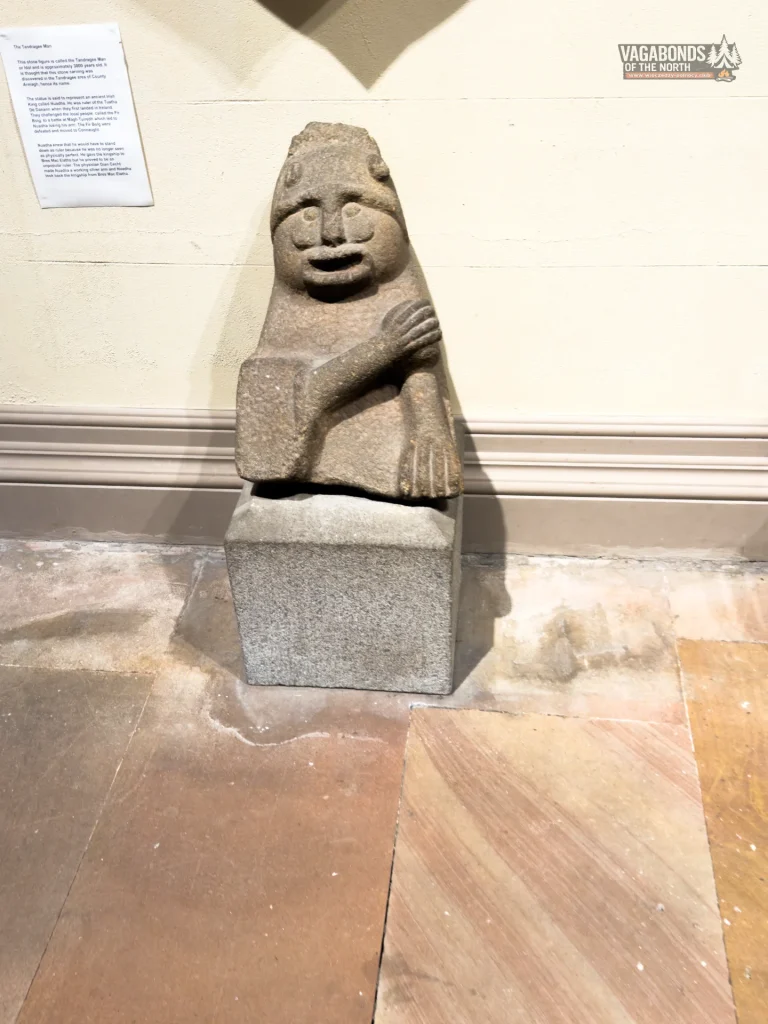
Among the exhibits, I was especially drawn to those that offered a glimpse much further into the region’s past.
One was a figure described as the “Man from Tandragee”.
These are the discoveries I enjoy most. You arrive to see a cathedral and suddenly find a story that takes you far beyond its walls.
We also noticed an ancient Celtic cross, reminders of Brian Boru and military colours.
One of the flags bore the word “Niagara”.
And that opens up another intriguing chapter.
Armagh’s history does not end with saints, bishops and kings.
The city also has a substantial military past.
Armagh's Military History – Not Always a Comfortable Story
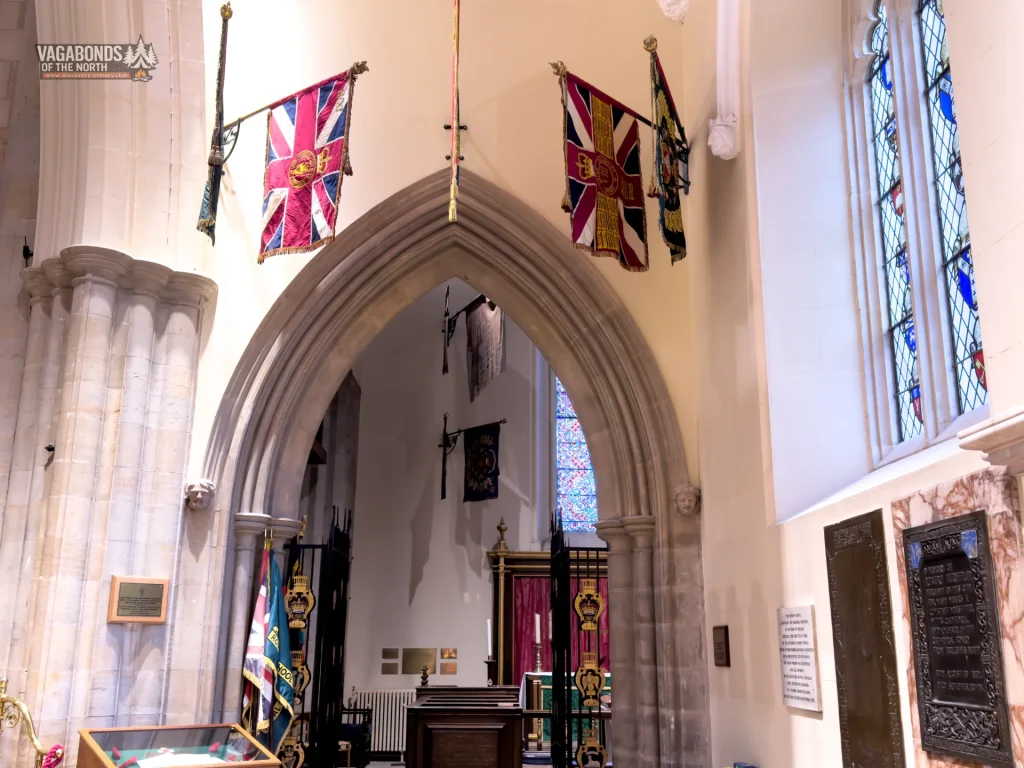
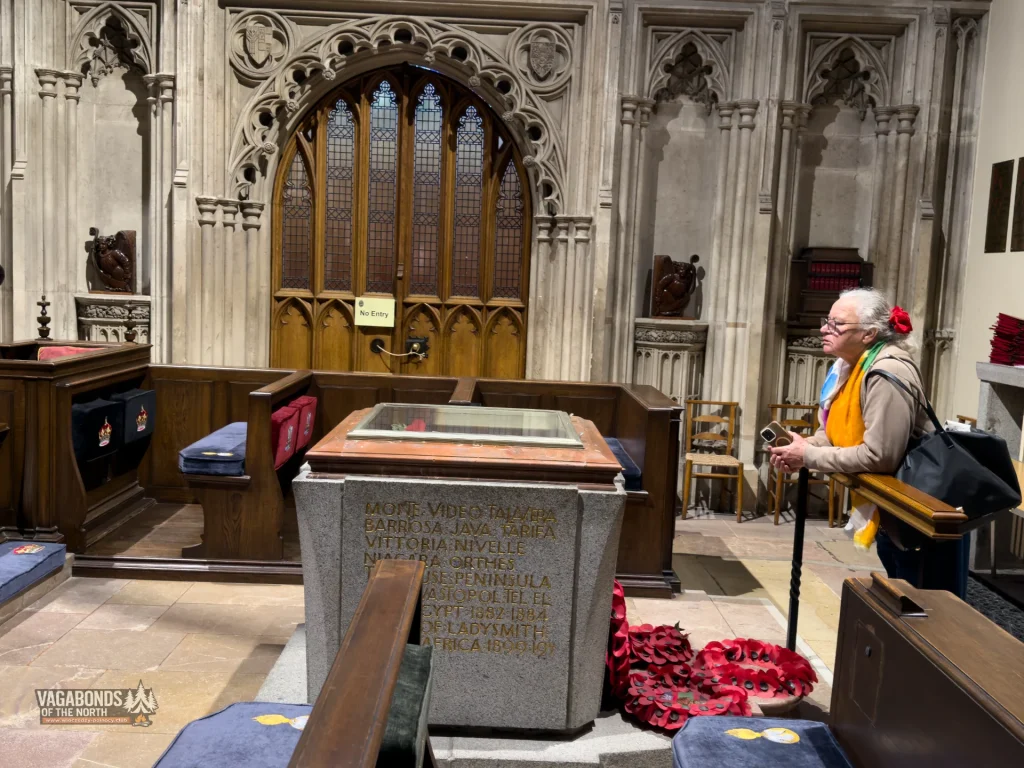
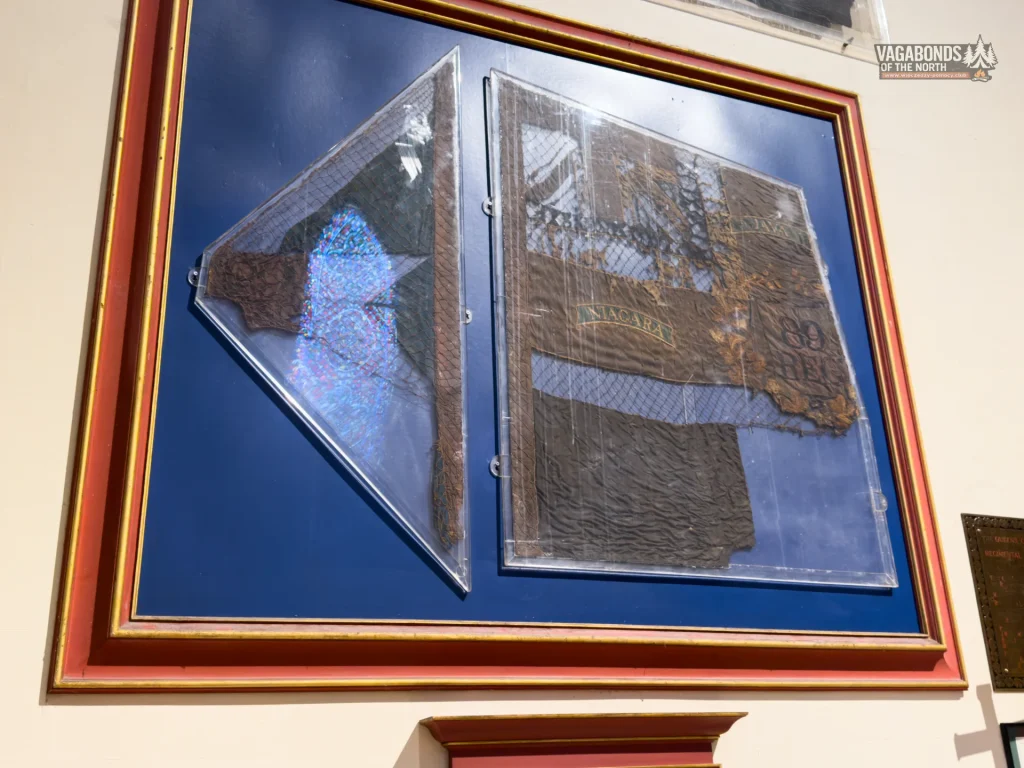
The cathedral contains objects associated with Irish regiments that served in the British Army.
It is a part of history that doesn’t always fit neatly into simple narratives about Ireland.
Irish soldiers took part in wars fought by the British Empire, served in many parts of the world and died far from their home towns.
Some enlisted out of conviction; others for economic, family or professional reasons.
Their lives cannot be reduced to a single sentence.
Today’s political divisions don’t always make it easier to discuss this history calmly.
Yet it remains part of the city’s story.
The military colours and memorial plaques in the cathedral are therefore much more than decoration.
They bear witness to lives lived in times far more complicated than modern political slogans might suggest.
Brian Boru – The First Attempt
At 11.26, we began exploring the cathedral grounds.
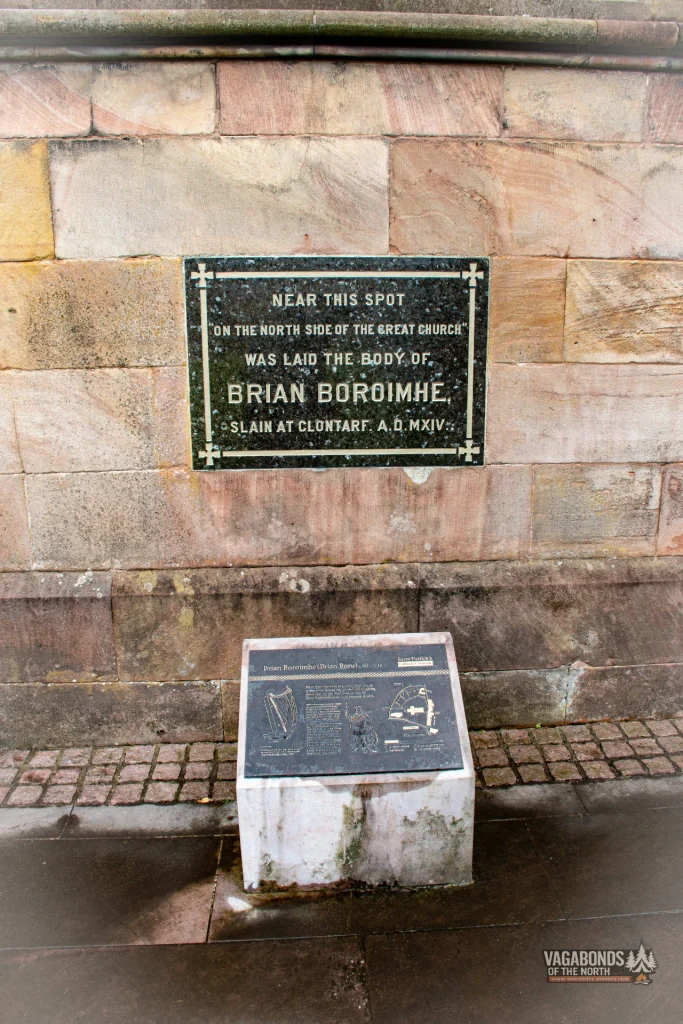
One of my goals was to find the memorial to Brian Boru.
This Irish king, who died in 1014 after the Battle of Clontarf, is one of the best-known figures in early medieval Irish history.
Tradition associates his burial with Armagh.
Since we were already there, I thought it would be only right to find his memorial plaque.
It sounded simple.
In practice, not quite.
We walked around the grounds, examined old gravestones, peered into corners and searched for the right spot.
Nothing.
Eventually, we had to move on.
But I couldn’t let it go.
Brian Boru won more than one battle in his lifetime. This time, though, it felt as if he’d beaten me at hide-and-seek.
I wasn’t ready to surrender.
The Observatory – Armagh Looks to the Skies
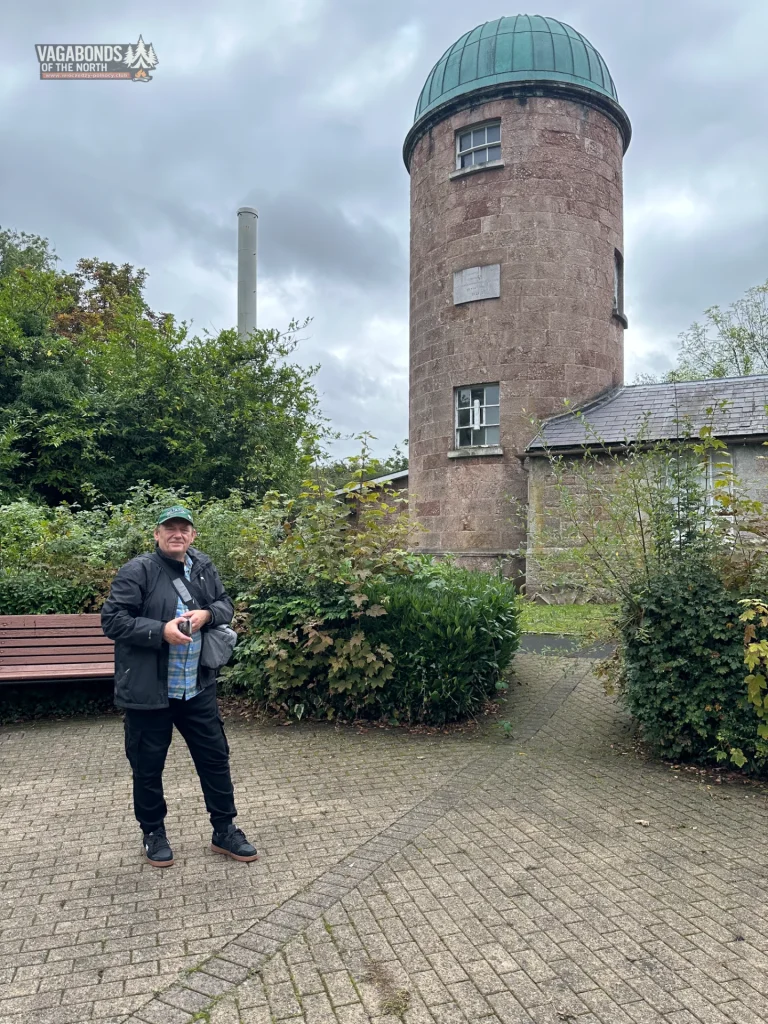
At 11.52, we reached the Observatory.
Here, Armagh revealed a completely different side of itself.
We left medieval kings, cathedrals and religious disputes behind and entered a place where astronomers have been studying the sky for more than two centuries.
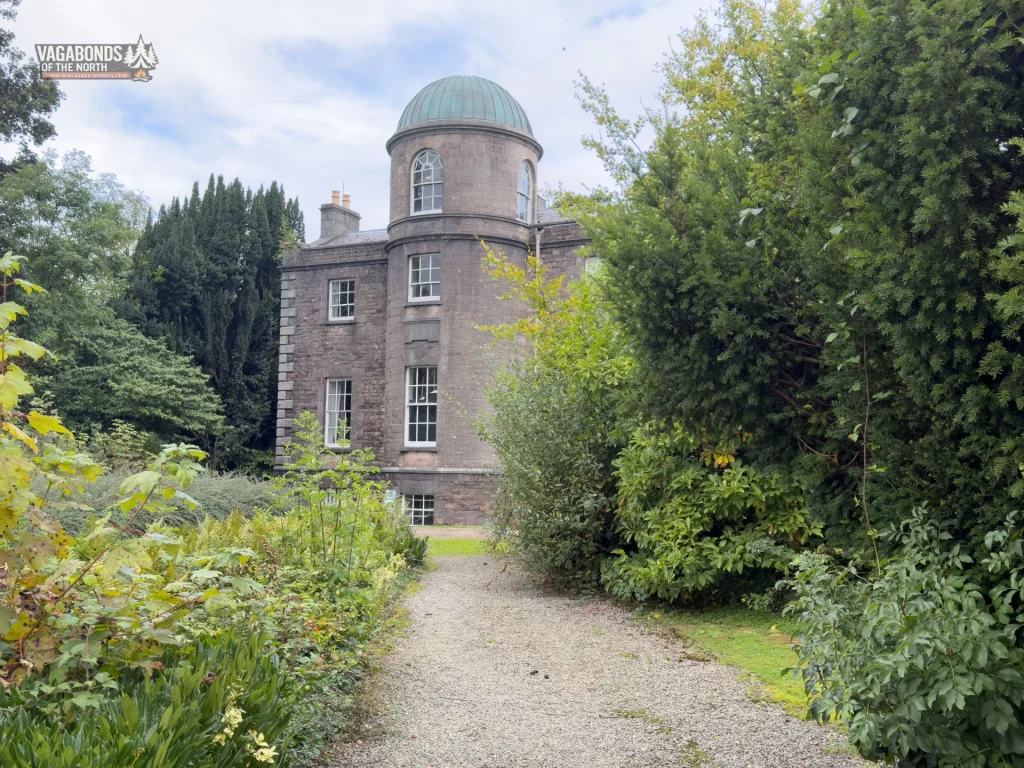
Armagh Observatory was founded in 1790 at the initiative of Archbishop Richard Robinson.
It is a fascinating example of a period when the Church, education and scientific progress could be closely connected.
The building itself is a delight.
Its stonework, distinctive domed tower and surrounding greenery make it look more like a secluded country house than a scientific observatory.
But behind that peaceful appearance lies a long history of astronomical research.
Clocks, Instruments and the People Who Measured the Universe
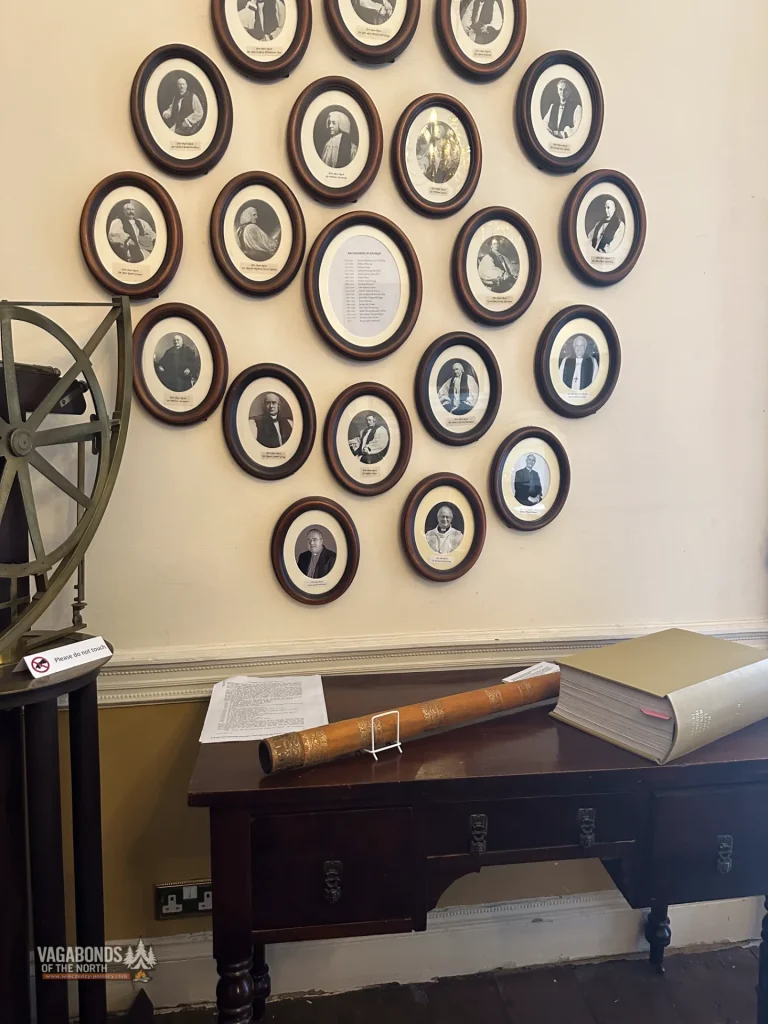
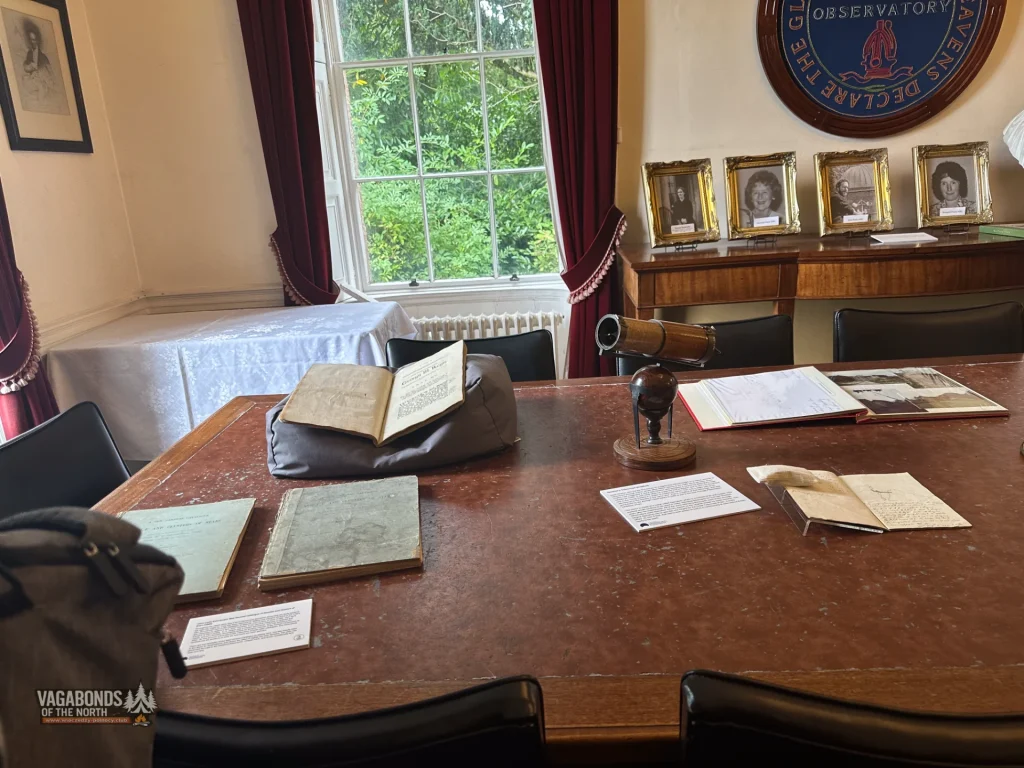
During our visit, we were drawn to historic astronomical instruments, old clocks and objects associated with the astronomers who worked here.
Today, we check the exact time on our phones.
In earlier centuries, measuring time precisely was one of astronomy’s essential tasks.
Accurate clocks, measuring instruments and observations of the stars underpinned research that gradually made it possible to describe the movements of celestial bodies with greater precision.
We also photographed historical scientific publications and a celestial globe.
Looking at these devices, it is hard not to admire the patience of people who spent years observing the heavens, recording their results and comparing measurement after measurement.
And me?
I had a much simpler task.
Find my star sign.
Where on Earth Are Pisces?!
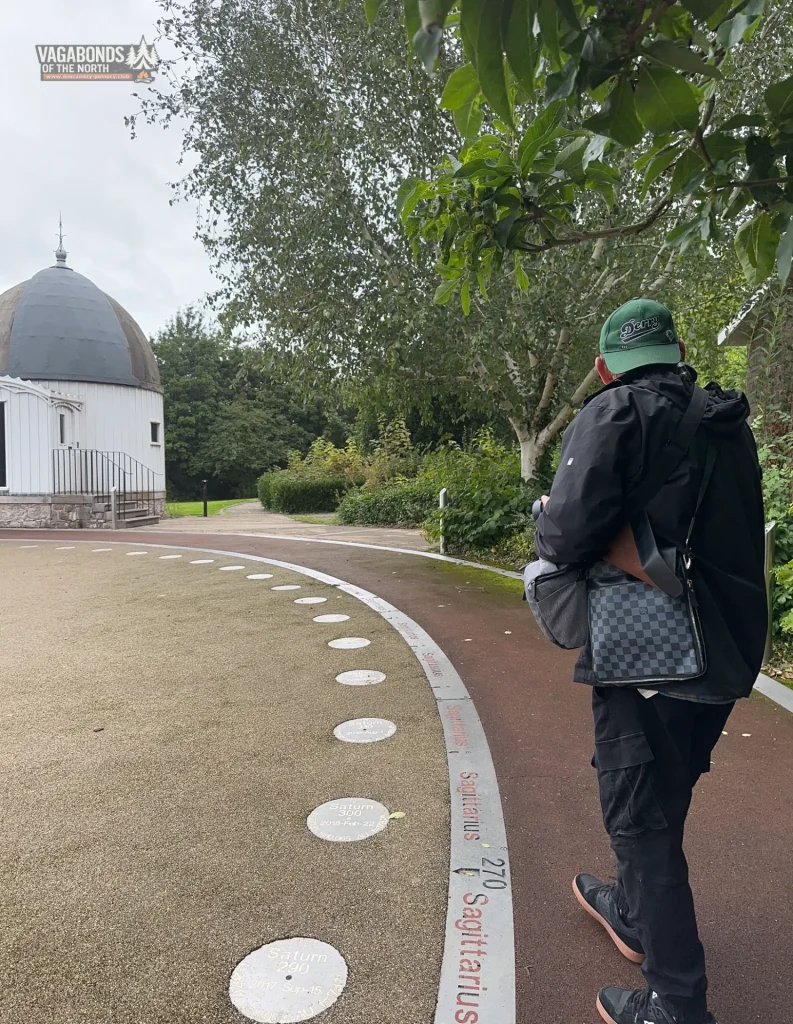
On one of the astronomy-themed installations, I decided to look for Pisces.
Simple enough, in theory.
In practice, I had to walk all the way around twice before finally finding the right sign.
For centuries, people have worked out the positions of stars at unimaginable distances, and I couldn’t even locate two little fish here on Earth.
Well.
We all have our own scientific challenges. 🤣
Astropark—Three Minutes, According to Google Maps
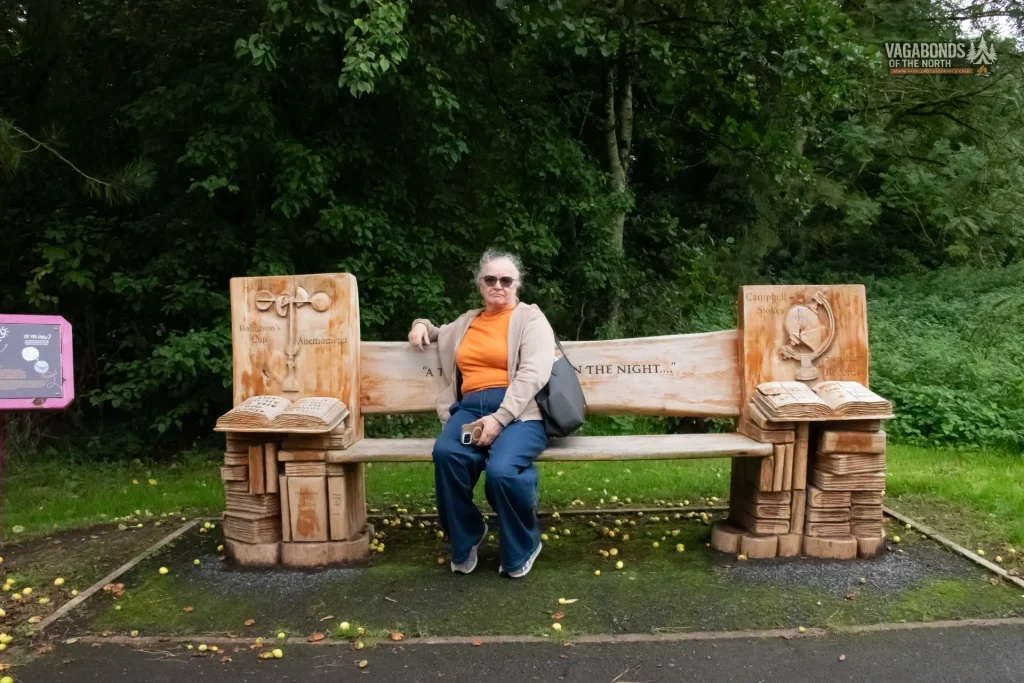
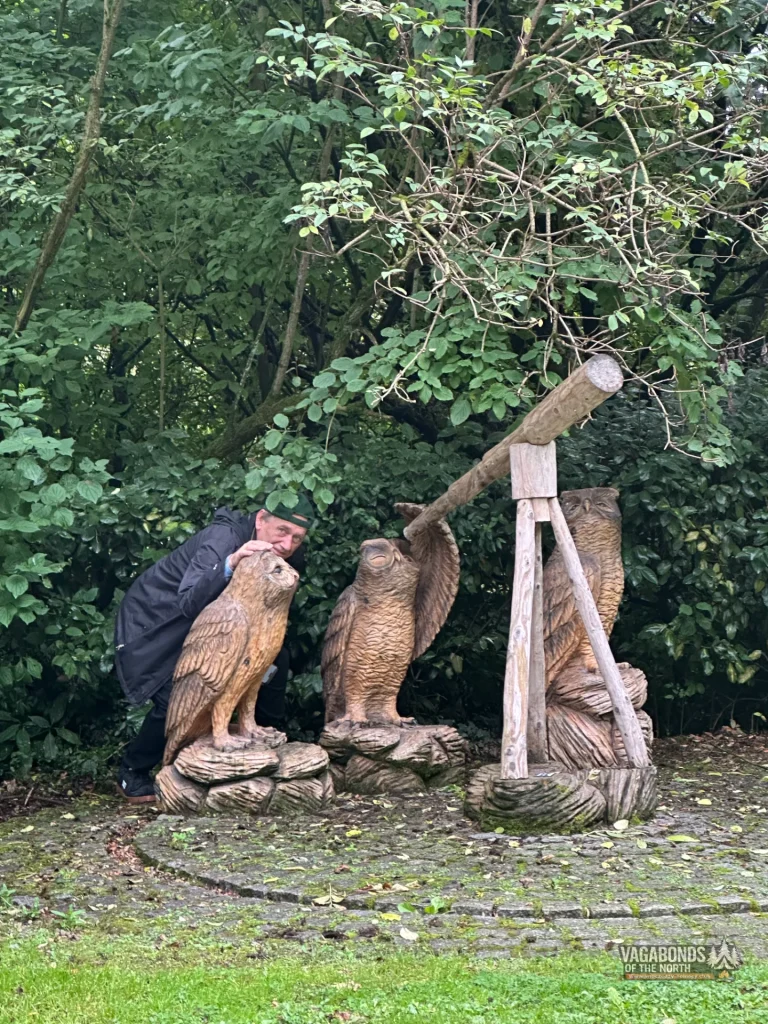
At around 12.15, we set off through Astropark.
That wasn’t quite the plan.
We were trying to reach the Planetarium.
According to the navigation, it should have been a short, straightforward walk.
Google Maps clearly had other ideas.
Instead of taking us by the shortest route, it directed us through Astropark.
And so a three-minute stroll turned into a considerably longer expedition.
At first, we could have been annoyed.
But only at first.
Astropark turned out to be a lovely place.
Paths winding through greenery, astronomy-themed installations, sculptures and educational displays meant that we kept finding something worth stopping for.
There were also places to sit and simply enjoy the surroundings.
In the end, the navigation hadn’t so much got us lost as arranged an extra attraction.
Without asking our permission, of course.
Back to the Observatory—This Time on Purpose
At 12.47, we returned to the Observatory.
This wasn’t another navigation error.
Before leaving home, we’d booked a special guided visit and talk about the Observatory’s history, organised as part of its open days.
It gave us a chance to understand the place in a wider context rather than simply looking at the objects on display.
That matters.
Seeing an old astronomical instrument doesn’t tell you much unless you know what it was used for and why it mattered.
It is the story of the people who used it that brings the object to life.
After the visit, we headed towards the Planetarium once more.
This time, we knew the way.
It took all of three minutes.
Perhaps even less.
Google Maps had finally been defeated. 😂
The Planetarium – A Journey Far Beyond Armagh
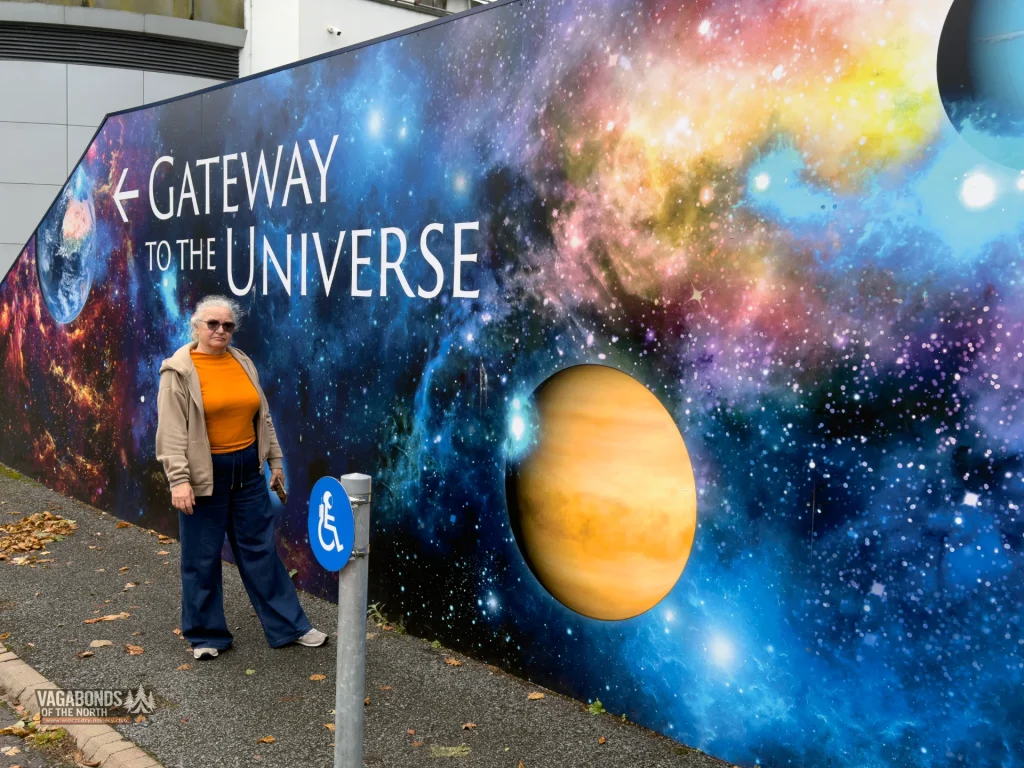
At 13.20, we entered the Planetarium.
This is another part of the city’s scientific identity.
Armagh Planetarium opened in 1968 with the aim of making astronomy accessible to the wider public, especially children and young people.
And it is hard to imagine a better way of capturing someone’s interest in the Universe than a show projected across a planetarium dome.
Comfortable reclining seats let you gaze upwards and, for a while, forget you’re inside a building.
Space never fails to stir the imagination.
The immense distances, stars, planets and galaxies remind us what a tiny part of reality our own planet occupies.
And, at the same time, how extraordinary it is.
An Astronaut, Coffee and Tayto
Inside the building, we also noticed an astronaut suit bearing NASA markings.
We couldn’t establish whether it had actually been used on a mission, so we treated it as an interesting educational exhibit rather than making any grand claims about its history.
There was also a shop selling space-themed souvenirs.
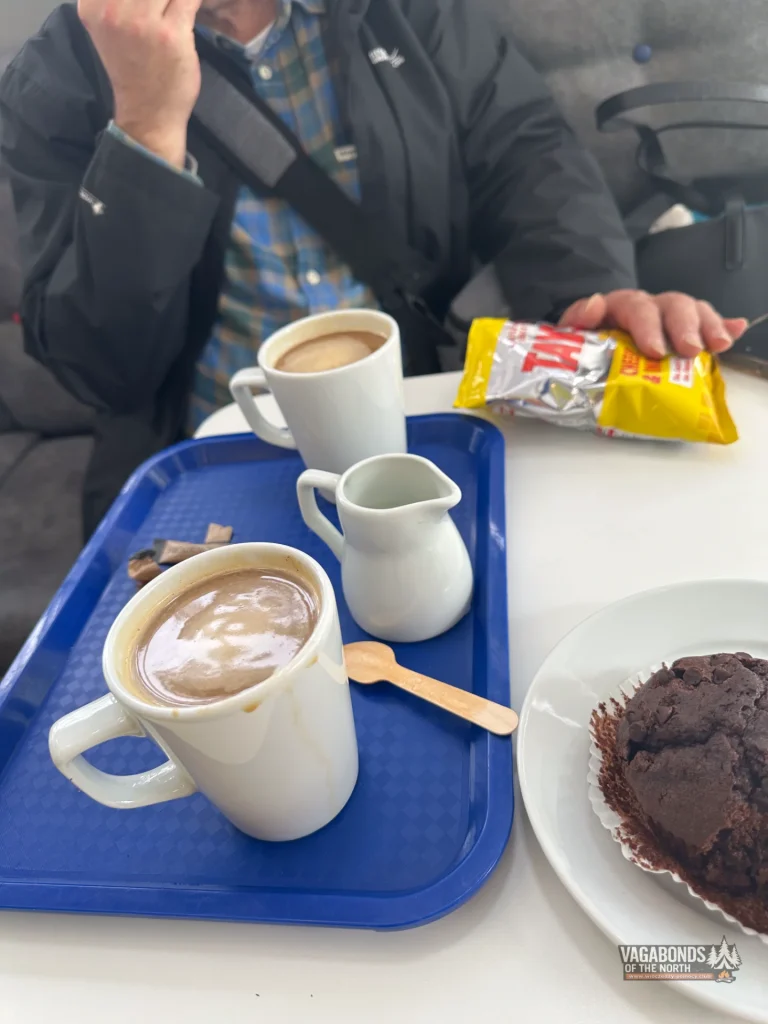
Naturally, we found time for a coffee break.
And since we were still in Northern Ireland, the coffee was accompanied by a packet of Tayto crisps.
You can travel across the entire Universe, but some things never change. 🤣
At 14.47, I took the first photograph after we left the Planetarium.
We still had unfinished business.
Brian Boru.
Back to the Cathedral—Operation Find the King
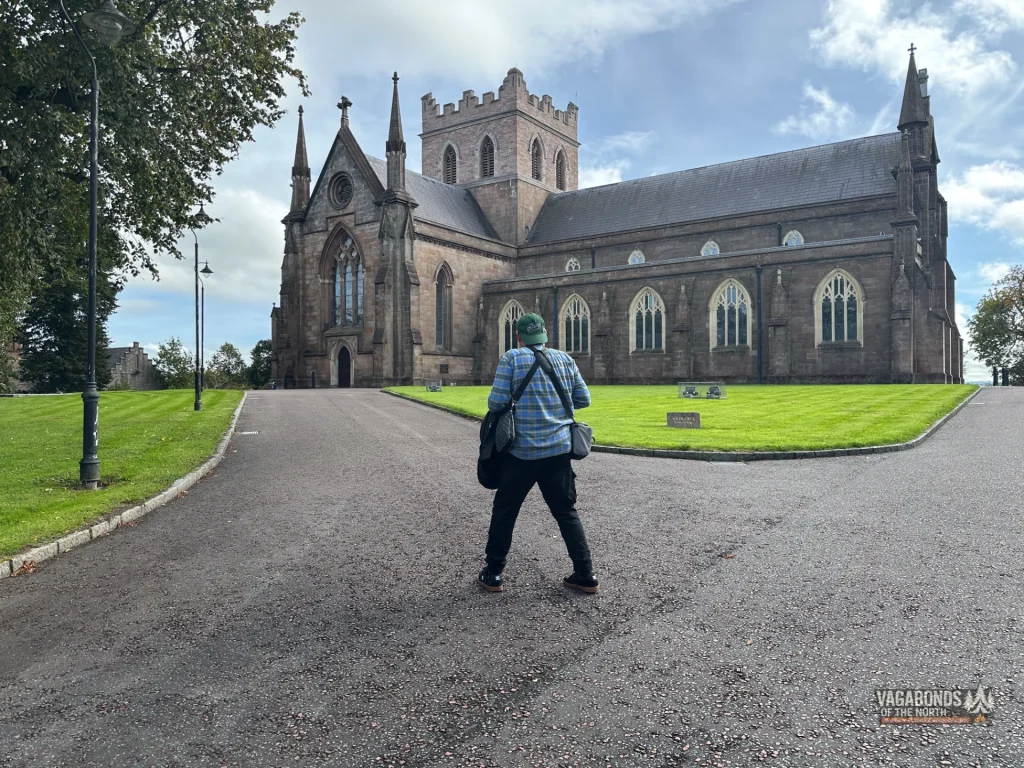
At 15.01, we arrived at St Patrick’s Church of Ireland Cathedral for the second time.
I must admit, I’d expected protests.
We’d already been there, we’d spent hours sightseeing, and the children would have been perfectly entitled to wonder why we needed to revisit the same place.
But nothing of the sort happened.
Everyone was happy to go back.
I think there were two reasons.
First, it wasn’t far.
Second, the cathedral and its surroundings are simply beautiful.
Karolina and her family stayed outside, exploring the nearby buildings and little street.
Only Dana and I went back into the cathedral grounds.
This time, I was prepared.
I’d already checked what the plaque looked like.
So began an investigation worthy of Sherlock Holmes.
I examined the cathedral walls and foundations more carefully.
And suddenly…
There it was!
15.03. Brian Boru found!
Just two minutes after we arrived.
After our earlier unsuccessful search, victory felt particularly sweet.
Delighted, I announced:
“We’ve got it!”
I turned around.
Dana was gone.
Wonderful.
A moment earlier, I’d been searching for an Irish king. Now I’d managed to lose my own wife. 🤦😂
Cathedral Gardens – The Discovery We Hadn't Planned
Fortunately, Dana hadn’t gone far.
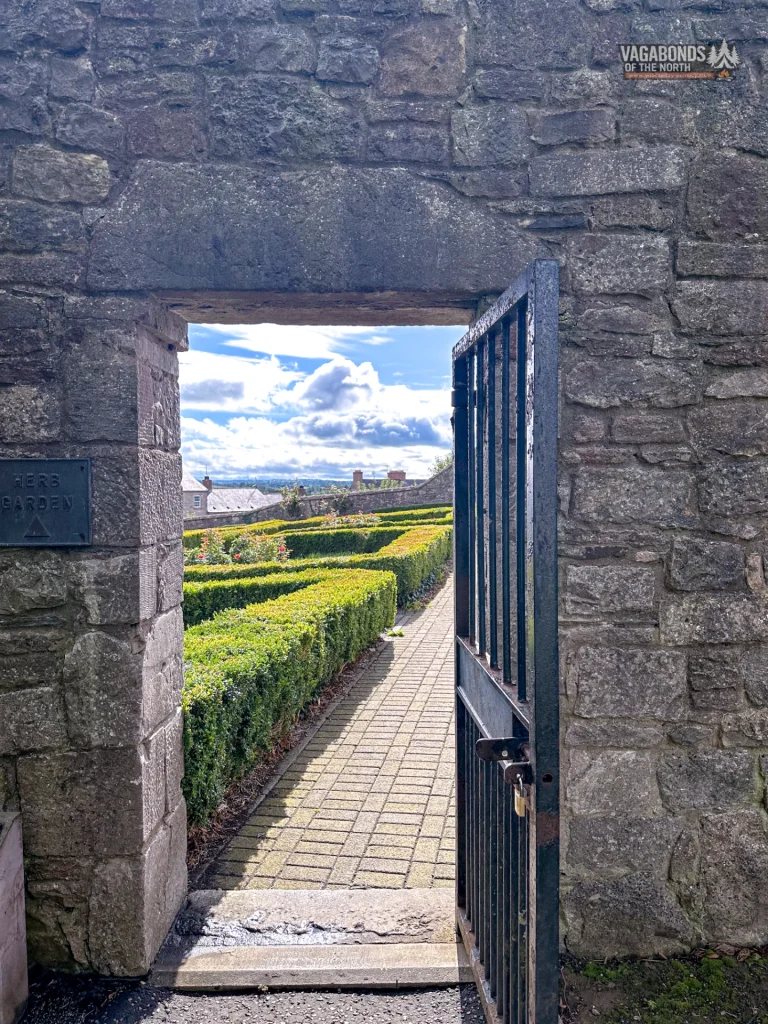
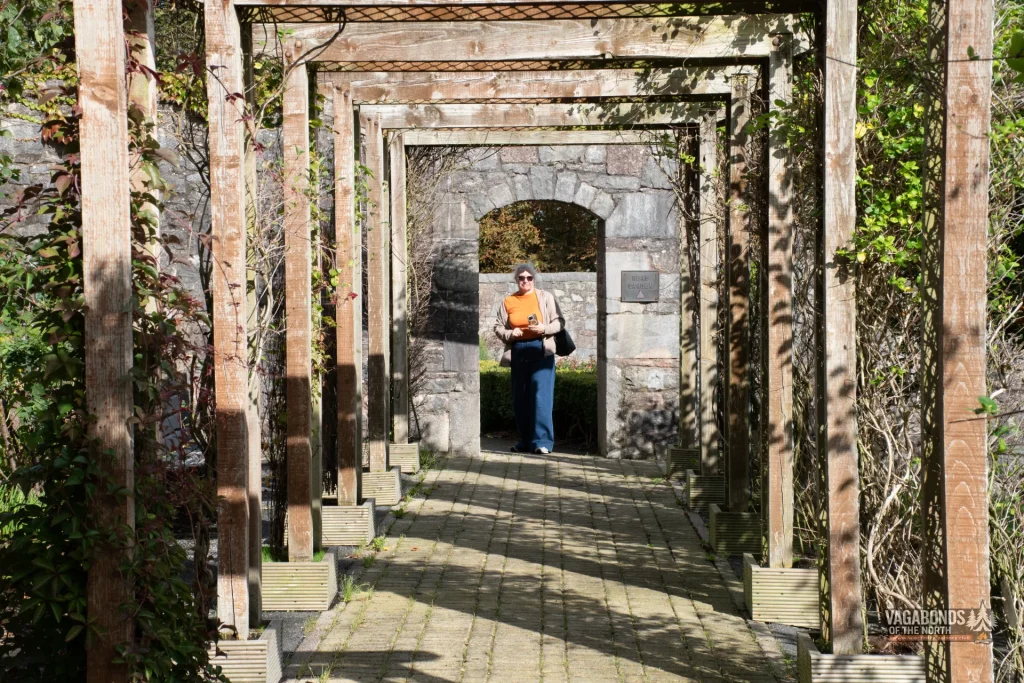
She’d slipped through an unassuming gate leading into a garden.
I found her sitting on a black wooden bench beside a stone wall.
Smiling.
In the sunshine.
She looked like someone who’d discovered a much more enjoyable way to spend the afternoon than hunting for plaques on cathedral walls.
And it was hard to disagree.
The place she’d found turned out to be one of the loveliest corners of our entire trip.
Cathedral Gardens delighted us with their carefully tended greenery, hedges, plants, pergolas, decorative features and peaceful atmosphere.
Among the foliage were ceramic and sculptural details, while some spots offered views across the town.
We hadn’t planned to visit this garden at all.
Perhaps that is why we remember it so fondly.
Sometimes the greatest pleasures come from places you weren’t looking for in the first place.
At 15.05, we took our first photographs of the garden.
Two minutes earlier, I’d found Brian Boru.
Not a bad result for a few minutes’ work.
One king, one rediscovered wife and one beautiful garden.
What more could you ask for? 🤣
Castle Street—An Easy Place to Miss
At around 15.20, we left the cathedral grounds.
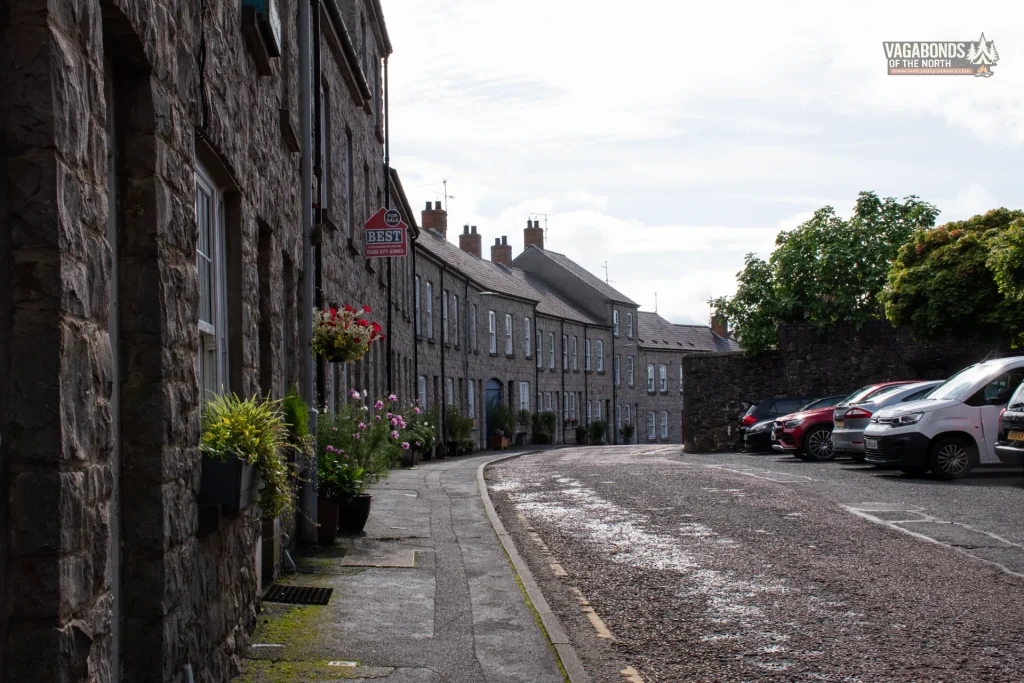
Nearby was Castle Street, a small, picturesque street lined with historic buildings.
Stone houses, architectural details, flowers and the sloping ground created an atmosphere quite different from the city’s main streets.
This is how Armagh keeps surprising you.
You don’t always need a major attraction or an impressive museum.
Sometimes all it takes is turning down a side street.
We also noticed gates leading towards the cathedral grounds. Some were locked, although they looked as if they were normally used.
It was another reminder of how closely sacred spaces and everyday city life sit alongside each other here.
By now, however, another part of everyday life was demanding our attention.
Hunger.
Keegan's—Lunch at Last!
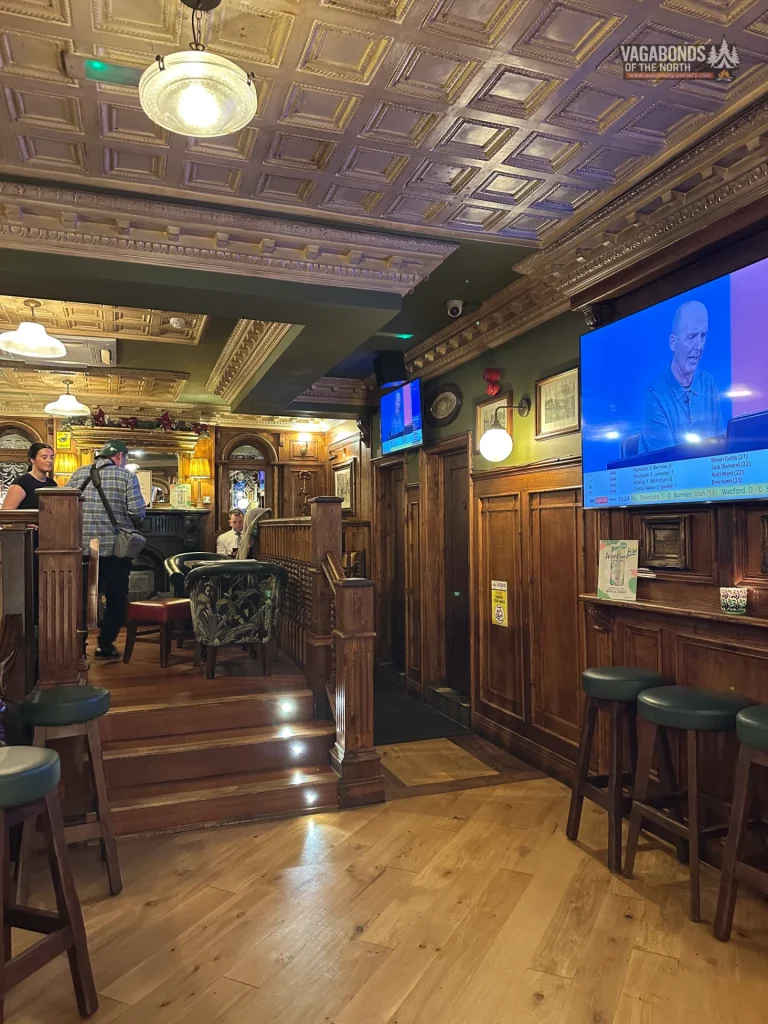
At 15.25, we walked into Keegan’s.
After hours on our feet, it was a very welcome stop.
We loved the interior.
Dark wood, decorative ceilings, green upholstery, small tables and an interesting arrangement of rooms gave the place the atmosphere of a traditional Irish pub.
Nothing felt excessively staged.
Just a pleasant place to sit down, rest and enjoy a meal.
And the children?
At last, the children got their ice cream.
The negotiations that had begun around 9.30 in the morning finally ended in success nearly six hours later.
I don’t know whether Armagh has ever witnessed longer talks, but ours certainly deserved to go on record. 🍦🤣
After lunch, we carried on.
Our legs were beginning to voice their objections, but the city still had more to show us.
St Malachy's Church – Another Side of Armagh
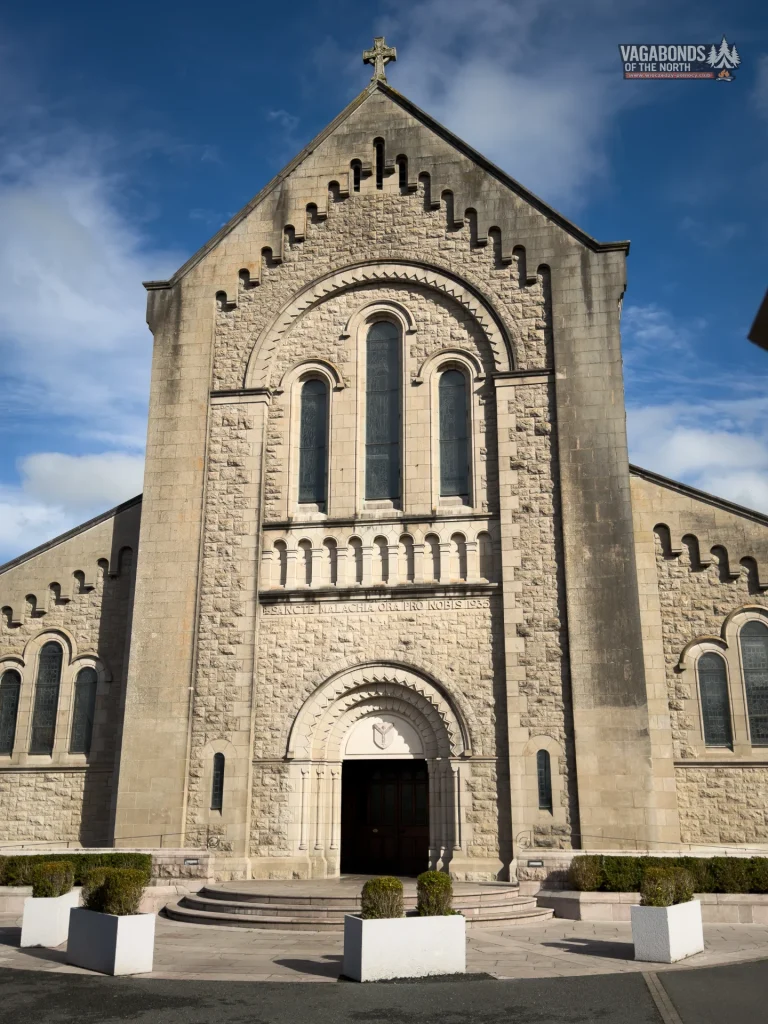
At 16.11, I photographed St Malachy’s Church.
Its architecture is quite different from that of the two great cathedrals.
The pale stone façade, distinctive arcades and rounded arches evoke the Romanesque style.
Above the main entrance is an inscription bearing the date 1935.
It makes an interesting contrast with the churches we’d seen earlier.
In a single day, we’d encountered buildings representing different periods and architectural traditions.
We didn’t go inside St Malachy’s, but its façade certainly deserved a photograph.
The Mall – A Green Heart and Memories of War
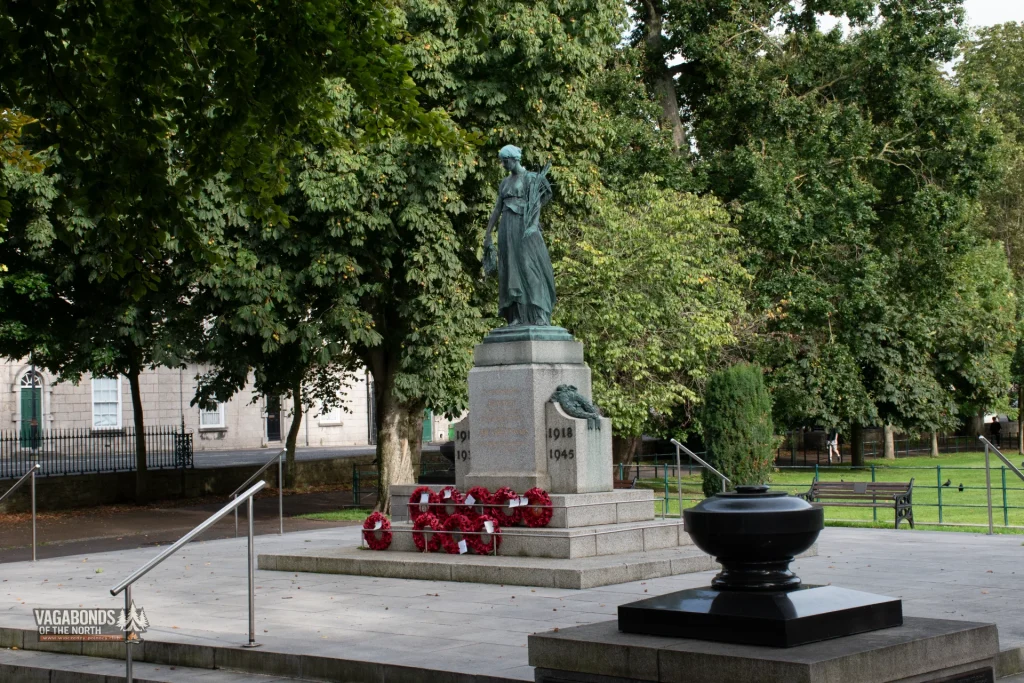
At 16.46, we reached The Mall.
It is a broad, open green space bordered by buildings and trees.
Today, residents use it for walking, relaxing and recreation.
But it also has a military past.
The Mall was once used for military drills and parades.
So it is much more than a park.
It is a space that has served different purposes throughout the city’s history.
Remembering the Fallen of Two World Wars
One of its most important landmarks is the Armagh War Memorial.
A female figure stands on a tall plinth, with the dates of both world wars inscribed below.
During our visit, red poppy wreaths had been laid at its base.
The poppy is one of the best-known symbols of remembrance for fallen service personnel in Britain and other Commonwealth countries.
In Northern Ireland, that symbolism can also be connected with differing historical and political traditions.
Nevertheless, the memorial commemorates people who died in the two greatest conflicts of the twentieth century.
The Boer War and the Story of a Bench
The Mall also has a memorial connected with the South African War of 1899–1902.
We decided to take a break nearby.
The monument stood only a few metres from me.
I wanted to photograph it, but from that distance I couldn’t fit the whole thing into the frame.
I decided I’d take the picture once we’d walked a little further away.
We sat down on a bench.
We started chatting.
About this, that and absolutely nothing in particular.
Then we got up and carried on.
Without the photograph, naturally.
The best part? Everyone assumed someone else must have taken it.
Nobody had.
And so one of Armagh’s monuments defeated the entire Vagabonds of the North team.
The moral of the story?
Photograph first. Bench afterwards! 🤣
Final Discoveries – First Presbyterian Church and Gospel Hall
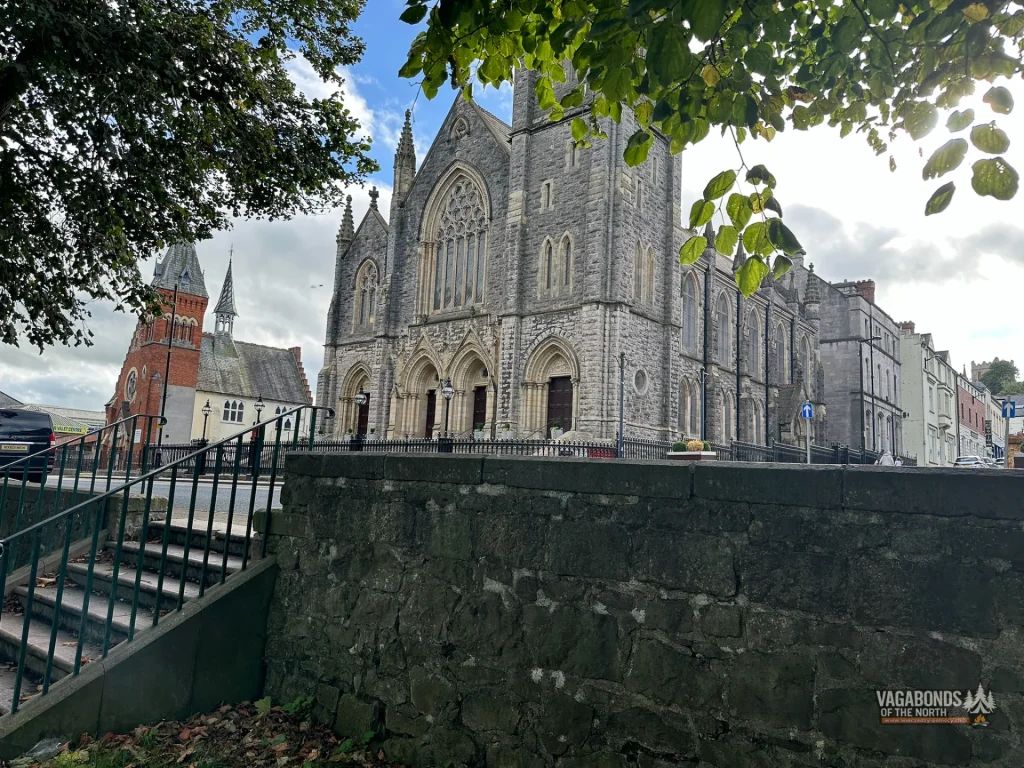
On our way back to the car, two more buildings caught our attention.
The first was First Presbyterian Church, an imposing stone church with Gothic Revival architecture.
Beside it stood Gospel Hall, distinguished by its brickwork and characteristic tower.
The contrast between the two was fascinating.
We’d spent much of the day discovering Armagh as the city of two great cathedrals.
Yet here, at the end of our walk, were further reminders of its religious diversity.
Christianity in Northern Ireland is not limited to the two largest traditions.
Presbyterian and Methodist congregations, along with many other churches and fellowships, are also part of its story.
Gospel Hall has another intriguing detail in its past: the building was previously associated with Freemasonry.
That is something we’d like to investigate more closely on a future visit.
The Last Photograph – Armagh Courthouse
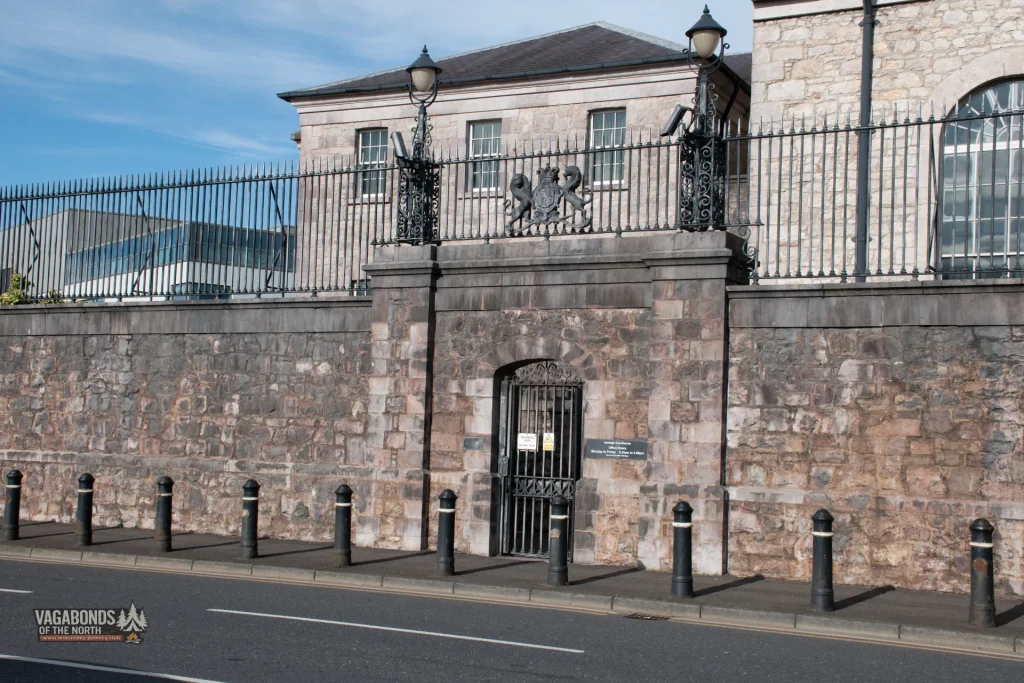
The final photograph I took on our walk was of Armagh Courthouse.
Or, more precisely, of a stone wall, an ornate gate and the building rising above them.
There was no special plan behind it.
We were simply walking back to the car when another interesting piece of architecture caught my eye.
There was a coat of arms on the railings and an information plaque by the entrance.
And so our day, which had begun at the monumental Catholic cathedral, ended beside a building associated with the administration of justice.
In just one day, we’d seen many different sides of Armagh.
Religious.
Historical.
Scientific.
Military.
And thoroughly everyday.
Armagh – See You Again Soon!
At around five o’clock, our adventure was coming to an end.
We’d spent roughly seven and a half hours in the city, taken tens of thousands of steps between us and filled our cameras with photographs.
For some time, the youngest members of our group had been reminding us that their walking reserves were running low.
Funny, really. That morning, they’d still had plenty of energy for lengthy negotiations over ice cream.
By late afternoon, things were rather different. 🤣
Had we seen everything?
Of course not.
We hadn’t made it to Armagh County Museum or the Royal Irish Fusiliers Museum. Nor had we managed to visit every other place on our list.
Some places were closed to us.
Others simply had to wait because we ran out of time.
And one monument had managed to escape our camera altogether.
But I don’t consider any of that a failure.
Quite the opposite.
Armagh turned out to be a city worth returning to.
Not just to tick off a few more sights.
But to wander its streets again, explore its gardens and uncover the stories we didn’t have time to discover on this visit.
And perhaps that sums up our day better than anything else.
Sometimes taking the wrong turn is the best part of the journey. What we discover by accident can be just as fascinating as what we set out to find.
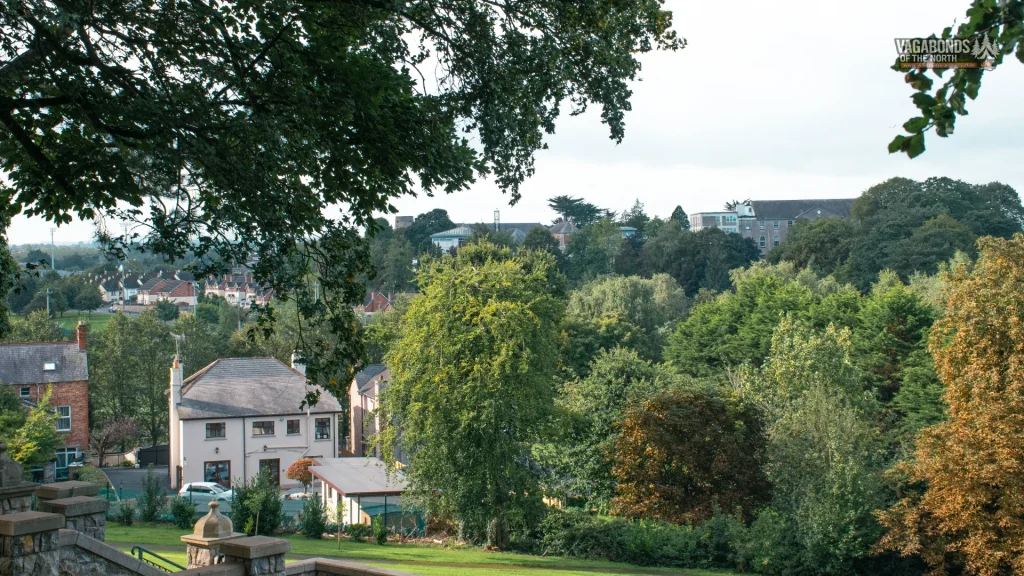
To close our story, I’m leaving you with a photograph of Dana beside the stone steps, with Armagh’s green landscape behind her.
Because that picture says exactly what I’d like to say to this city.
Armagh, see you again soon! ❤️
Discover with us: