
"The Templars did not become powerful because they wielded the sharpest swords. They became powerful because people trusted them."
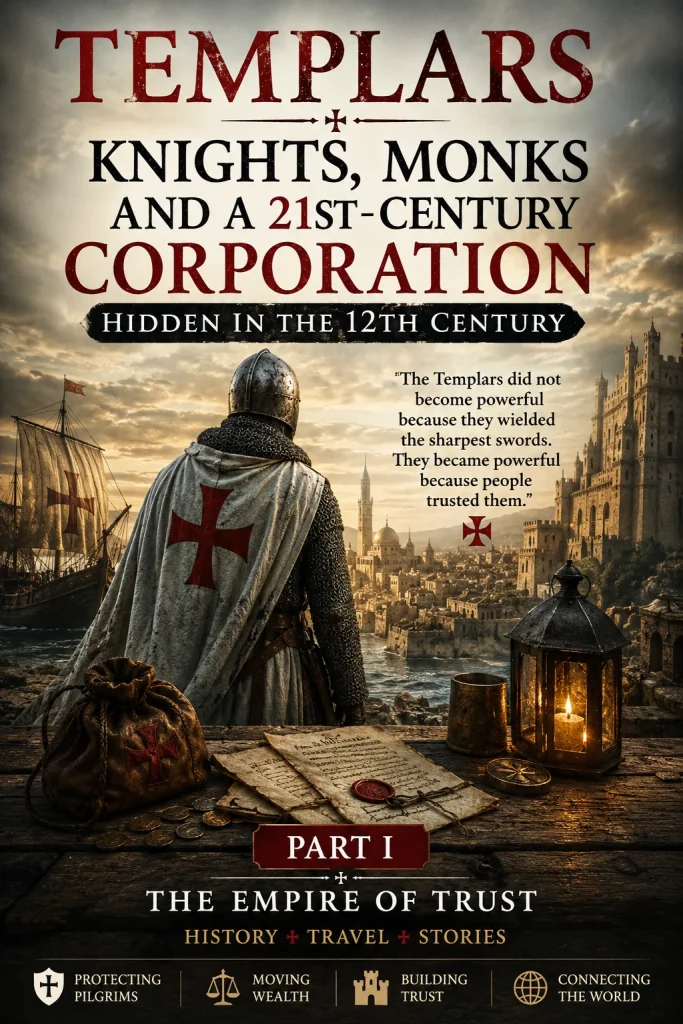
"The Templars did not become powerful because they wielded the sharpest swords. They became powerful because people trusted them."
Vagabonds of the North
Imagine It Is the Year 1180...
You stand in a busy harbour.
Ahead of you lies a journey of several thousand kilometres to Jerusalem.
You have no phone.
No GPS.
No bank account.
No insurance.
What you do have is a pouch full of money and the uncomfortable certainty that more people along the road would like to steal it than protect it.
You are about to enter a world without embassies, international banking systems or emergency phone calls home.
If your money is stolen, you are on your own.
If you are robbed, no one will compensate you.
If you fall ill somewhere between France and the Holy Land, survival may depend on little more than luck and faith.
And yet thousands of people undertook this journey every year.
Why?
Because there was an organisation that offered something almost as valuable as gold itself.
Security.
Trust.
Reliability.
We know them today as the Knights Templar.
A World That Needed the Templars
It is easy for modern people to look at the Middle Ages with a sense of superiority.
We often imagine mud, disease, primitive villages and people who believed the world ended beyond the next hill.
Reality was far more complicated.
The twelfth century was a period of growth and transformation.
Cities expanded.
Trade routes flourished.
Merchants travelled further than ever before.
Pilgrims crossed entire continents.
New networks of communication connected distant regions.
To people living at the time, the world felt every bit as dynamic as ours does today.
The technology was different.
The challenges were not.
How do you travel safely?
How do you protect your wealth?
Whom can you trust?
How do you move money across vast distances?
The Templars emerged as one answer to those questions.
Nine Knights and an Idea That Changed Europe
Tradition tells us that the Order was founded around 1119.
A small group of knights led by Hugues de Payens took religious vows and pledged to protect pilgrims travelling to the Holy Land.
It sounds modest.
Almost insignificant.
Yet within a few generations, that small brotherhood became one of the most influential organisations in medieval Europe.
The Templars possessed something many others lacked.
A clear mission.
Discipline.
And remarkably effective organisation.
Knights? Yes. But That Is Only Part of the Story
When most people hear the word “Templar”, they imagine a warrior in a white cloak marked with a red cross.
Hollywood has made sure of that.
Reality, however, was less cinematic.
Most Templars spent far more time managing estates than fighting battles.
They kept records.
Oversaw farms.
Protected warehouses.
Organised transport.
Administered lands.
Solved logistical problems.
In many ways, they resembled a multinational organisation far more than a conventional military order.
And that is precisely what makes them so fascinating.
The Medieval Problem of Trust
Imagine you live in England and plan to travel to Jerusalem.
You possess your life’s savings.
Carrying all of that wealth across Europe would be incredibly risky.
The Templars offered a solution.
You could deposit your money at one Templar house and receive documentation proving the deposit.
Later, in another Templar centre, you could reclaim the equivalent value.
This was not modern banking.
But it was an elegant solution to a very real problem.
People no longer needed to carry their entire fortune on dangerous roads.
Instead, they carried trust.
Were the Templars the First Bankers?
Were the Templars the First Bankers?
The answer is both yes and no.
No, they did not invent banking.
No, they did not invent money.
No, they were not the world’s first financiers.
Yet they successfully combined security, reputation and an international network in ways that felt revolutionary to many people.
For a merchant or pilgrim, the question was not who invented banking.
The question was whether their money would still be there when they arrived.
Are We Really So Different?
This is where history begins asking uncomfortable questions.
Modern people often assume they are fundamentally different from those who lived eight hundred years ago.
In some ways, they are.
We have smartphones.
Aircraft.
Artificial intelligence.
The internet.
But once technology is stripped away, many familiar concerns remain.
Who can we trust?
Where can we safely store our wealth?
Which information is reliable?
Who deserves our confidence?
The Templars wrestled with remarkably similar questions.
They simply used different tools.
The Vagabonds' Perspective
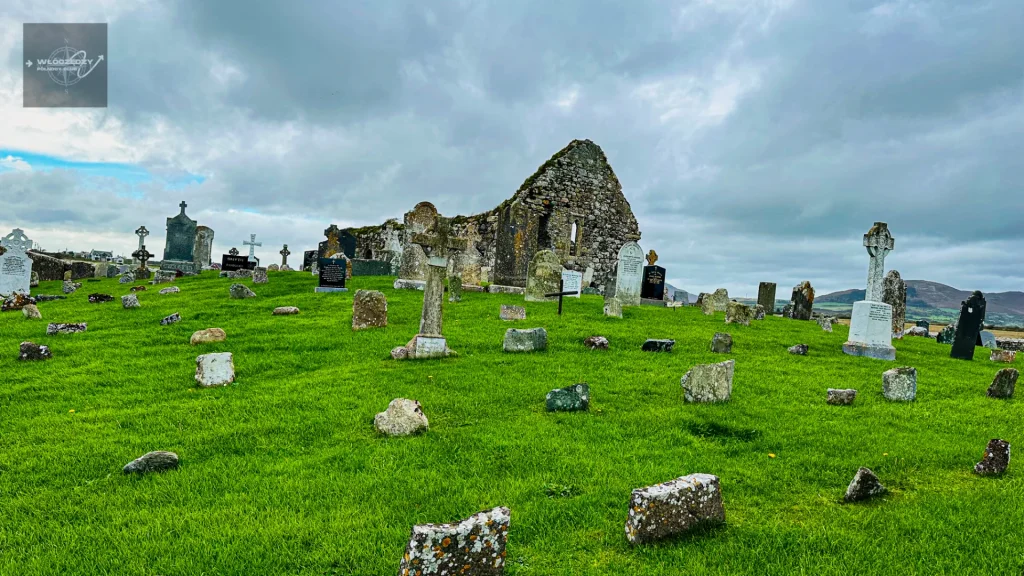
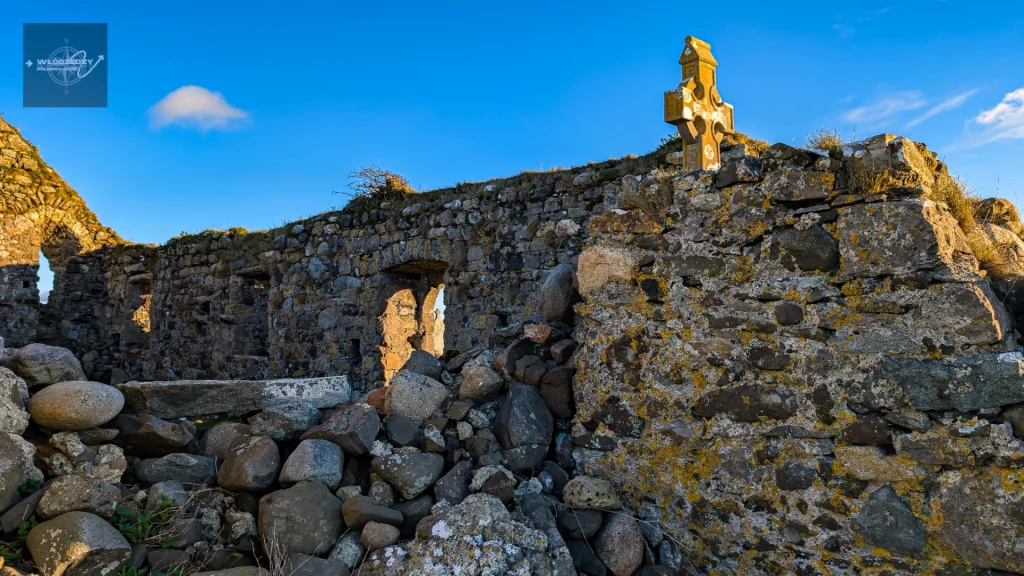
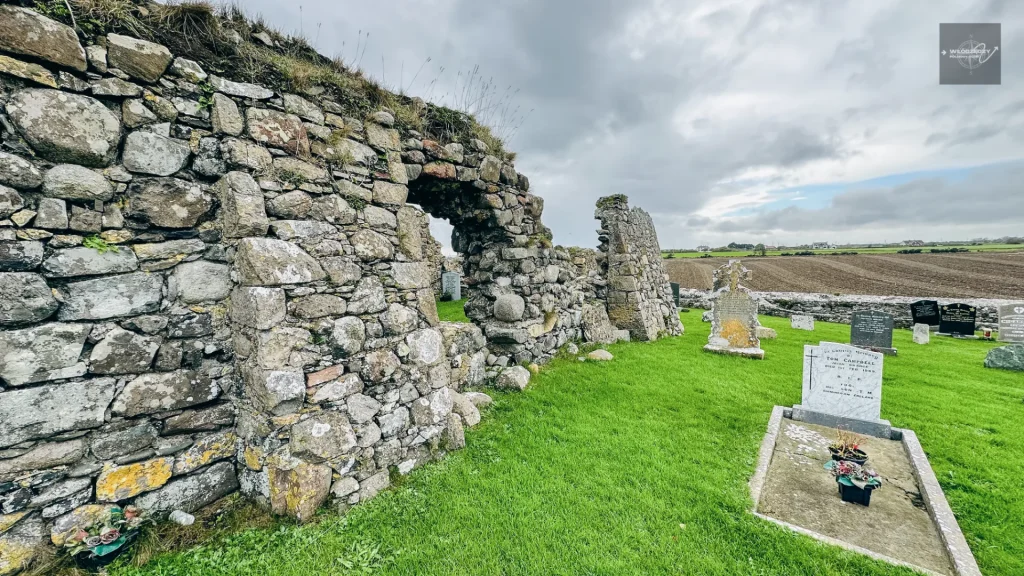
Standing among ancient ruins, forgotten graveyards or places such as Kilwirra Church on the Cooley Peninsula, it is easy to feel as though we are looking at a world that has vanished forever.
Yet some things never truly change.
People still travel.
People still search for security.
People still seek meaning.
And people still place their trust in institutions that promise protection and stability.
Perhaps the greatest difference between us and the people of the twelfth century is not who we are.
Perhaps it is simply the tools we use.
Conclusion
Most people remember the Templars as warriors.
History suggests something far more interesting.
Their greatest achievement was not a battlefield victory.
It was not a castle.
It was not even their wealth.
Their greatest achievement was creating an organisation trusted by ordinary people, merchants and rulers alike.
In a world filled with uncertainty, that kind of trust was more powerful than any sword.
"The Templars did not conquer the world. They simply convinced people that travelling through it could be a little safer."
Vagabonds of the North