The Voladores Dance—People Who Dance with the Sky
When we first saw them above the crowd in Costa Maya, I’ll admit something honestly:
The temperature suddenly felt a few degrees higher.
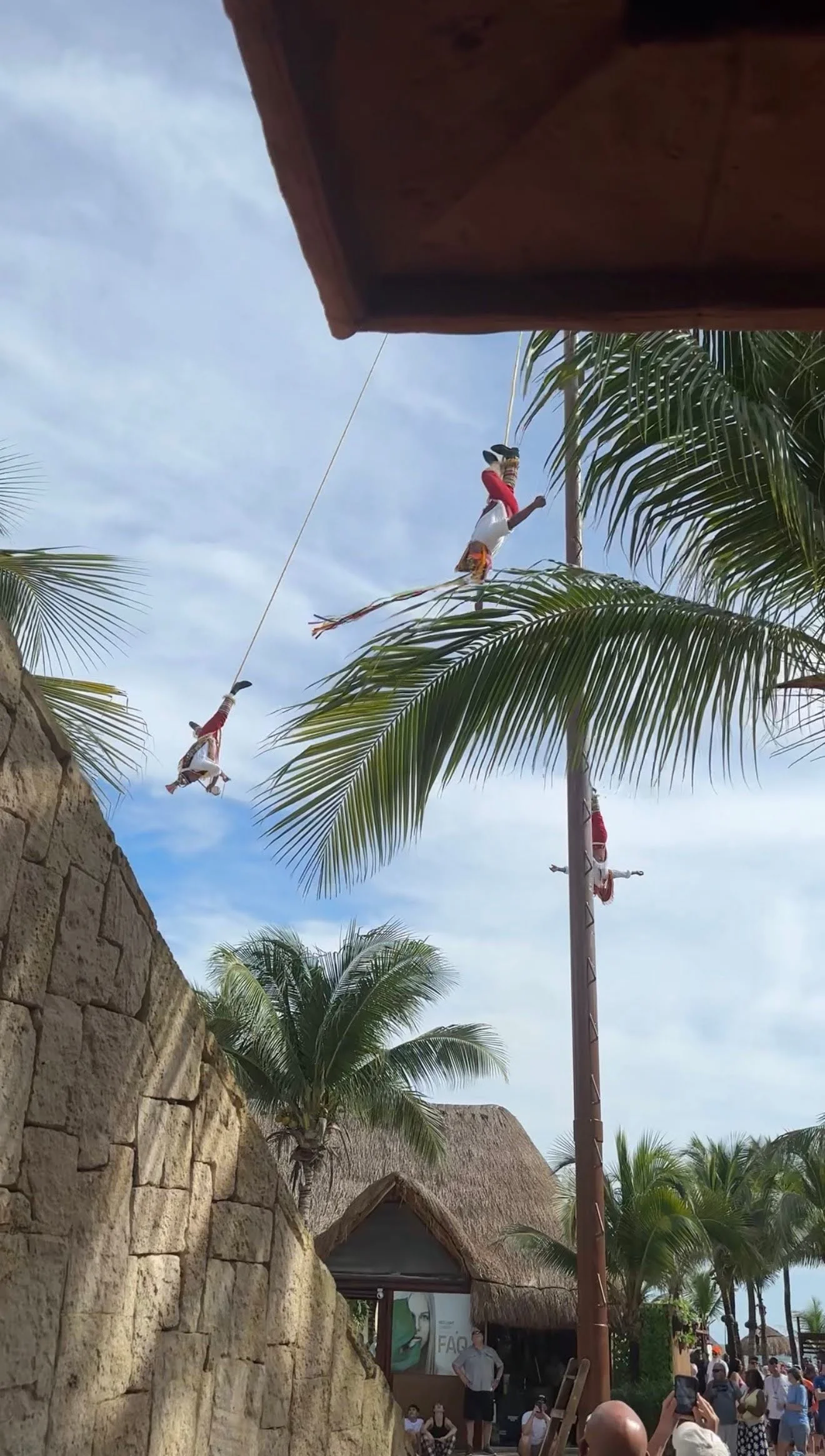
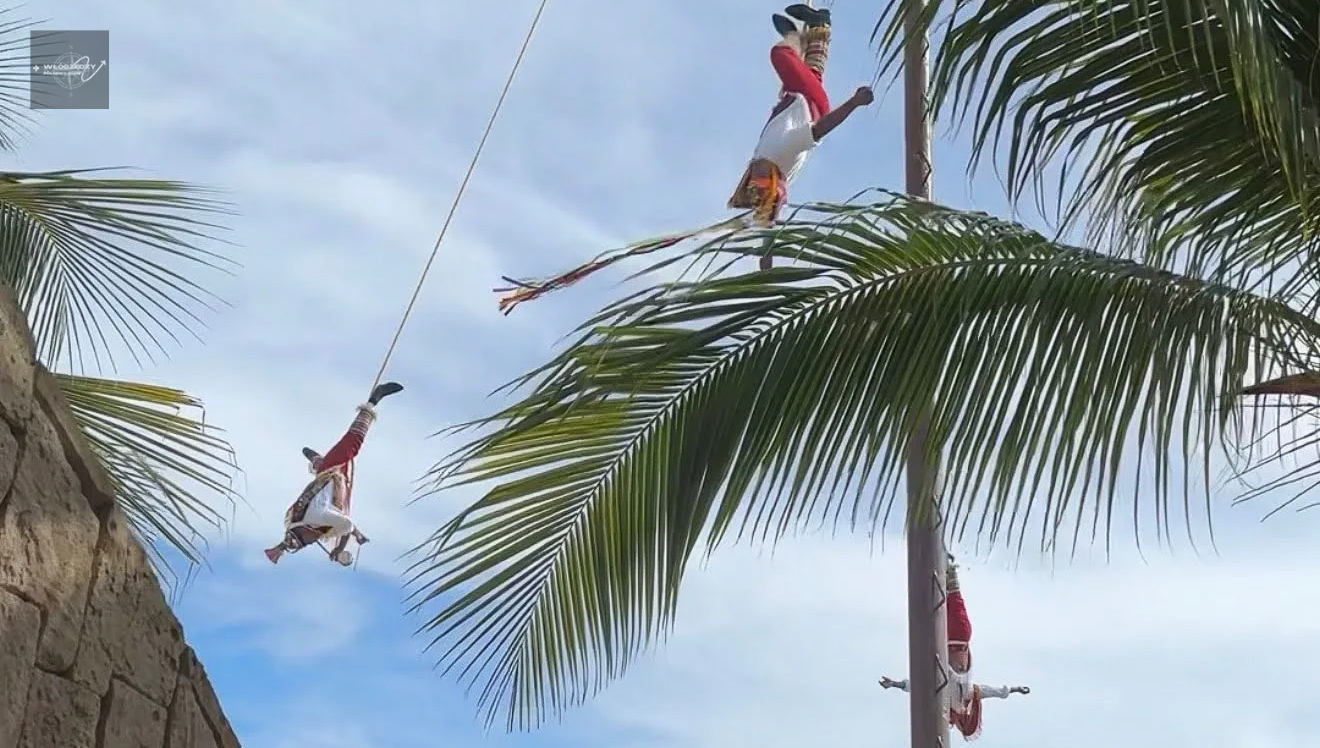
Four men hanging upside down dozens of feet above the ground, slowly spinning around a tall wooden pole. One of them standing at the very top, calmly playing a flute and a small drum.
At first glance, it may look like a spectacular show prepared for tourists.
But the truth goes much deeper.
The ritual is known as Danza de los Voladores, or The Dance of the Flyers. It originates primarily from the culture of the Totonac people of Veracruz in Mexico, although its symbolic roots reach deep into the broader spiritual world of ancient Mesoamerica.
Historically, the ritual was performed as a prayer for rain and agricultural fertility.
The symbolism is precise:
-
Four flyers represent the four cardinal directions
-
The fifth performer at the top represents the center of the universe and the connection to the sky
-
The spiraling descent symbolizes the movement of the sun and the cycles of time
Traditionally, performers climbed a wooden pole up to 30 meters high—without modern safety equipment. At the top, the leader played the flute and drum while the four flyers leaned backward and descended slowly, suspended by ropes unwinding toward the ground.
It is dramatic.
And undeniably powerful.
Today the ritual is often performed in places visited by travelers—including ports like Costa Maya. Yet it is far from a staged invention for tourism. It is a genuine cultural tradition, preserved for centuries and recognized by UNESCO as Intangible Cultural Heritage of Humanity.
And even if you witness it between souvenir stands and coconut vendors in a Caribbean port, it is impossible not to feel a moment of respect.
Because when someone hangs upside down twenty meters above the ground while playing a flute…
That’s no longer just entertainment.
That is living tradition.