KING JOHN’S CASTLE—PART I
The castle that saw everything… and probably enjoyed very little of it
King John’s Castle – the fortress that watched history get messy
Some places look fantastic on Instagram.
Others look like they could casually tell you a story that ends badly for most people involved.
King John’s Castle in Limerick firmly belongs to the second category.
Today, it’s a beautifully restored attraction where families wander the walls, kids enjoy interactive exhibits, and visitors sip coffee while taking panoramic photos of the River Shannon.
A few centuries ago?
Well.
A few centuries ago, this was less “family day out” and more:
- starvation,
- sieges,
- epidemics,
- military panic,
- and people making exceptionally poor life decisions.
King John’s Castle is not just another medieval fortress.
It is one of those places where Irish history repeatedly arrived wearing muddy boots and bad intentions.
And long before King John himself got involved…
things were already getting dramatic.
Sometimes literally on fire.
“Some castles tell stories. This one survived them.”
Vagabonds of the North
Before the castle, there were Vikings
If you think of Limerick as a pleasant riverside Irish city today, medieval residents might politely laugh.
Or aggressively laugh.
Because Limerick’s beginnings were… less peaceful.
Around 922 AD, Vikings established a settlement here.
And to be fair:
Vikings were not known for visiting places “for the local culture.”
Their usual operating model looked more like:
arrive → take things → possibly burn things → leave
Over time, though, Limerick became much more than a raiding base.
Its position on the River Shannon made it incredibly valuable.
Strategically?
Excellent.
Commercially?
Excellent.
Militarily?
Also excellent.
Which, naturally, meant everyone wanted it.
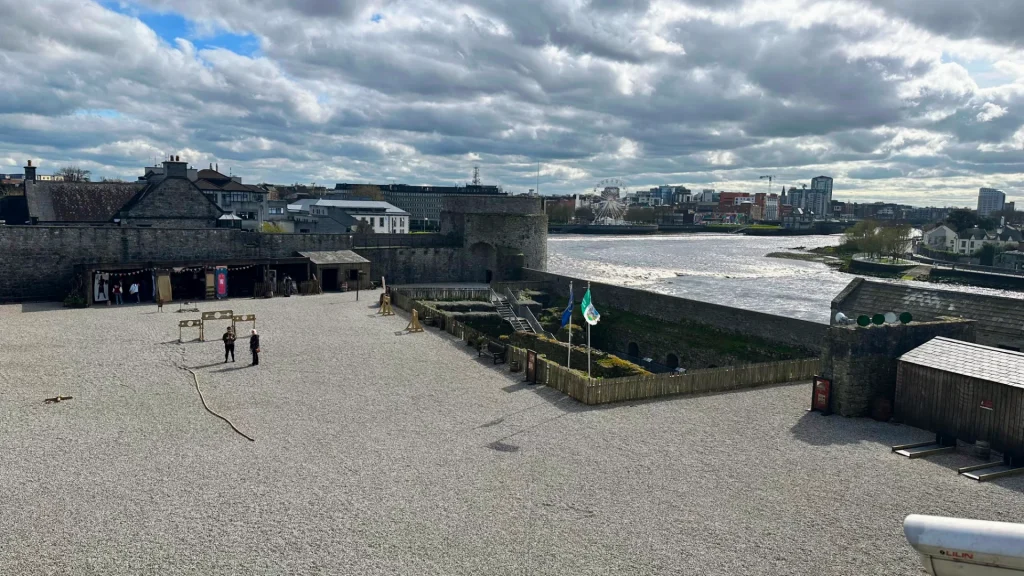
King’s Island, where the castle now stands, was already prime strategic real estate.
So before the first Norman stone was ever laid…
this patch of land already had a disturbingly solid résumé in organised violence.
The Irish were fully capable of dramatic decisions too
By the 12th century, things escalated further.
And by “escalated,” I mean “everyone made increasingly destructive choices.”
The Normans had begun their expansion into Ireland.
Enter:
Domnall Mór Ua Briain
King of Thomond.
A man who clearly believed in decisive action.
In 1174, rather than let Limerick fall into Norman hands…
he burned it.
Yes.
His own city.
Because apparently the official strategy was:
“If I can’t keep it, nobody gets it.”
Which is admittedly dramatic, but effective.
At least temporarily.
Because the Normans had one defining characteristic:
they were unbelievably persistent.
And they came back.
Enter King John. A deeply unpopular gentleman.
If medieval England had a ranking of “least beloved monarchs,” John Lackland would comfortably sit near the top.
Yes.
That King John.
The Magna Carta one.
The politically messy one.
The strategically questionable one.
Even his nickname wasn’t exactly flattering.
“Lackland”
meaning:
“the one without land.”
Which sounds suspiciously like the medieval equivalent of:
“the guy who keeps messing things up.”
When John came to power, Ireland was unstable, violent and strategically critical.
Which, historically speaking, was Tuesday.
Normans wanted control.
Irish lords wanted them gone.
Everyone had grievances.
Most people had weapons.
Naturally, the solution was:
build a very large fortress.
And so, King John’s Castle was born.
Building a fortress that politely says “don’t even try”
Construction began around 1200.
Location?
Perfect.
King’s Island offered:
- natural water protection,
- control over river crossings,
- dominance over Shannon trade,
- excellent defensive positioning,
- and a very convenient way of intimidating everyone nearby.
This was not built as some romantic knightly residence with poetry and elegant medieval banquets.
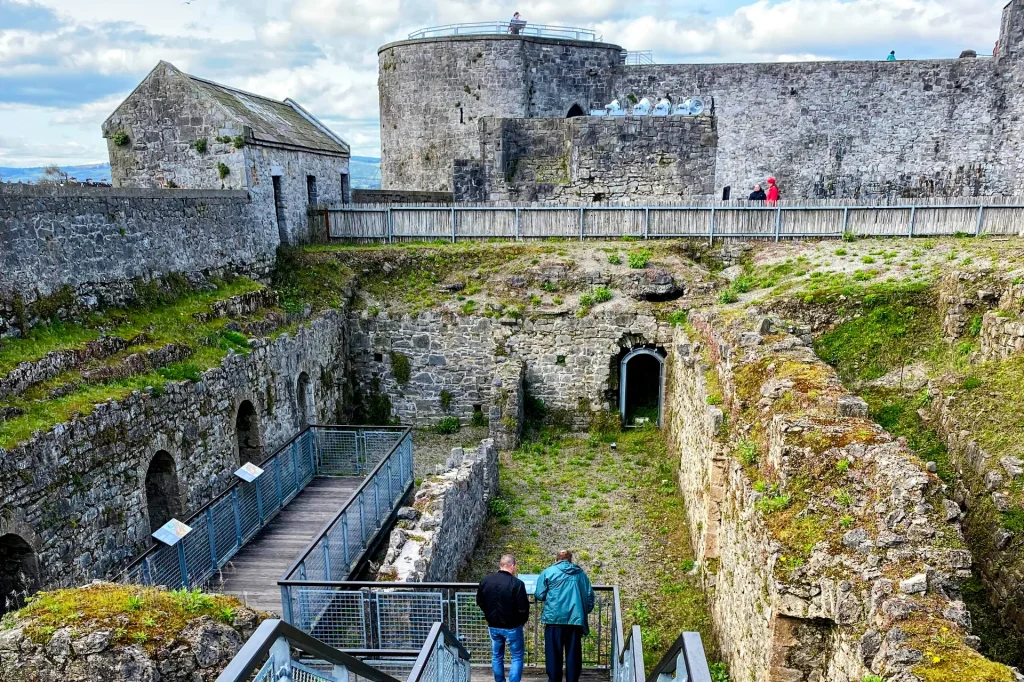
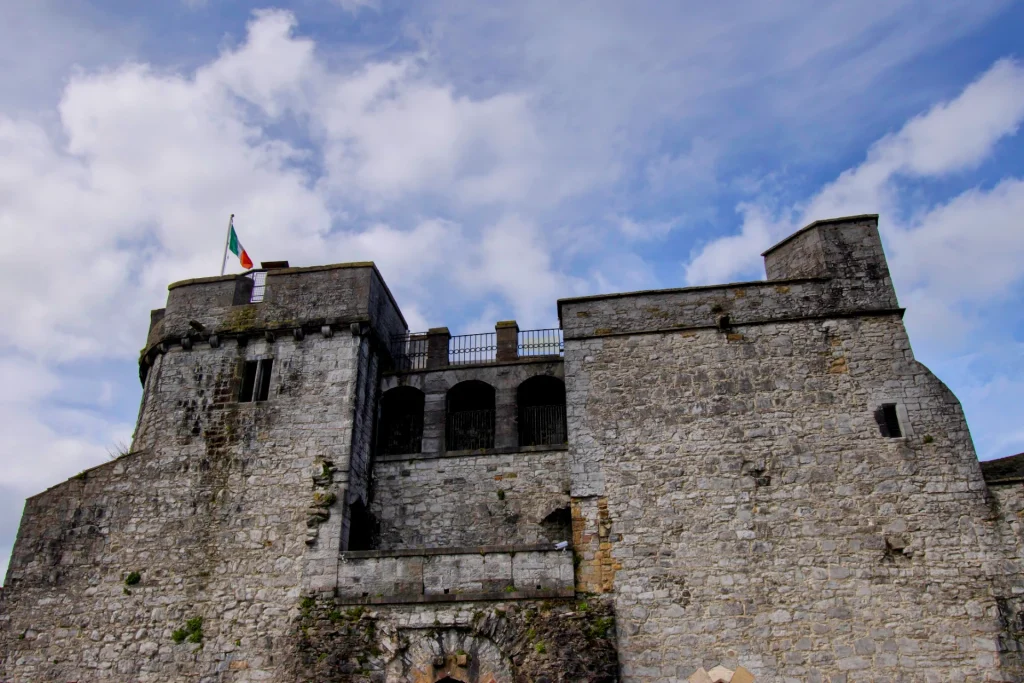
This was a military machine made of stone.
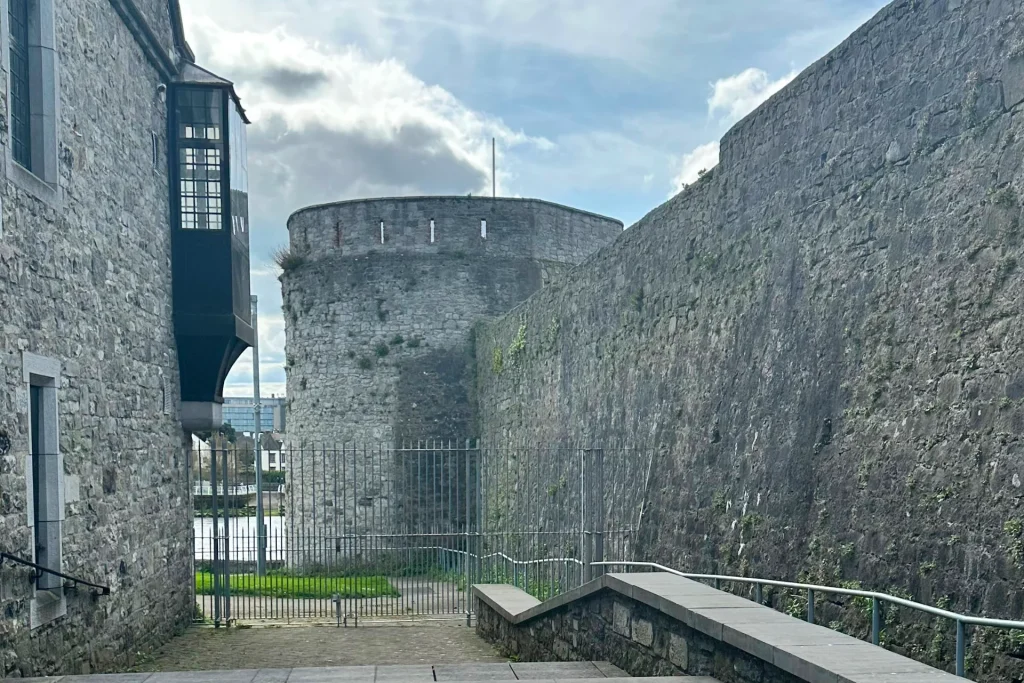
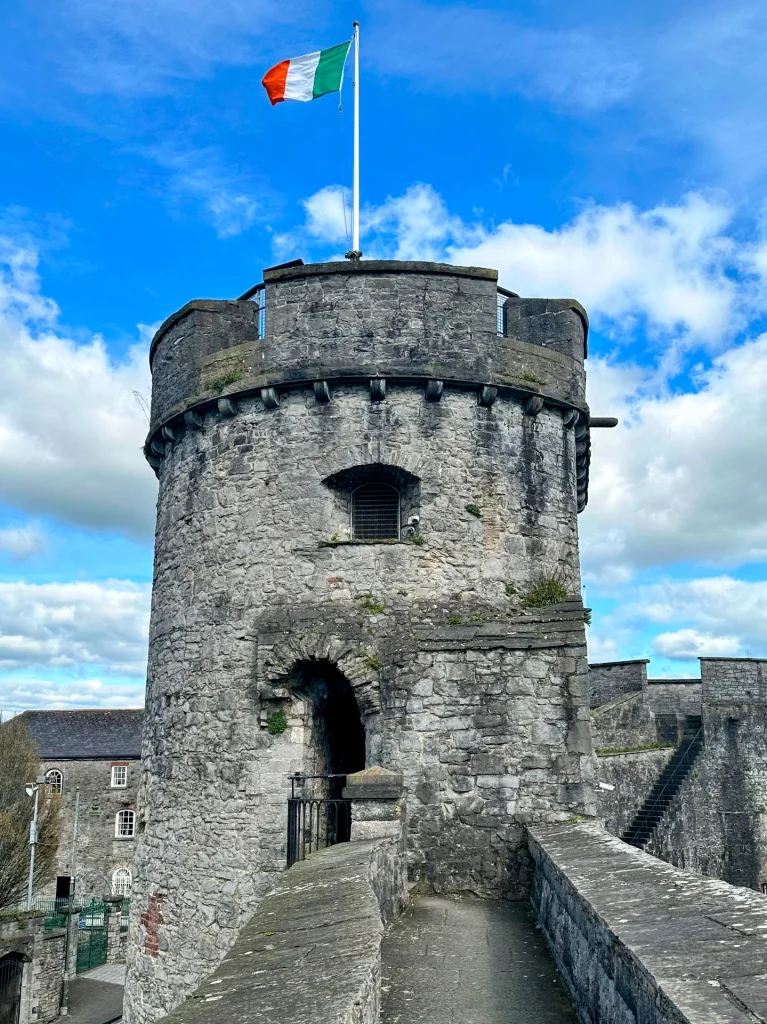
Thick walls.
Defensive towers.
Minimal subtlety.
Purpose?
Simple:
show people who was in charge.
And to be fair…
it did that rather effectively.
Humour insert