
KING JOHN’S CASTLE—PART III
Ghosts, dark legends, Viking secrets and a fortress that simply refused to die
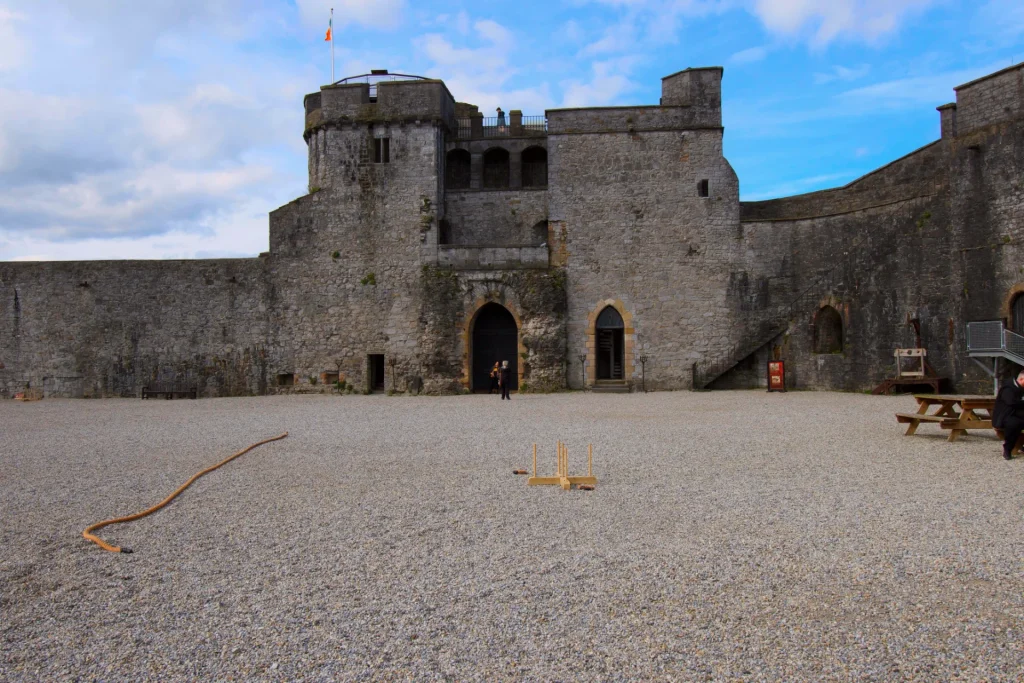
“History never truly leaves places like this.”
Vagabonds of the North
INTRO
By now, King John’s Castle has survived:
- Viking predecessors,
- Norman conquest,
- multiple sieges,
- starvation,
- Cromwell,
- political betrayal,
- military chaos,
- and centuries of Irish weather.
Frankly, that alone deserves respect.
But medieval fortresses rarely stop at military history.
Eventually, every old stone building with enough suffering attached acquires another layer:
ghost stories.
And naturally…
King John’s Castle is no exception.
Is the castle haunted?
Let’s address the obvious.
If you have a medieval fortress involving:
- warfare,
- executions,
- disease,
- imprisonment,
- starvation,
- centuries of misery,
- and a healthy Irish imagination…
someone is eventually going to insist something walks the corridors at night.
Do we have peer-reviewed academic confirmation of a ghostly Norman guard doing rounds?
No.
Do local storytelling traditions enjoy the idea immensely?
Absolutely 😄
And honestly?
That feels entirely understandable.
Because even without ghosts, this place already has the atmosphere.
Dark things that definitely happened
The good news:
we don’t need invented legends to make this castle unsettling.
Reality handles that nicely.
For centuries King John’s Castle functioned as:
- military headquarters,
- defensive stronghold,
- political power symbol,
- site of repeated sieges,
- instrument of control.
Which usually translates to one thing:
human suffering.
Reasonably safe assumptions include:
- prisoners,
- interrogations,
- wounded soldiers,
- civilians trapped during sieges,
- deaths from starvation,
- disease,
- battlefield trauma.
Not every individual story was recorded.
But places like this do not accumulate history gently.
DARK CORNER ☠️
The most unsettling thing about King John’s Castle?
Not the possibility of ghosts.
The certainty of very real human suffering.
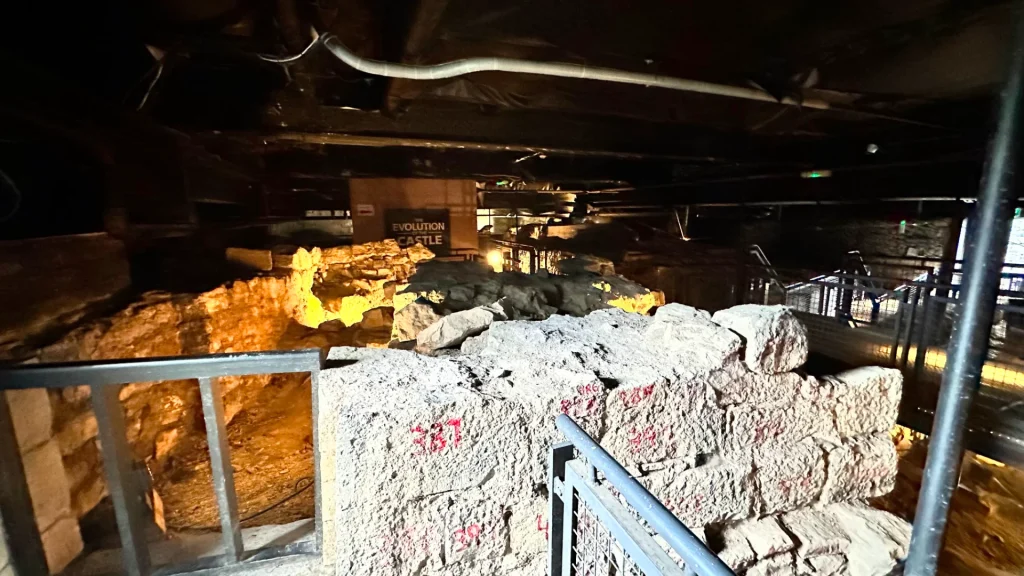
Archaeologists ruined the timeline (in the best way)
One of the most fascinating discoveries came during modern archaeological investigations.
Because beneath the Norman castle…
they found Viking Limerick.
Yes.
The medieval Norman fortress sits atop earlier Viking settlement remains.
Which means visitors today are effectively walking across multiple historical layers at once:
- Viking occupation,
- Gaelic Ireland,
- Norman conquest,
- religious conflict,
- British military control,
- modern tourism.
It’s less a timeline.
More a historical lasagne 😄
And a remarkably violent one.
About King John himself…
Let’s be fair.
This wasn’t exactly a universally adored monarch.
John Lackland had a complicated reputation.
Which is a diplomatic way of saying:
many people thought he was dreadful.
Known for:
- political instability,
- conflicts with nobles,
- military failures,
- aggressive taxation,
- questionable judgement,
- and a deeply unimpressive popularity rating.
So while the castle bears his name…
local Irish enthusiasm for his personal brand was understandably limited.
VAGABOND COMMENT 🍺
If medieval history had TripAdvisor:
⭐ Excellent location
⭐ Strong walls
⭐ Catastrophic management
What happened to the castle afterwards?
Like many fortifications, King John’s Castle eventually lost strategic importance.
Because military technology is deeply disrespectful toward defensive architecture.
As artillery improved, even thick medieval walls became less reassuring.
Over time, the castle shifted roles.
Military.
Administrative.
Practical.
At various points:
- neglected,
- underused,
- partially forgotten,
- surviving more through stubbornness than planning.
Which, frankly, feels very Irish.
😄
King John’s Castle today
And then you arrive.
With:
- a camera,
- coffee,
- comfortable shoes,
- and significantly better survival odds.
Modern King John’s Castle is a genuinely excellent heritage attraction.
And credit where due:
it’s done properly.
You get:
- immersive exhibitions,
- meaningful archaeology,
- excellent historical interpretation,
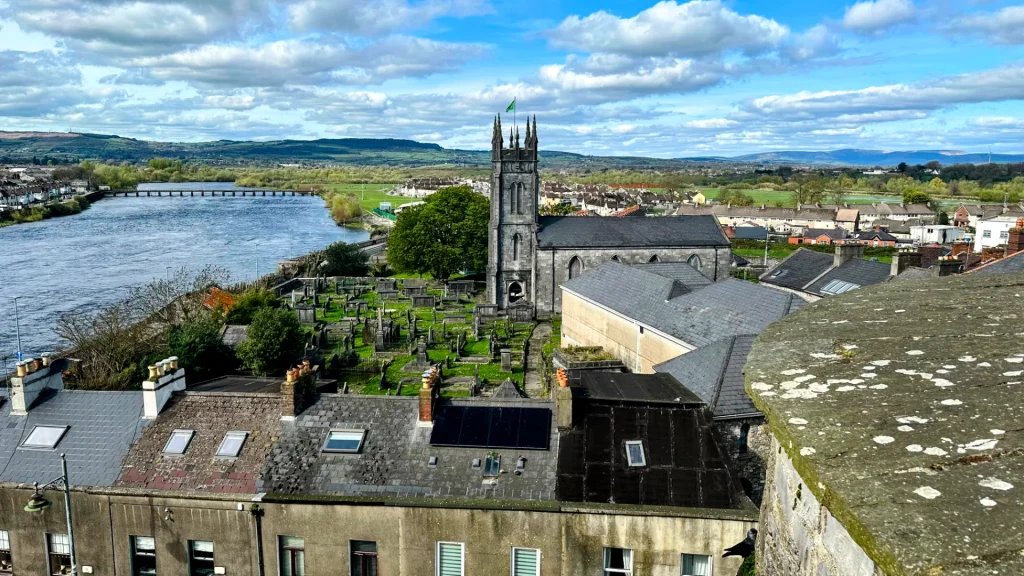
- fantastic views over the River Shannon,
- city panoramas,
- access to spaces once associated with much worse life outcomes.
But despite all the modern polish…
the atmosphere remains.
Because some places carry weight.
This one absolutely does.
Is it worth visiting?
Yes.
Absolutely.
But not just because it’s a “must-see.”
Because this place actually tells a story.
King John’s Castle is not decorative history.
It’s not simply photogenic medieval architecture.
It is a site where Irish history repeatedly collided with war, politics, suffering and survival.
And standing there…
you genuinely feel some of that.
Especially if the weather turns dramatically Irish halfway through your visit.
FINAL THOUGHTS
Some castles were built for prestige.
Some for beauty.
King John’s Castle was built for control.
For defence.
For intimidation.
For survival.
And somehow…
it succeeded.
From Viking beginnings to Norman power.
From siege warfare to political treaties.
From starvation to tourism.
It endured all of it.
Now it lets us walk the walls, take photographs and pretend medieval life was atmospheric and romantic.
It wasn’t.
And that’s precisely what makes the story so compelling.
FINAL CTA
Visit the castle.
Climb the walls.
Take the photos.
Enjoy the views.
But spare one thought for the people who once stood in exactly the same place…
having a dramatically worse day.