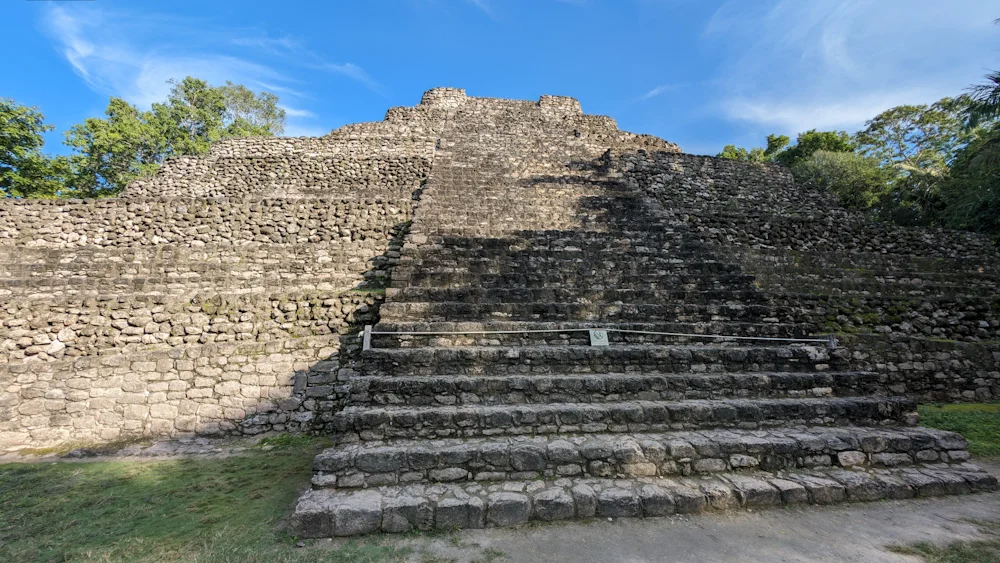
The Road In—A Study in Contrast
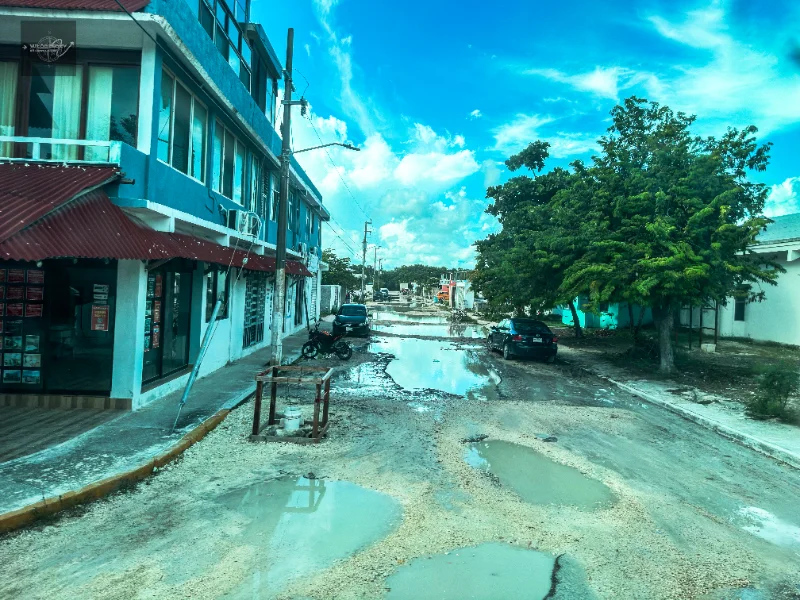
Rural road in southern Mexico on the way to Chacchoben
The journey to Chacchoben takes about forty minutes by bus—a vehicle that felt like a nostalgic throwback to a 1990s Eastern European coach. Slightly rattling, slightly bouncing, but determined.
The road? Full of holes. Not dangerous, just honest. Real.
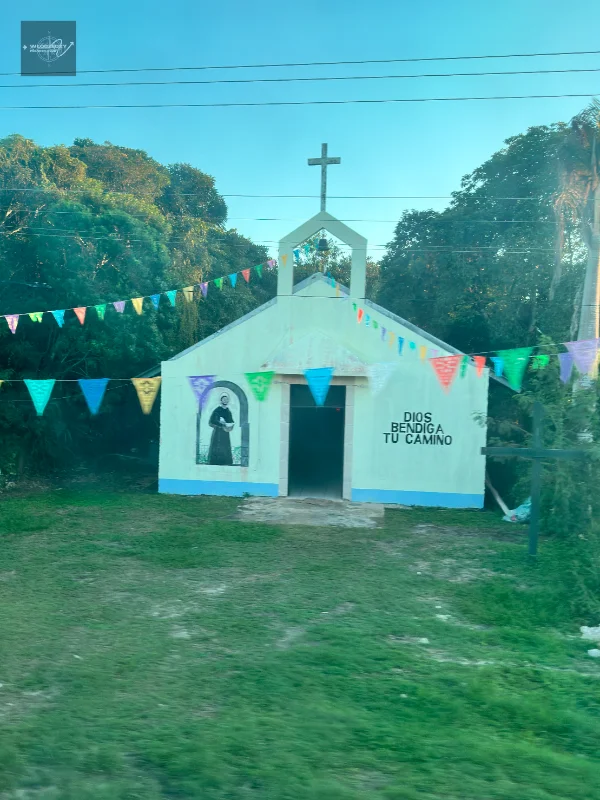
Driving towards Chacchoben, we passed a roadside chapel.
Outside the window, the Caribbean postcard fades quickly. Wooden houses. Tin roofs. Small roadside shops. A chapel with the words: “Dios bendiga tu camino.”
This is not the Mexico from cruise brochures.
This is the Mexico that exists beyond resort walls.
And that contrast matters.
The First Impact
I expected to see a pyramid.
One.
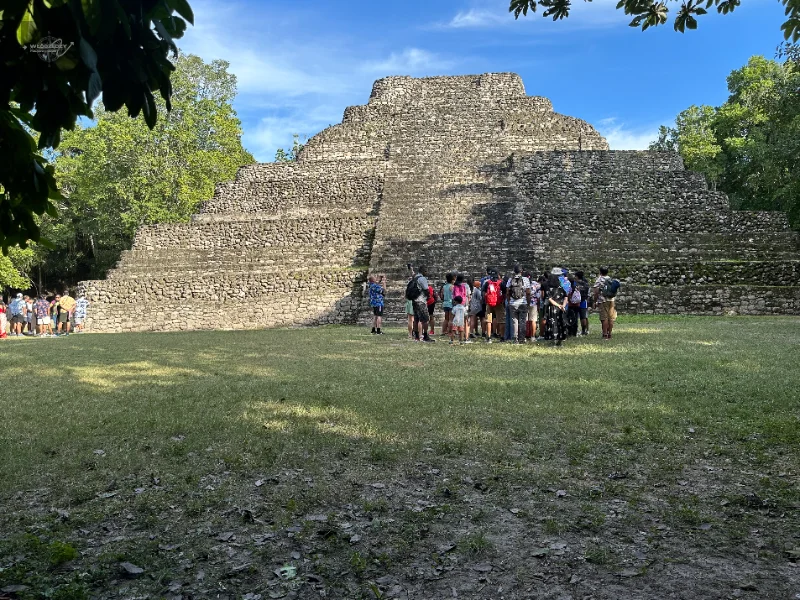
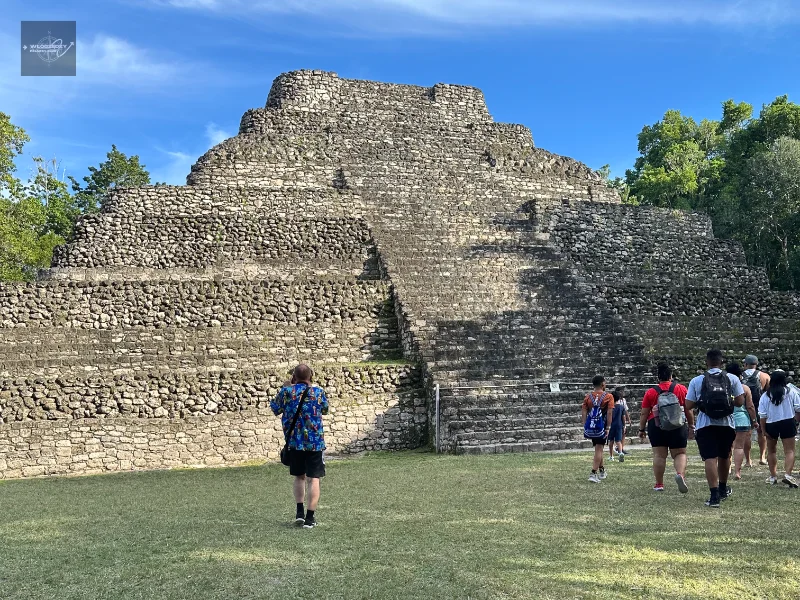
Mayan pyramid at Chacchoben archaeological site
Large. Impressive. Something you circle once, take a few photos, and move on.
When our guide said, “Ladies and gentlemen, here is the pyramid,” I assumed it was just the beginning.
It wasn’t.
This Is Not a Pyramid. It’s a City.
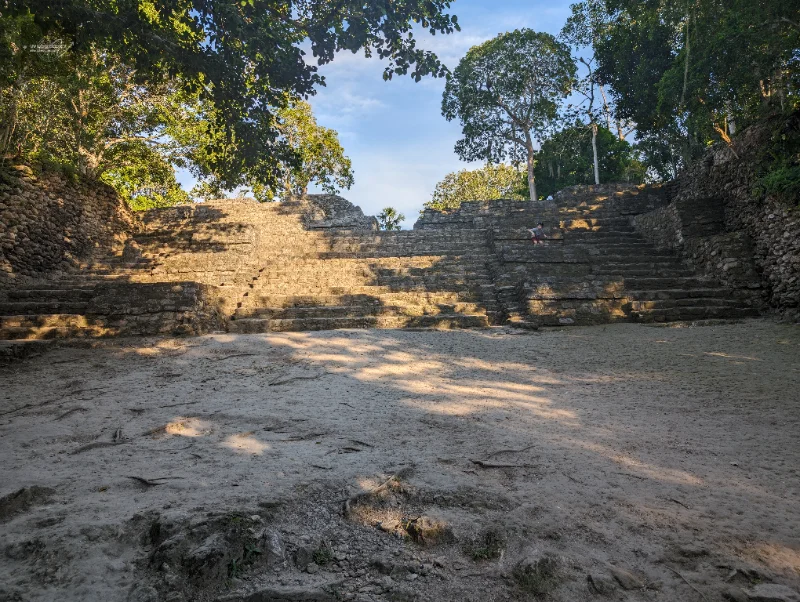
Ruiny miasta Mayów otoczone dżunglą / Ruins of a Mayan city surrounded by jungle.
Chacchoben is not a single monument.
It is an entire ancient Mayan city.
Scattered structures across a vast jungle-covered landscape. Platforms. Staircases. Ceremonial spaces. The scale is overwhelming.
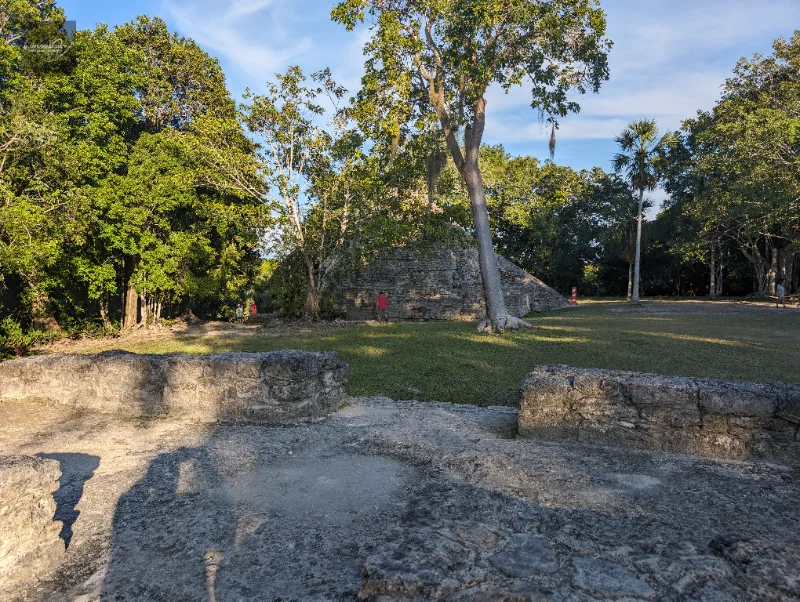
Jedno z wielu stanowisk w Chacchoben / One of the many sites in Chacchoben
Standing there, it is almost impossible to understand how a civilization capable of building something like this could decline so rapidly.
The Maya were not primitive builders.
They were mathematicians. Astronomers. Engineers.
This wasn’t a village.
It was a structured civilization.
The Jungle Was Patient
Walking between the excavation sites, one realization grows stronger:
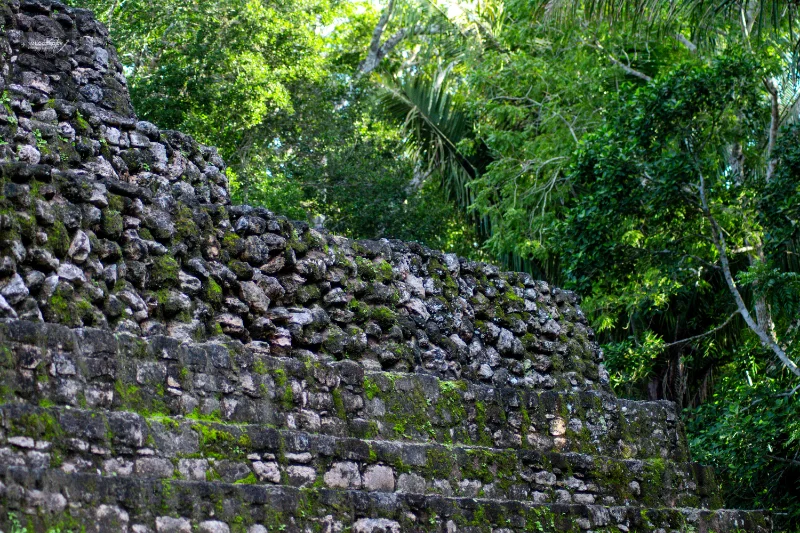
Roślinność dżungli górująca nad ruinami Majów / Jungle vegetation towering over Mayan ruins
What we see is only a fragment.
I refuse to believe everything has been uncovered.
Most likely, this entire hill was once a living city—homes, workshops, daily life—now sleeping beneath layers of soil and roots.
The jungle does not destroy violently.
It reclaims slowly. Methodically.
Eventually, only stone survives.
Without Drama. Just Personal.
Walking through Chacchoben was something I had quietly dreamed about for years.
Not because it’s a “must-see attraction.”
Jaro documenting the expedition to Chacchoben
But because standing on stone steps that are over a thousand years old changes your sense of proportion.
Someone once climbed those steps.
Lived here. Worked here. Believed here.
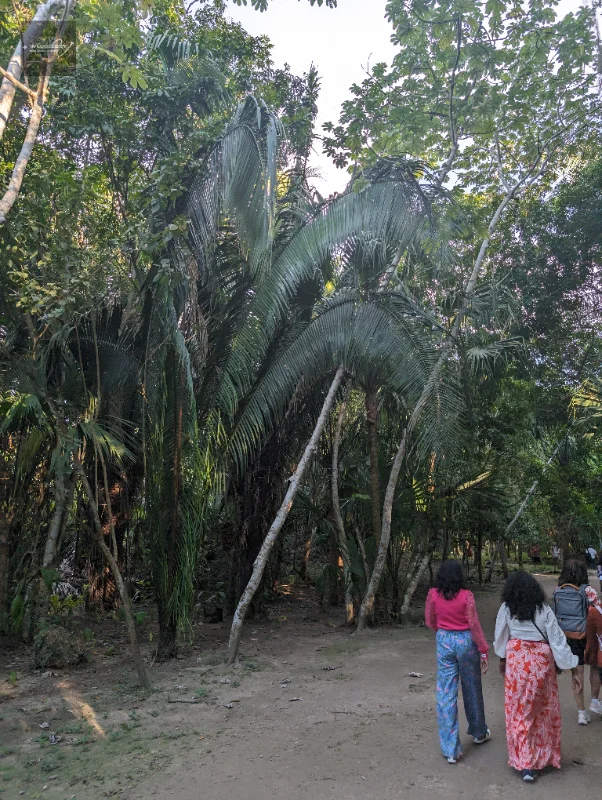
Our group on the way to the next sites of the Mayan city
The stairs are steep.
The sun is brutal.
The air barely moves.
Yet there is a silence here that no museum can replicate.
You feel small.
Not insignificant.
Just small in the presence of time.
Final Thoughts
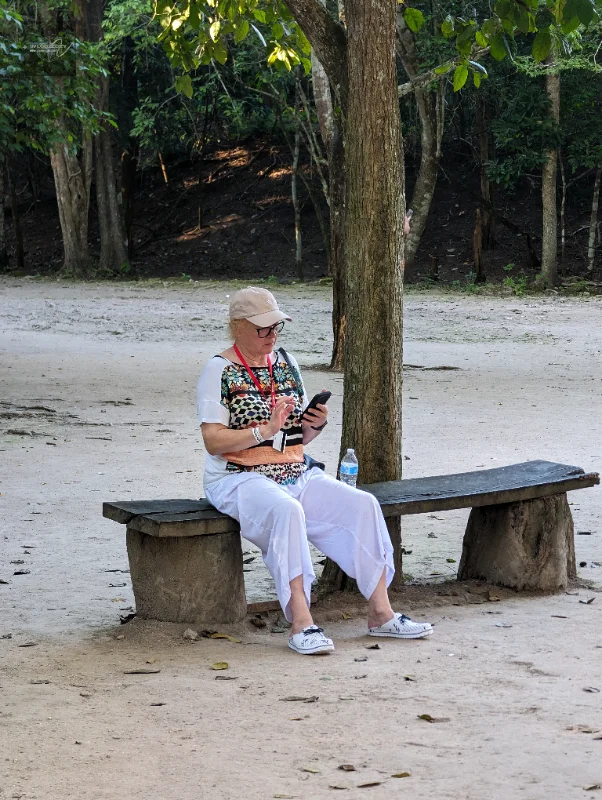
Rest while exploring the ruins
Chacchoben is absolutely worth visiting.
Not because it’s exotic.
But because it reminds you that civilizations rise, flourish, and disappear—leaving behind questions carved in stone.
This is not a vacation postcard.
It’s a lesson in perspective.